Trump Asserts US Independence from NATO Following Allied Rejection of Hormuz Force
In a striking declaration from the Oval Office on Tuesday, former President Donald Trump stated that the United States "does not need NATO" after several member nations rebuffed his appeal for a multinational naval force to secure the Strait of Hormuz. The vital trade route has been effectively closed by Iran amid a rapidly escalating regional crisis, now entering its third week.
Diplomatic Tensions and Military Escalation
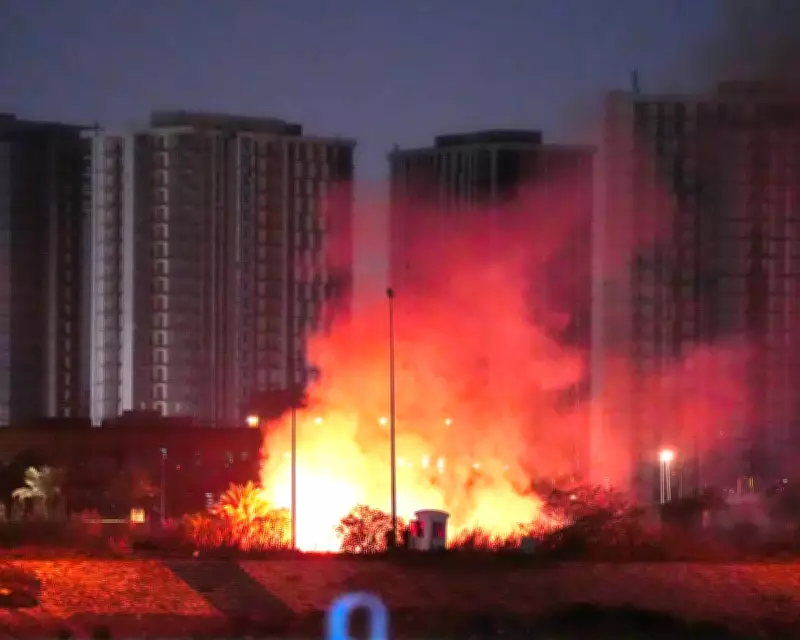
Trump characterized the allied rejection as a "very foolish mistake," asserting without evidence that "everyone agrees with us, but they don't want to help." His comments came as flames were reported engulfing a structure within the US embassy compound in Baghdad, Iraq, early Tuesday, highlighting the expanding conflict's geographical reach.
The US president specifically expressed disappointment with British Prime Minister Keir Starmer, noting that UK-US relations had been stronger before Starmer took office. This criticism followed Starmer's Monday statement that while Britain would defend itself and allies, it would "not be drawn into the wider war." British government sources confirmed no plans to deploy UK ships to the strait.
Global Economic Implications
The strategic Strait of Hormuz, through which approximately one-fifth of the world's oil typically transits daily, has become a flashpoint with profound economic consequences. Iran has declared it will not permit "even a single litre" of oil to reach its enemies, driving crude prices above $100 per barrel and threatening global inflationary pressures.
Trump's frustration extended beyond European allies to include Japan, Australia, and South Korea, all of which declined to contribute warships. In a Truth Social post, he wrote: "Because of the fact that we have had such Military Success, we no longer 'need,' or desire, the Nato Countries' assistance _ WE NEVER DID!"
Expanding Conflict and Contradictory Messaging
The Middle East crisis widened significantly on Tuesday with fresh attacks across the Gulf region. Qatar intercepted a missile with falling debris causing fires, while the United Arab Emirates temporarily closed airspace responding to missile and drone threats. In Iraq, drone and rocket attacks struck near the US embassy in Baghdad, and a separate strike killed four at a house reportedly hosting Iranian advisers.
Explosions were reported in multiple Iranian cities including Tehran, Ahvaz, Isfahan, and Shiraz. Meanwhile, Trump's messaging remained characteristically contradictory—boasting of military successes while refusing to commit to a withdrawal timeline, stating "we'll be leaving in the near future" but warning that if the US left immediately, it would take adversaries "10 years to rebuild."
Regional Diplomacy and Human Cost
In a potentially significant development, Iraq's oil minister announced Baghdad had reached an understanding with Tehran to allow tankers through the Strait of Hormuz. This occurred alongside reports that the White House was encouraging Syria's regime to help disarm Hezbollah in eastern Lebanon—a proposal that could pit Sunni former Salafists against Shia forces.
Trump also hailed the reported death of Ali Larijani, secretary of Iran's supreme national security council, in an Israeli strike, referring to his alleged role in suppressing protests. "Their leaders are gone," Trump said of Iran's clerical regime. "It's an evil group. I mean, they've killed much more than 32,000 people."
The Washington Post separately reported that senior Israeli officials told US diplomats Iranian protesters would "get slaughtered" if they demonstrated against their government, even as Israel publicly called for popular uprising.