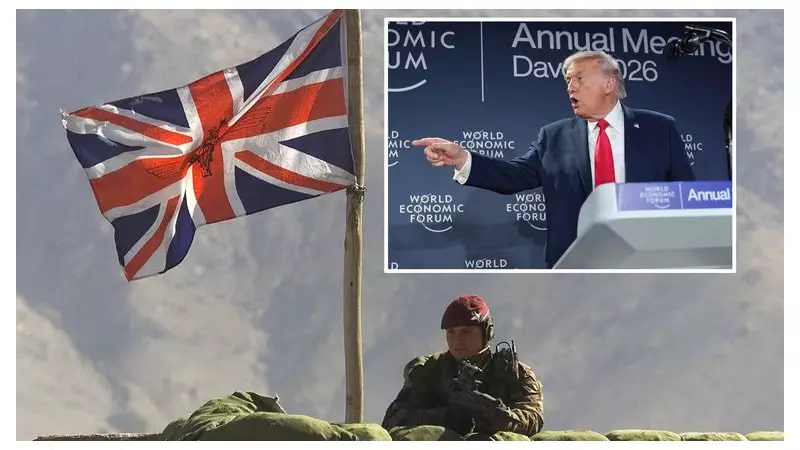
Former US President Donald Trump has issued a glowing tribute to the "very brave" British soldiers who served in Afghanistan, in a stark reversal after his earlier remarks sparked widespread anger and condemnation across the United Kingdom.
A Swift Social Media Reversal
Taking to his Truth Social platform on Saturday, Trump penned a post that effusively praised the UK military, describing Britons as being "among the greatest of all warriors." He explicitly acknowledged the 457 British service personnel who lost their lives during the near two-decade campaign, alongside the many more who were "badly injured."
"The GREAT and very BRAVE soldiers of the United Kingdom will always be with the United States of America!" Trump declared. "It's a bond too strong to ever be broken. The U.K. Military, with tremendous Heart and Soul, is second to none (except for the U.S.A.!). We love you all, and always will!"
Origins of the Controversy
This public about-face comes just days after Trump, speaking at the World Economic Forum and in an interview with Fox News, made incendiary comments questioning NATO's reliability. He falsely asserted that non-American NATO troops in Afghanistan had "stayed a little back, a little off the frontlines," while pondering whether the alliance would stand by the US if needed.
The reaction from British political leaders, veterans, and the royal family was immediate and severe. Prime Minister Sir Keir Starmer labelled the initial remarks as "insulting and frankly appalling." Downing Street confirmed that Starmer had spoken directly with Trump shortly before the president's conciliatory social media post was published.
"The prime minister raised the brave and heroic British and American soldiers who fought side by side in Afghanistan, many of whom never returned home. We must never forget their sacrifice," a statement from Number 10 read.
Fury from the Forces Community
The backlash extended deeply into the military community. Prince Harry, who completed two tours of duty in Afghanistan, defended the valour of UK troops, stating that British "sacrifices deserve to be spoken about truthfully and with respect."
Armed Forces Minister Al Carns, a veteran of the Royal Marines' deployment, dismissed Trump's original claims as "utterly ridiculous." Conservative MP Ben Obese-Jecty, who served with the Royal Yorkshire Regiment, expressed profound disappointment, saying it was "sad to see our nation's sacrifice, and that of our NATO partners, held so cheaply by the president of the United States."
Among the most poignant criticism came from Diane Dernie, mother of Lance Bombardier Ben Parkinson who suffered life-changing injuries in Afghanistan. She called Trump's initial comments "the ultimate insult" and urged the prime minister to confront the US leader directly.
Political Reactions to the Apology
The subsequent praise from Trump was cautiously welcomed by some political figures. Conservative Party leader Kemi Badenoch responded on social media platform X, stating: "I'm pleased President Trump has now acknowledged the role of the British armed forces and those brave men and women who gave their lives fighting alongside the US and our allies. It should never have been questioned in the first place."
The Human Cost of the Conflict
The controversy has refocused attention on the stark human toll of the Afghanistan war. Over 1,000 non-US NATO troops lost their lives, with the United Kingdom suffering the second-highest death toll at 457 personnel. The United States endured the greatest loss, with 2,461 military fatalities. Countless more from all nations returned home with serious, life-altering injuries.
The conflict was initiated under the NATO Article 5 collective defence clause following the 9/11 attacks, marking the only time the article has been invoked. Trump has been a long-standing critic of the alliance, frequently arguing that European members do not contribute sufficiently to defence budgets and are overly dependent on American military power.
This episode underscores the delicate and often fraught nature of the transatlantic 'special relationship,' where diplomatic words carry immense weight for the families of those who served and for the nations that stood shoulder-to-shoulder in a prolonged and costly war.