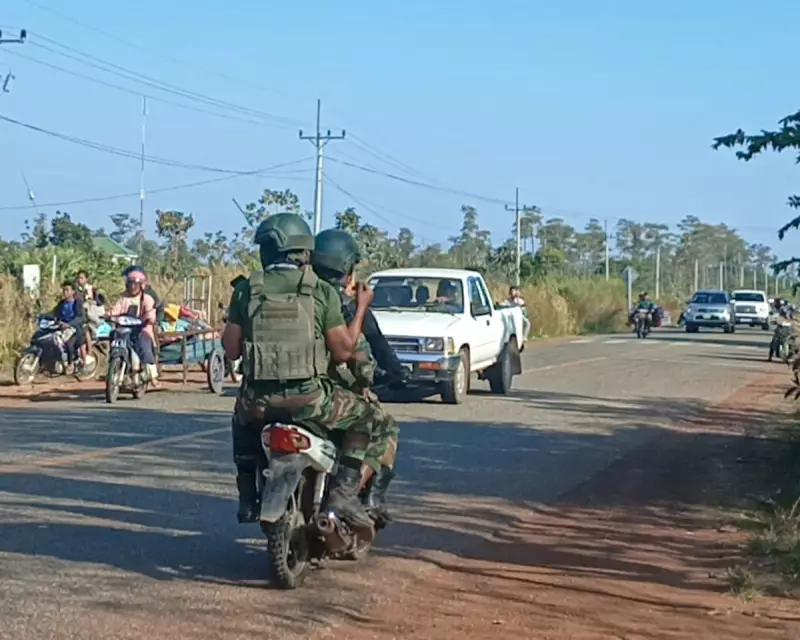
Thailand has conducted a series of airstrikes against Cambodian military positions, dramatically escalating a long-simmering territorial dispute along their shared border. The military action, confirmed by officials on Monday, marks a severe intensification of a conflict centred on the ancient Preah Vihear temple and its surrounding lands.
Details of the Military Escalation
The Royal Thai Air Force launched the strikes on Sunday, targeting what it described as Cambodian army installations within a contested zone. According to a statement from the Thai government, the operation was a direct response to Cambodian forces allegedly firing artillery shells into Thailand's Sisaket province earlier the same day. Thai authorities reported that this shelling resulted in damage to civilian property, though no immediate casualties were announced.
Cambodia has offered a starkly different account of the events. A spokesperson for the Cambodian defence ministry flatly denied that its forces had initiated any attack across the border. Instead, the spokesperson accused Thailand of fabricating the pretext to justify an aggressive military incursion into Cambodian territory. The area in question remains a persistent flashpoint, governed by a fragile and often ignored ceasefire agreement from 2011.
The Historical Roots of the Conflict
The core of the dispute lies in the sovereignty over the 11th-century Preah Vihear temple, a UNESCO World Heritage site perched on the Dangrek Mountains escarpment. The International Court of Justice (ICJ) awarded the temple itself to Cambodia in a landmark 1962 ruling. However, the judgement did not fully resolve the issue of the adjacent 4.6-square-kilometre parcel of land, leaving a fertile ground for continued disagreement and periodic military stand-offs.
This latest violence erupts against a backdrop of increased diplomatic and military posturing from both nations in recent months. Observers have noted a significant build-up of troops and equipment along the border, with both governments engaging in heated rhetoric over the rightful ownership of the territory. The 2011 ceasefire, brokered after deadly clashes, has effectively collapsed.
International Reaction and Future Implications
The international community has reacted with alarm to the sudden outbreak of aerial warfare. Neighbouring ASEAN member states are likely to urge an immediate return to dialogue, fearing regional destabilisation. The United Nations Security Council may be called upon to intervene if hostilities continue to escalate.
The immediate risk is a full-scale border war between the two Southeast Asian nations. Both armies are now on high alert, with troops mobilised along the contentious frontier. The use of air power represents a dangerous new phase in the conflict, moving beyond the sporadic small-arms fire and artillery duels that have characterised previous flare-ups. The situation threatens not only regional security but also the safety of civilians living in the border regions and the preservation of the ancient temple complex at the heart of the quarrel.
Analysts warn that without swift and credible international mediation, the cycle of attack and retaliation could deepen, making a peaceful resolution increasingly difficult to achieve. The coming days will be critical in determining whether the two nations can step back from the brink or if the borderlands are destined for further violence.