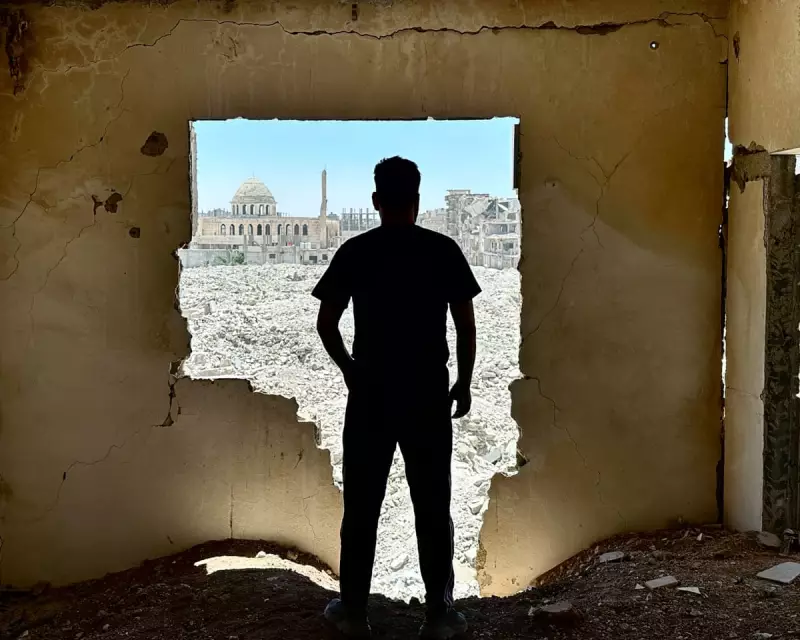
A Damascus suburb that became one of Bashar al-Assad's most notorious killing fields continues to haunt its residents years after the dictator's fall. Tadamon, a working-class district in south-east Damascus, witnessed systematic atrocities that may have claimed thousands of civilian lives, with many perpetrators still living freely in the community.
The Smell of Death
Abu Mohammed, a retired engineer who asked to be identified only by his nickname, recalls the distinctive odour that permeated his neighbourhood beginning in winter 2012. "It usually came at dawn," he remembers, "as the mosques sounded the first call to prayer." The smell was difficult to describe but impossible to ignore - something between burning hair and meat left too long in a pan.
By this time, Tadamon's once-bustling streets had become largely deserted. The Assad regime had established numerous checkpoints across the neighbourhood following the 2011 uprising. From behind his curtains, Abu Mohammed watched soldiers patrol and observed white minibuses driving repeatedly along Daboul Street. "Whenever the minibuses passed by," he notes, "I would hear gunfire later that day. Then, overnight, that same smell."

The Video Evidence
In April 2022, the Guardian published chilling footage that finally revealed the source of the smell. Dated April 2013 and geolocated to Tadamon, the video showed two soldiers in military fatigues executing blindfolded civilians beside a white minibus. The method was systematic: victims were dragged toward a large pit filled with bodies and car tyres, pushed in, and shot as they fell. After 41 people lay dead, the shooter poured fuel over the scene and set it ablaze.
The footage formed part of a collection of videos leaked by a source inside Syria and obtained by genocide scholars Annsar Shahhoud and Uğur Ümit Üngör in Amsterdam. Their analysis concluded the videos documented the killing of 288 civilians by Assad's forces, including seven women and twelve children.
Through meticulous investigation using a fake Facebook account, Shahhoud identified the primary shooter as Amjad Youssef, an officer in Branch 227 of Assad's military intelligence. When confronted with the evidence, Youssef responded: "I am proud of my deeds."
A Pattern of Atrocity
According to Abu Mohammed and other residents, the video captured only a fraction of the slaughter. The killing of civilians in Tadamon wasn't an isolated event but a recurring nightmare that continued from late 2012 until at least 2015. "The minibuses would drive up and down the street sometimes two or three times a week," Abu Mohammed explains. The actual death toll may number in the thousands rather than hundreds.
During multiple visits to Tadamon between March and August this year, residents guided journalists through the district's traumatised landscape. Daboul Street divides the area: to its west, narrow alleyways buzz with life, while to its east lies a wasteland of rubble and bombed-out apartment blocks covering an area equivalent to more than fifty football fields.
"This is where the smell came from," Abu Mohammed said, stepping into the ruined area. Local children, having watched the execution videos on YouTube, spontaneously re-enacted the massacres for visitors. Deeper in the wasteland, human remains continue to surface. "Stray dogs keep digging up bones," Abu Mohammed observed near one destroyed building containing a shallow crater filled with skeletal fragments, including what appeared to be children's bones.
Survivors Break Their Silence
With Assad's regime toppled in December 2024, Tadamon's residents are finally speaking openly about their experiences. Among them is Malek Moustafa, who participated in the first protests against the regime in April 2011. "Something came out of me that day that never went back inside," the 43-year-old recalls.

Moustafa helped establish the Tadamon Coordination Committee, an activist network that initially organised protests and later took up arms as the conflict intensified. He witnessed the fracturing of Tadamon's traditionally diverse community, where Sunnis, Alawites, Christians, Druzes and Ismailis had coexisted peacefully. The neighbourhood's name means "solidarity" in Arabic, reflecting its history of welcoming Syrians displaced from the Golan Heights after Israel's 1967 occupation.
As protests grew, regime loyalists known as "shabiha" - literally "ghosts" - were mobilised to crush dissent. A local Alawite named Fadi Ahmad, better known as Fadi 'Saqr' (the Falcon), played a crucial role in establishing these paramilitary groups, which later evolved into the National Defence Force (NDF).
Forced into Atrocity
Perhaps the most disturbing testimony comes from Abu Mohammed's son, who asked to be identified as Ahmed. Now in his early thirties and living in Europe after fleeing Syria in 2015, Ahmed revealed how NDF paramilitaries regularly forced him and other young men to participate in hiding evidence of atrocities.
"They would grab me at the bus stop on my way to high school," Ahmed recalled. After confiscating his phone and ID to prevent escape or documentation, the NDF would put him to work filling sandbags or stripping copper from destroyed buildings. But on two occasions, the task was far more horrific.
"We were forced to burn bodies," Ahmed said softly. Taken to the Othman bin Affan mosque on Daboul Street - which served as a torture facility - he and others were made to transport at least twenty corpses of beaten men and women across the main street. "There we would stack them inside an empty building, close it off, and set the place on fire."
Abu Mohammed listened to his son's account with dawning comprehension. "This is the first time I've heard all the details," he admitted. Ahmed explained his long silence: "I could not tell anyone. The regime would have hurt us." Even in Europe, he feared people wouldn't understand the specific horrors Syrians endured.
Justice Delayed
Despite the regime change, justice remains elusive for Tadamon's victims. While Amjad Youssef is rumoured to have fled the country, many other perpetrators continue living in the neighbourhood. "We don't feel safe," said Ghassan, an elderly man who lost his brother in the massacres. "I can walk down the street here and shake someone's hand, and that same person might be the one who killed my brother."
Most controversially, Fadi Saqr has transitioned from NDF commander to government collaborator. Despite his role in organising paramilitary forces implicated in atrocities, Saqr now works with President Ahmed al-Sharaa's administration, reportedly helping to disarm former regime affiliates and negotiate with ex-loyalists.
This collaboration has sparked public outrage in Tadamon. When Saqr visited the neighbourhood under security escort last February, hundreds protested and hung an effigy of him from a makeshift gallows. The authorities subsequently arrested three men accused of involvement in neighbourhood atrocities, but many residents consider this insufficient.
Abu Abdelrahman, Tadamon's local general security chief, acknowledged the deteriorating security situation since Saqr's appearance. "The longer the impunity lasts," he warned, "the more difficult it becomes for me to dissuade locals from taking revenge."
As simmering conflicts between neighbours threaten to erupt into violence, the people of Tadamon wait for meaningful accountability. Abu Mohammed expresses cautious hope in President Sharaa, but adds ominously: "If he doesn't bring us justice, I'm sure that the men in the neighbourhood will take care of this." The scars of Tadamon's killing fields run deep, and without proper reckoning, the cycle of violence may yet continue.