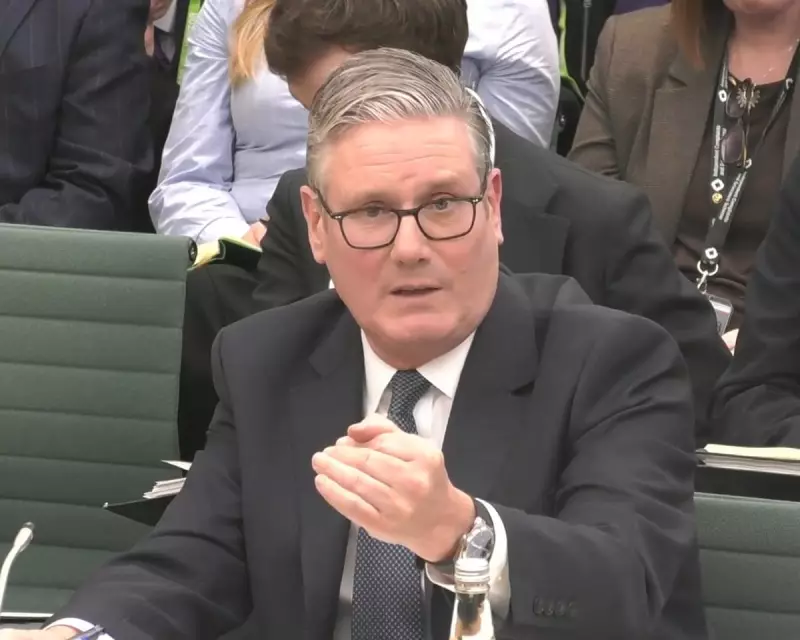
Prime Minister Keir Starmer has issued a stark warning that any potential peace agreement between Russia and Ukraine is destined to collapse unless it is underpinned by robust security guarantees from Western powers. Speaking to MPs on Monday, Starmer emphasised his opposition to any deal lacking sufficient military assurances for Kyiv, a stance declared as Ukraine comes under increasing pressure from the United States to consider a plan endorsed by former President Donald Trump.
Historical Precedents and the Need for Military Assurance
Addressing Parliament's Liaison Committee, Starmer drew on European history, noting it is "full of peace agreements that failed and sometimes led to even greater conflict." He argued that meticulous attention to detail was crucial, stating, "Putin has shown time and again that he will keep coming back for more if he sees the chance."
The Prime Minister pinpointed the absence of strong security commitments as the primary reason for the failure of past peace deals. This belief, he explained, was the driving force behind the "coalition of the willing" he established with French President Emmanuel Macron. This initiative aims to provide security guarantees from participating nations, operating alongside potential US support.
MI6 Chief Echoes Concerns Over Putin's Intentions
In a separate address on Monday, the head of the UK's Secret Intelligence Service (MI6), Blaise Metreweli, aligned with the government's cautious position. Metreweli stated that Vladimir Putin was "dragging out negotiations" over Ukraine, consistent with the agency's long-held assessment that the Russian leader is not serious about ending the war except on terms overwhelmingly favourable to the Kremlin.
She accused Putin of engaging in "historical distortions" and reaffirmed the UK's enduring support for Ukraine, describing it as "fundamental not just to European sovereignty and security but to global stability."
Diplomatic Moves and Shifting Negotiating Positions
Starmer's comments came hours before he was due to fly to Berlin for a dinner with leaders from eight European nations, as well as the heads of the European Commission, the EU Council, and NATO. The Prime Minister is among a core group of Western leaders advising Ukrainian President Volodymyr Zelenskyy, as diplomatic talks involving the US, Russia, and Ukraine intensify.
This follows a coordinated show of support last week, when Starmer hosted Zelenskyy at Downing Street alongside President Macron and German Chancellor Friedrich Merz. Zelenskyy himself was in Berlin on Monday, where Ukrainian and US officials held what he described as "not easy" but productive talks.
In a significant shift over the weekend, Zelenskyy indicated a willingness to drop Ukraine's NATO membership ambition to facilitate an agreement. In exchange, Kyiv and its European allies are pushing for "article-5-like" security guarantees from Europe and the US, mirroring NATO's collective defence principle.
Starmer has previously stated the UK's readiness to commit troops to a multinational force defending Ukrainian sovereignty, though such a move would depend on logistical support from Washington. The future of that US support remains uncertain amidst a newly announced US national security strategy championed by Donald Trump, which has caused European officials to scramble in response.
Concluding his remarks to MPs, Starmer reiterated his call for greater European defence investment, arguing, "I do think it is time for European countries to step up, step into the breach on spend, capability, coordination."