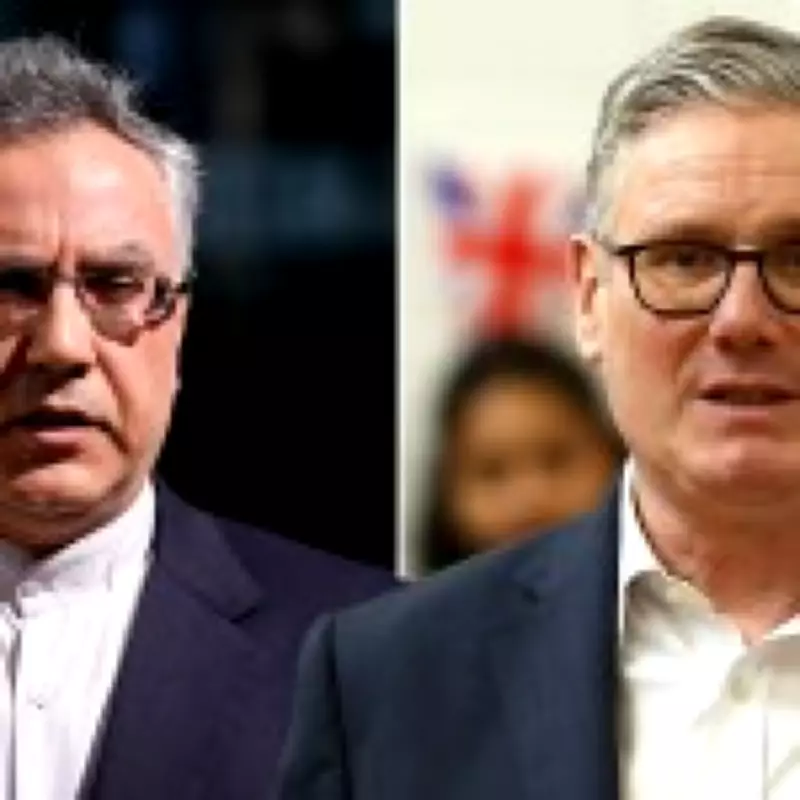
Growing Demands for Immediate Action Against Iranian Diplomat
Prime Minister Keir Starmer is facing mounting pressure from across the political spectrum to expel Iran's ambassador from London without delay. This urgent call follows explicit threats made by Ambassador Seyed Ali Mousavi against British military installations, specifically referencing potential attacks on RAF bases utilized by allied forces in the Middle East.
Unified Political Condemnation
Conservative MP Bob Blackman, who chairs the influential 1922 Committee, stated unequivocally that an ambassador who declares British military sites and personnel as legitimate targets has forfeited any right to remain in the country. "He should be expelled immediately," Blackman emphasized, adding that the Iranian embassy should be closed entirely and all Islamic Revolutionary Guard Corps operatives removed from British soil.
Labour MP Luke Akehurst echoed these concerns, questioning the logic of maintaining normal diplomatic relations with a nation actively attacking UK allies, disrupting oil supplies through the Strait of Hormuz, and suppressing democratic protests through violent means. "I would favour expelling their Ambassador and withdrawing our own diplomats from Iran," Akehurst declared.
Opposition Figures Amplify Calls
Cameron Khansarinia, chief of staff to exiled Iranian prince Reza Pahlavi, characterized the Islamic Regime as a direct threat to British national security. "Its terrorist ambassador should not have the pleasure of serving at the Court of St. James and should be expelled at once," Khansarinia asserted, highlighting what he described as Iran's network of operatives and terror cells operating within the United Kingdom.
Conservative MP Greg Stafford criticized the government's response as "hesitant and wholly inadequate," arguing that any suggestion of targeting the United Kingdom constitutes a direct threat requiring decisive action. "The Iranian Ambassador should be expelled without delay," Stafford insisted.
Historical Precedent and International Context
The United Kingdom has previously taken such diplomatic measures against Iran. In 2011, following the storming of the British embassy in Tehran, the Coalition government expelled all Iranian diplomats from London. Diplomatic relations were only restored in 2015 after extended negotiations.
Internationally, other nations have already taken similar actions. Lebanon expelled its Iranian top diplomat following the outbreak of regional hostilities, while Australia removed its Iranian ambassador last summer over antisemitic attacks linked to Tehran's influence operations.
Broader Demands for IRGC Proscription
Beyond the immediate expulsion demands, multiple figures are calling for the formal designation of the Islamic Revolutionary Guard Corps as a terrorist organization. Former Conservative leader Iain Duncan Smith argued that proscription would fundamentally alter diplomatic relations with Iran and likely necessitate the ambassador's recall.
"The IRGC spreads terror, threatens British citizens, targets Iranian dissidents and fuels antisemitism and extremism, including here in the UK," Duncan Smith stated, criticizing what he characterized as the government hiding behind procedural delays.
Government Response and Sanctions Framework
Downing Street has emphasized existing sanctions against Iranian entities, including asset freezes, travel bans, and director bans affecting more than 500 individuals and organizations connected to the regime. In July 2025, the United Kingdom joined thirteen other nations in condemning Iranian intelligence activities globally.
The Foreign Office has summoned Iran's ambassador twice since the beginning of Middle East hostilities for formal reprimands, but critics argue these measures fall short of what the current threat level requires. With pressure building from multiple directions, the Prime Minister faces critical decisions regarding Britain's diplomatic posture toward a regime increasingly viewed as hostile to British interests and security.