
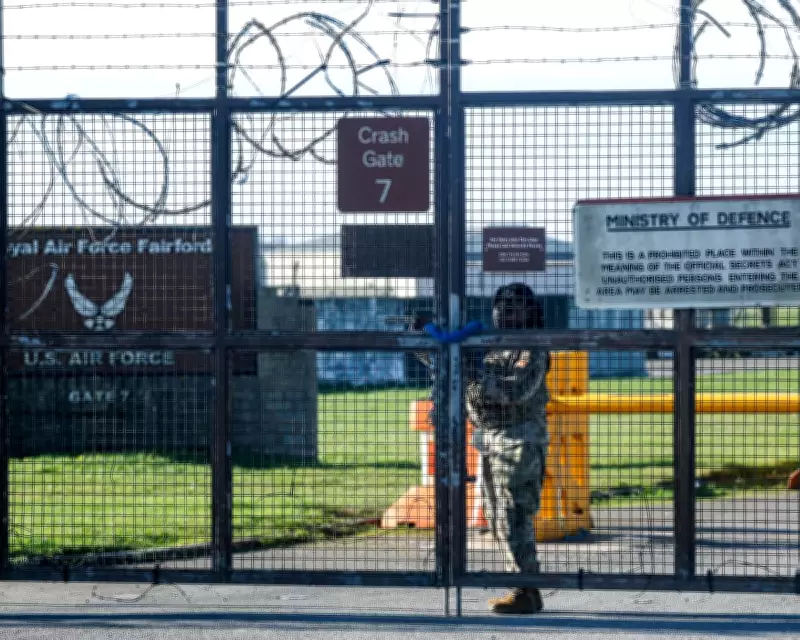
Starmer Authorizes US Defensive Strikes from RAF Fairford Amid Iran Tensions
In a significant parliamentary statement, Prime Minister Sir Keir Starmer has declared that the United Kingdom will permit the United States to utilize RAF Fairford in Gloucestershire for defensive military strikes aimed at preventing ongoing Iranian attacks. This decision, announced in the House of Commons, underscores a carefully delineated legal stance, with Sir Keir emphasizing that Britain will not participate in offensive actions against Tehran, thereby avoiding what he termed an illegal "regime change from the skies."
Legal Distinctions and Political Risks in UK-US Cooperation
The prime minister's authorization is restricted to specific and limited defensive purposes, such as intercepting Iranian missiles or targeting launchers to halt immediate barrages. Sir Keir asserted that where British nationals are at risk or allies request support, the UK is legally entitled to act in collective self-defense under international law. However, he cautioned that this permission must not extend to supporting a prolonged bombing campaign designed to dismantle Iran's long-term military capabilities, which could constitute unlawful involvement in US-Israeli actions.
This legal line is fraught with political and military complexities, particularly given the broader objectives articulated by US President Donald Trump and Israeli Prime Minister Benjamin Netanyahu. Mr. Trump has openly discussed ambitions to destroy Iran's missile capabilities, annihilate its navy, and prevent nuclear weapon development, with potential ground troop deployments. Sir Keir's statement highlighted that while defensive strikes to stop active attacks may be lawful, actions aimed at crippling future military power risk blurring into illegality.
International Context and Historical Precedents
Sir Keir noted that France and Germany are similarly prepared to enable US efforts to neutralize Iran's missile and drone capabilities at their source. This international alignment suggests a cautious, shared approach, but it also raises concerns about mission creep. If strikes target underground complexes not merely to halt current launches but to degrade long-term strategic assets, the legal basis of self-defense could erode, potentially drawing the UK into an unlawful conflict.
The shadow of the Iraq war looms large over these deliberations. Sir Keir, referencing past mistakes, vowed not to repeat scenarios where legal arguments were stretched beyond their original limits. To uphold transparency and a rules-based order, the government has committed to publishing a summary of the legal rationale for this decision and notifying the United Nations. Additionally, Sir Keir affirmed that if British territory is used for more than defensive strikes, the House of Commons should vote under the war powers convention to prevent unchecked escalation.
Implications for UK Policy and Global Stability
This development places the UK at a critical juncture in its foreign policy, balancing alliance commitments with legal and ethical responsibilities. Sir Keir's narrow authorization seeks to mitigate risks of Britain becoming a co-belligerent in an illegal war, emphasizing that sustained support for US strikes aimed at regime change or strategic degradation would violate international norms. The prime minister's stance reflects a broader commitment to parliamentary oversight and legal accountability in military engagements, aiming to safeguard national interests while adhering to global standards.




