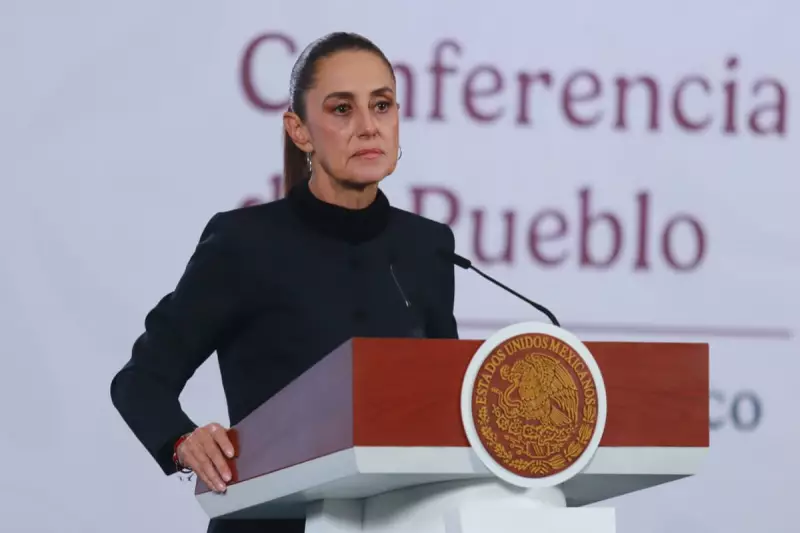
Mexican President Claudia Sheinbaum has publicly defended the latest transfer of 37 Mexican drug cartel operatives to the United States, characterising it as a "sovereign decision" made by her government. This move comes as Mexico faces mounting pressure from the Trump administration to intensify its efforts against powerful drug-trafficking organisations operating within its borders.
A Strategic Response to US Demands
The extradition flight, which took place on 21 January 2026, marks the third such operation since Donald Trump returned to the White House. Speaking at a news conference held at the National Palace in Mexico City, Sheinbaum emphasised that this action was taken independently, despite clear external pressures. However, security analysts caution that while these extraditions serve as an effective short-term pressure valve, their long-term utility may be diminishing in the face of escalating US demands.
Rodrigo Peña, a respected security expert, noted: "I believe the Mexican government will need to explore alternative solutions. The issue of politicians connected to criminal networks is gaining increasing significance. There will be heightened pressure on President Sheinbaum to confront these entrenched networks directly."
Escalating US Pressure and Threats
Since his return to office, President Trump has repeatedly asserted that Mexico is "run by cartels," demanding more aggressive action from Sheinbaum. This pressure is underscored by the looming threat of unilateral US intervention, a prospect that has grown more credible following recent military actions in Venezuela and strikes on suspected drug-trafficking vessels in the Pacific and Caribbean.
The US government has reportedly intensified its push for American military involvement in joint operations on Mexican soil, specifically targeting fentanyl production laboratories. Fentanyl, a potent synthetic opioid, is a primary driver of the overdose crisis in the United States. However, the idea of US troops operating within Mexico remains a highly sensitive issue, given the country's historical experiences with foreign intervention. Sheinbaum has consistently rejected such proposals, framing them as a fundamental matter of national sovereignty.
The Nature of the Extraditions
In lieu of accepting US military assistance, the Sheinbaum administration has opted to facilitate another plane transfer of high-value cartel figures from Mexican prisons. This latest group includes operatives from two of Mexico's most formidable organised crime groups: the Cartel Jalisco Nueva Generación and the Cartel del Noreste.
Among those extradited was Pedro Inzunza Noriega, a significant fentanyl trafficker who, in May 2025, became the first individual charged with narco-terrorism by the US Department of Justice. Mexican Security Minister Omar García Harfuch defended the action on social media, stating the individuals were "high impact criminals" who posed a "real threat to the country's security."
Nevertheless, legal experts within Mexico have raised questions about the process, noting these flights are conducted outside the standard extradition framework. Rodrigo Peña suggested that the 92 cartel figures sent to the US so far could provide valuable intelligence for American law enforcement. However, he added, "The security policy of the Trump administration is so aggressive, so unilateral, so war-like, that they are less focused on intelligence work and more on other kinds of pressure."
Entangled Agendas: Trade and Security
The geopolitical stakes are exceptionally high. Analysts warn that unilateral US action in Mexico would be far more costly than the Venezuela operation, potentially triggering severe political turmoil and jeopardising the nearly trillion-dollar annual trade relationship between the two nations.
Complicating matters further, the US-Mexico-Canada free trade agreement is currently under renegotiation. Diego Marroquín Bitar of the Center for Strategic and International Studies in Washington DC observed, "The security agenda is no longer separate from trade negotiations – and that could completely pollute or derail those discussions."
To mitigate the threat of punitive tariffs, the Mexican government has already assisted the Trump administration on border security, working to suppress migrant flows and accept deportees. Yet, as Marroquín notes, "That's not enough for this administration: they expect more. I believe what they want is for the Mexican government to pursue politicians – people in power associated with these drug trafficking organisations. The critical question is whether President Sheinbaum is willing to target them, especially given that some may be members of her own political party."
The extradition of the 37 operatives represents a calculated, sovereign response from Mexico, but it underscores a deepening and complex crisis. As pressure from Washington intensifies, President Sheinbaum faces the formidable challenge of balancing national sovereignty, domestic political stability, and the demands of a powerful neighbour whose trade and security agendas are now inextricably linked.