In a significant move for Australia's national security oversight, the federal parliament is set to establish a new joint defence committee that will operate largely in secret. This powerful body will scrutinise the controversial AUKUS nuclear submarine agreement and decisions about committing Australian troops to conflicts.
Committee Structure and Secrecy Provisions
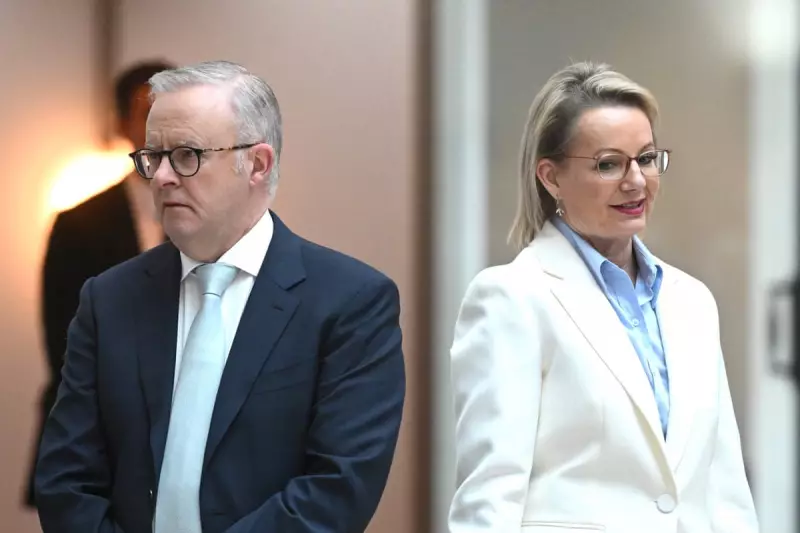
The committee's membership will be exclusively determined by Prime Minister Anthony Albanese in consultation with Opposition Leader Sussan Ley. The arrangement deliberately mirrors the Parliamentary Joint Committee on Intelligence and Security (PJCIS), which has long excluded minor parties and independents.
No more than seven government MPs will be appointed to the committee, alongside six non-government members from the Coalition. The Greens and crossbench independents will be completely excluded from participation, a decision that has already sparked significant controversy.
The committee's work will be conducted behind closed doors, with all proceedings classified as secret unless the defence minister specifically authorises public hearings. This level of confidentiality is designed to allow for frank discussions about sensitive defence matters.
Scope and Responsibilities
The new body will have broad oversight powers covering the Australian Defence Force, the Defence Department, Veterans' Affairs, and all government areas working on the AUKUS agreement with the United States and United Kingdom. This includes the recently established Australian Submarine Agency.
Committee members will be tasked with examining crucial defence matters including:
- Defence strategy and planning
- Military capabilities and contingencies
- Government decisions to commit Australian troops to conflicts
The AUKUS deal, which is expected to cost Australia up to $368bn by the mid-2050s, will be a primary focus of the committee's scrutiny. Both major parties strongly support the agreement, despite growing public concern about its enormous cost and strategic implications.
Political Reactions and Controversy
The Greens have strongly condemned the exclusion of minor parties from the committee. Greens defence spokesperson David Shoebridge described the arrangement as a "secret closed shop" that serves only major party interests.
"Creating another secret committee where the major parties can furiously agree and back in their groupthink on defence does the public no good," Shoebridge told Guardian Australia. "AUKUS is a toxic deal, and the more the Australian public sees of it, the more they oppose it. Labor has responded to this challenge by leaning into secrecy."
Meanwhile, Liberal MP Andrew Hastie, a former assistant defence minister and SAS commander, has been a strong advocate for the committee's establishment. He argued that Greens MPs should be excluded due to what he called their "deeply anti-defence views."
"We need serious parliamentarians, not performative ones chasing online outrage," Hastie stated in parliament. "This committee would mean we can ask hard questions of the defence bureaucracy and those in uniform in a protected classified environment."
The committee proposal emerged from a review of parliamentary oversight and accountability measures covering defence. Hastie had previously worked on the plan with Defence Minister Richard Marles, Australia's ambassador to Washington Kevin Rudd, and serving defence officials.
Legislation to establish the joint House and Senate committee could pass parliament as soon as Thursday, creating a new powerful body that will operate away from public view while overseeing one of the most expensive defence agreements in Australian history.