From Football Pitch to Battlefield: The Rise of Russian Drone Racing
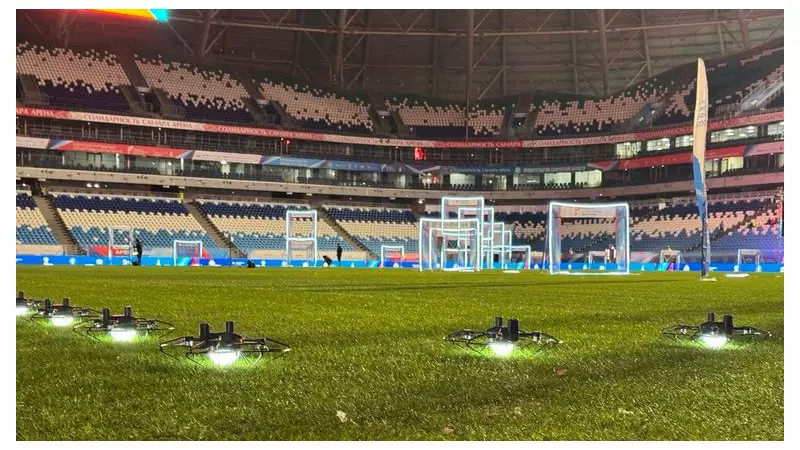
The night sky over a Samara football stadium, built for the 2018 World Cup, is alive with a surprising spectacle. Instead of athletes, the arena hosts a swarm of tiny, luminous drones, zipping through an obstacle course. This is not a scene from the front lines in Ukraine, but a main event at a Russian sports festival, where drone racing has taken centre stage.
Pilots navigate via on-board cameras, with the live feed projected onto the stadium's big screen for spectators. Among the competitors is Irina, a 14-year-old schoolgirl who has been practising for two years and dedicates two hours daily to the sport. When asked about her passion, she explained in broken English, "This has adrenaline and you can be fast."
Kremlin's Strategic Vision for Drone Pilots
The adrenaline and skill on display have not gone unnoticed by the state. The Kremlin has been quick to recognise the sport's potential to boost Russia's military capabilities. In June 2025, President Vladimir Putin announced a new national drone flying championship for children as young as seven, named 'Pilots of the Future', set to begin in 2026.
However, at the Samara event, race organisers pushed back against the idea that the sport is a direct recruitment pipeline. Ilya Galaev, president of the Russian Drone Racing Federation, insisted, "Many people have a stereotype that as soon as they start working with drones... they'll be taken away to be drone pilots. But in reality, of course, that's not true. Everything is voluntary."
The Human Cost: Para Ice Hockey and the 'Heroes of Our Time'
While drone racing offers a glimpse into the future of warfare, another sport in Samara tells the story of its present-day consequences. Across town, at a para ice hockey tournament, the physical toll of the conflict is starkly visible. All players have a physical disability, and for many, like Mikhail, who was mobilised in 2022, their injuries were sustained on the battlefield.
Mikhail lost a leg after stepping on a mine in August 2023. He described the incident as a motivation, stating, "I immediately realised that I won't give up and will move on... to show other people that I didn't become any worse than others who live a full life."
Russia does not publish official numbers of its wounded, but the recent prominence of para ice hockey is no coincidence. Many teams, such as Gvardia from the Moscow region, were formed only in the last three years specifically for soldiers returning with injuries.
Mikhail Trifonov, Gvardia's founder, explained his mission: "I visited hospitals, talked with the guys... I suggest they take up sport. It's an integral part of the rehabilitation process." He emphasised the psychological benefit of being part of a team with fellow soldiers.
War, Propaganda, and the Push for Enlistment
The tournament, named the Heroes of Our Time Cup, is a powerful element of how the war is presented domestically. Far from concealing veterans' trauma, the Kremlin is showcasing them, portraying the wounded as societal heroes. The event's entrance hall featured military recruitment leaflets, a clear indication that the authorities hope such displays of resilience will inspire others to enlist.
This sports festival in Samara reveals the deep and pervasive impact of three and a half years of war on Russian society. From the racing drones that mirror military technology to the arenas filled with wounded veterans, the consequences of the conflict in Ukraine are never far away, intricately woven into the fabric of civilian life.