Major Russian Assault Targets Ukrainian Energy Infrastructure
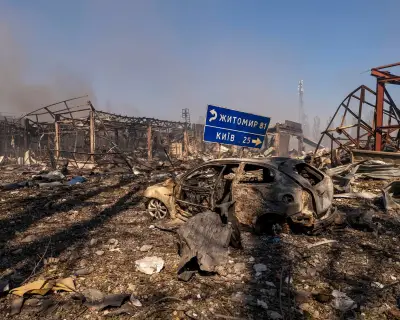
Russian forces launched a devastating overnight assault on Ukraine, killing at least four civilians and causing significant damage to energy facilities across multiple regions. The coordinated attack involved hundreds of drones and missiles, marking one of the most intense bombardments in recent months.
Civilian Casualties Mount in Dnipro and Kharkiv
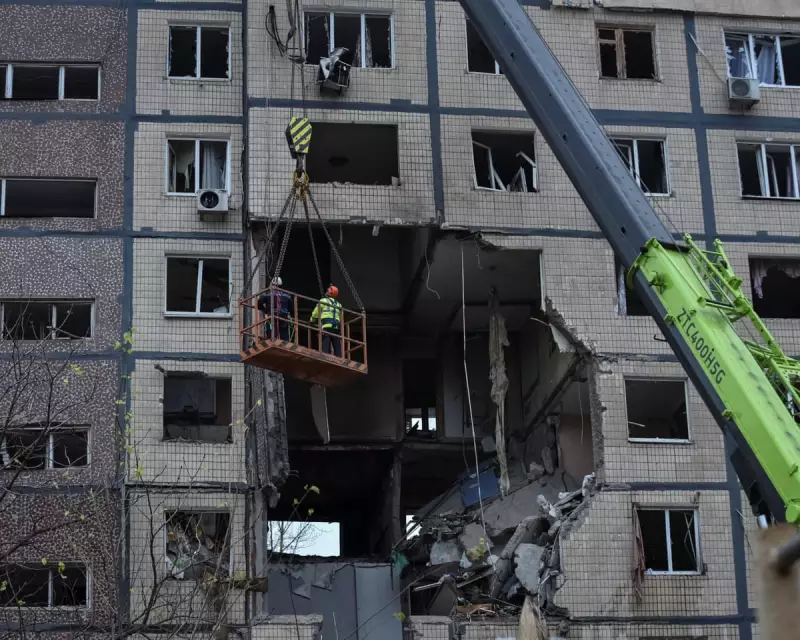
Three people lost their lives and twelve others were wounded when a Russian drone struck an apartment building in Dnipro on 8 November 2025. Rescue teams worked tirelessly at the damaged residential block, with photographs capturing the extensive destruction caused by the direct hit.
In a separate incident, another civilian was killed in the Kharkiv region during the same wave of attacks. Ukrainian President Volodymyr Zelenskyy confirmed that Russian forces had fired more than 450 drones and 45 missiles at Ukrainian territory, though he noted that most had been successfully intercepted by air defence systems.

Energy Infrastructure Suffers Widespread Damage
According to Ukrainian Prime Minister Yulia Svyrydenko, energy facilities in three key regions - Kyiv, Poltava and Kharkiv - sustained significant damage from the strikes. The attacks have severely disrupted electricity, water and heating services as winter approaches.
Energy companies are working around the clock to restore essential services, with several cities resorting to emergency generators to maintain power. Municipal officials confirmed that Kremenchuk and Horishni Plavni in the Poltava region are currently using generators to keep water supplies running.
President Zelenskyy responded to the attacks by demanding stronger international sanctions against Russia, stating: "For every Moscow strike on energy infrastructure – aimed at harming ordinary people before winter – there must be a sanctions response targeting all Russian energy, with no exceptions."
Escalating Energy War Between Russia and Ukraine
The assault represents a significant escalation in Russia's targeting of Ukrainian energy infrastructure. According to state energy firm Naftogaz, Russian forces have attacked Ukrainian gas facilities nine times in the past two months alone.
Both nations have increasingly focused on damaging each other's energy infrastructure as part of their military strategies, aiming to weaken economic capacity and civilian morale. In a related development on Saturday, Ukrainian drones struck an electricity substation in northern Russia and injured two people in an attack on a residential building in Saratov.
Russia claimed its latest "massive strike" targeted Ukrainian weapons production and energy facilities, while also announcing the capture of a village in eastern Ukraine as fighting continues along the frontline.
Diplomatic Efforts Stall Amid Continued Fighting
Despite international pressure for a ceasefire, peace negotiations have failed to gain momentum. In October, US President Donald Trump called for both Russia and Ukraine to freeze current frontlines and end the conflict.
While Zelenskyy endorsed beginning talks with a frontline freeze, Russian Foreign Minister Sergei Lavrov rejected the proposal, stating Moscow would only accept a "long-term, sustainable peace" agreement.
Adding to concerns about the conflict's trajectory, former NATO secretary general Anders Fogh Rasmussen warned on Thursday that Ukraine faces a "forever war" and gradual territorial losses unless Europe increases pressure on Russia.
The war, which began with Russia's full-scale invasion in February 2022, represents the largest and deadliest conflict in Europe since the Second World War.