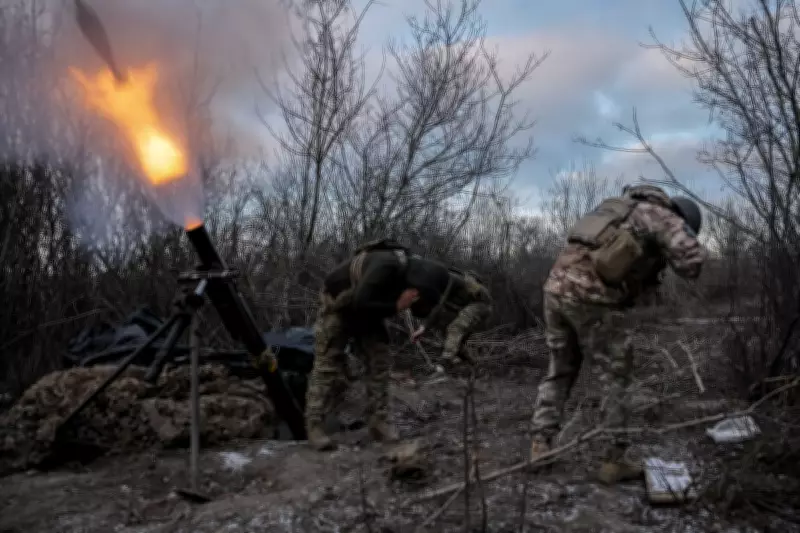
Russian Military Advance Grinds to Near Halt in Ukraine, Marking First Stagnation Since 2023
In a significant development in the ongoing conflict, the Russian army has recorded almost no territorial gains on the Ukrainian frontline in March 2025, according to a detailed analysis of data from the Institute for the Study of War (ISW) conducted by Agence France-Presse. This represents the first time in two-and-a-half years that Russian advances have effectively stalled, signaling a potential shift in the war's momentum.
Analysis Reveals Drastic Slowdown in Russian Advances
The AFP analysis indicates that across the entire frontline, Russian forces seized only 23 square kilometers (approximately 8.9 square miles) in March, with some areas actually experiencing territorial losses. This figure notably excludes infiltration operations conducted by Russian forces beyond established frontlines, as well as advances claimed by Moscow but neither confirmed nor denied by the ISW.
This minimal gain stands in stark contrast to previous months: Russian forces captured 319 square kilometers in January 2025 and 123 square kilometers in February 2025, which was already the smallest advance since April 2024. The March figures represent the most limited territorial expansion since September 2023, highlighting a consistent downward trend in Russian offensive capabilities.
Ukrainian Breakthroughs and Southern Front Setbacks
The analysis attributes this slowdown primarily to Kyiv's localized breakthroughs in the southeastern regions of Ukraine, which have disrupted Russian offensive operations. Additionally, Russian forces have been losing ground on the southern section of the frontline between the Donetsk and Dnipropetrovsk regions throughout February and March 2025.
The Russian army has been slowing its advances since late 2025, the AFP report emphasizes, pointing to Ukrainian counteroffensives as a key factor. However, the ISW identifies additional elements contributing to Russia's diminished momentum, including:
- Russia's ban on using Starlink satellite terminals in Ukraine
- The Kremlin's efforts to restrict access to Telegram messaging app
Telegram, which remains extremely popular among Russians including those fighting on the frontlines, has become barely usable in recent months due to blocks imposed by Russian authorities, potentially hampering communication and coordination.
Escalating Attacks and Infrastructure Disruption
Despite the stalled territorial advances, Russian military aggression continues through other means. On Friday, Russian strikes killed 14 people in Ukraine as Moscow launched another in a series of increasingly frequent daytime barrages. While Russia has fired aerial attacks throughout its more than four-year invasion, typically at night, recent weeks have seen a marked increase in daytime assaults.
The Ukrainian air force reported that the Russian military utilized more than 500 drones and dozens of missiles in Friday's salvo alone, demonstrating continued capacity for large-scale attacks even as ground advances falter.
Economic and Logistical Challenges for Russia
Russia faces mounting challenges beyond the battlefield. The country's Baltic oil export hubs at Ust-Luga and Primorsk remain unable to handle shipments following a series of Ukrainian drone attacks that have damaged port infrastructure. Industry sources report that at least five strikes targeted Ust-Luga within a ten-day period during the last two weeks of March.
These disruptions have significant consequences:
- Refineries have been unable to deliver diesel fuel to Primorsk for export since March 22
- European Russian and Siberian refineries have lost their most viable export routes
- Traders report refineries must consider more expensive rail transport to alternative terminals
- Export restrictions combined with refinery disruptions could decrease overall Russian oil production
Ukraine's Domestic Challenges and International Pressure
While making military gains, Ukraine confronts its own substantial challenges. President Volodymyr Zelenskyy has urgently called on lawmakers to pass critical legislation next week to avert a funding crisis, support the war effort against Russia, and implement key reforms required for European Union accession.
Economists note that due to lagging reforms and slow legislative progress in late 2025 and early 2026, Ukraine has missed deadlines to unlock billions in funding from key international lenders. With external financing needs standing at $52 billion this year—equivalent to approximately one-quarter of Ukraine's annual economic output—the budget situation remains precarious.
"I have a list of key draft laws that are critical for securing funding," President Zelenskyy stated in remarks released on Friday, emphasizing legislation ranging from strengthening the court system to reforming energy sector procedures. "I believe that members of parliament from all parties must understand the importance of these bills for Ukraine's budget."
This appeal comes despite Zelenskyy maintaining a parliamentary majority, as relations between his government and legislators have reportedly soured in recent months, complicating the legislative process at a critical juncture in the conflict.