
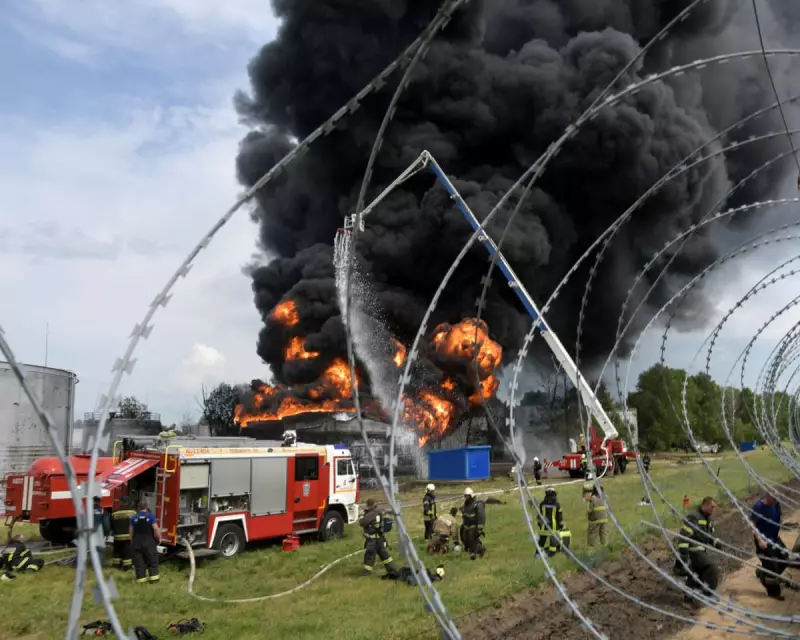
Russia has implemented a series of drastic new laws designed to fortify its domestic defences against Ukrainian drone strikes and sabotage operations, signalling the Kremlin's preparation for a prolonged war.
New Measures for Critical Infrastructure Protection
In a significant move, President Vladimir Putin has authorised the use of reservists to guard key energy sites, including fuel depots and refineries that have been repeatedly targeted by Ukrainian drones. This decree, signed earlier this month, allows the Kremlin to mobilise approximately 2 million reservists without declaring a full-scale mobilisation - a deeply unpopular measure previously implemented.
These reservists, who undergo annual military training and receive modest monthly payments, can now be deployed to protect critical infrastructure while remaining exempt from frontline combat in Ukraine unless they volunteer. This comes as Russia struggles to adequately defend its hundreds of oil refineries and industrial plants scattered across the country, despite having deployed dense air defence systems around Putin's Valdai residence and elite Moscow neighbourhoods.
Digital Disruption and Civilian Impact
Alongside physical protection measures, Russian authorities are implementing electronic countermeasures against Ukrainian drones. Since 10 November, mobile users returning from abroad have faced automatic 24-hour connection blocks in what's being called a SIM card 'cooling-off period'.
This controversial measure aims to prevent drones from leveraging civilian mobile networks for transmitting telemetry, video, or control signals - a tactic previously used by Ukrainian forces. The restriction has caused significant disruption and confusion among Russians returning from overseas, with residents of border regions like Pskov also reporting mistakenly frozen connections under the new security rules.
Tightening Control and Increasing Penalties
The legislative changes represent a substantial increase in state control over ordinary Russians' daily lives. Independent political expert Andrei Kolesnikov noted that 'Russia is acclimating its population to a prolonged semi-military existence and urging people to brace for greater sacrifices as the war drags on.'
In a particularly severe development, Putin recently signed legislation imposing life sentences for involving minors in acts of sabotage, while lowering the age of criminal responsibility for such offences from 18 to 14. Russian courts have already convicted at least 158 minors on terrorism and sabotage-related charges since the invasion began.
Kirill Kabanov, a member of the presidential human rights council, defended the possibility of jailing minors as 'a necessary measure for the current moment, given that we are a country at war.'
The new laws come as Ukraine demonstrates an increasing capacity to strike deep inside Russian territory, with attacks on energy facilities becoming almost daily occurrences. This vulnerability, once assumed to lie far from the battlefield, has forced Moscow to confront significant security gaps as the conflict approaches its fourth year.




