US Secretary of State Issues Stern Warning on Venezuela Policy
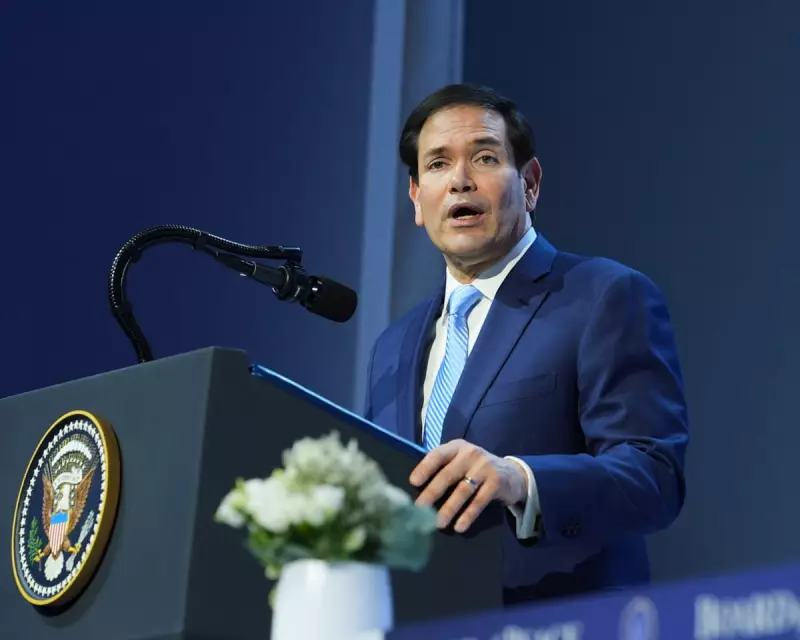
Marco Rubio, the United States Secretary of State, has delivered a stark message to Congress regarding the Trump administration's stance on Venezuela. In prepared testimony for the Senate Foreign Relations Committee, Rubio emphasised that while the US is not at war with Venezuela, it remains prepared to deploy military force should the country's interim leadership deviate from Washington's expectations.
Force Remains a Viable Option
Rubio's opening statement, released by the State Department, contained unambiguous language about America's willingness to escalate military involvement. "We are prepared to use force to ensure maximum cooperation if other methods fail," the document stated. The Secretary of State added: "It is our hope that this will not prove necessary, but we will never shy away from our duty to the American people and our mission in this hemisphere."
This warning follows the controversial capture of former Venezuelan president Nicolás Maduro earlier this month, who now faces drug trafficking charges in American courts. Rubio defended the operation as "an operation to aid law enforcement" rather than an act of war, noting that "there are no US troops on the ground" in Venezuela despite significant military buildup in the region.
Congressional Division and Legal Challenges
The Secretary of State's testimony comes amid growing political division in Washington. Congressional Democrats have condemned President Trump's actions as exceeding executive authority, while most Republicans have supported them as legitimate exercises of presidential power.
Senator Jeanne Shaheen, the committee's top Democrat, plans to question whether the costly operation to remove Maduro achieved meaningful results, noting that "the Maduro regime is still in power" through former aides and lieutenants. Meanwhile, the House recently narrowly defeated a war powers resolution that would have directed Trump to withdraw US troops from Venezuela.
Legal challenges are also emerging, with families of two Trinidadian nationals killed in a Trump administration boat strike filing what appears to be the first wrongful-death case arising from the campaign. US officials have conducted three dozen strikes on boats in Caribbean and Pacific waters since September, resulting in at least 126 fatalities.
Normalising Relations with Interim Leadership
Despite these tensions, American officials are working to establish normalised relations with Venezuelan acting president Delcy Rodríguez, who previously served as Maduro's vice-president. Rodríguez stated on Tuesday that her government and the Trump administration "have established respectful and courteous channels of communication" and are developing "a working agenda."
However, Rubio made clear in his prepared remarks that Rodríguez has limited options, suggesting that "her own self-interest aligns with advancing our key objectives." These objectives reportedly include opening Venezuela's energy sector to US companies, providing preferential access to production, using oil revenue to purchase American goods, and ending subsidised oil exports to Cuba.
The Secretary of State's testimony represents an effort to justify one of the Trump administration's most contentious foreign policy initiatives to former congressional colleagues, while addressing concerns about the president's broader international agenda.