The Precarious Future of Rojava's Feminist Revolution
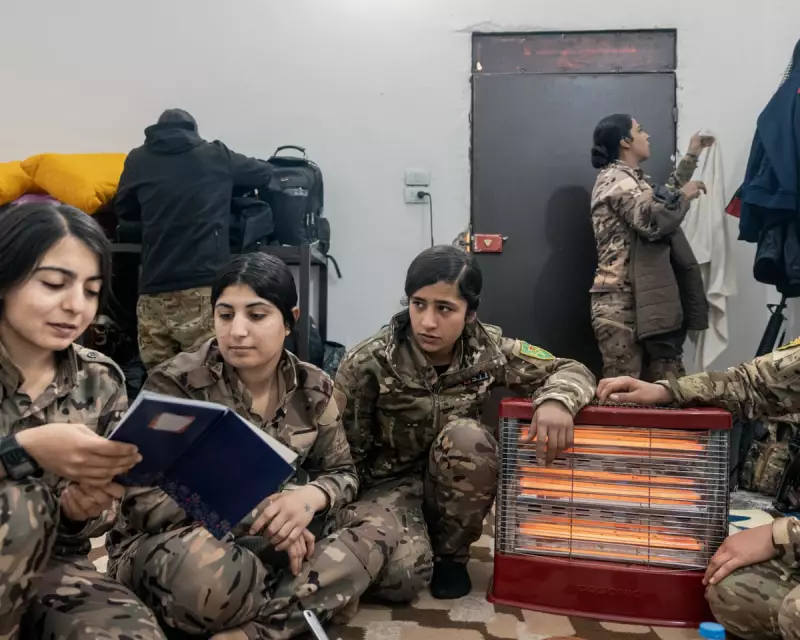
In December 2024, Women's Protection Unit (YPJ) fighters trained at a military academy in al-Hasakah, Syria, embodying the revolutionary spirit that has defined north-east Syria's autonomous region for over a decade. This territory, known as Rojava, has stood as a remarkable experiment in gender equality and decentralised governance, but now faces grave peril that resonates far beyond its shifting borders.
A Decade of Transformative Governance
For more than ten years, the Democratic Autonomous Administration of North and East Syria (Daanes) has governed this Kurdish-dominated region, implementing radical principles of power-sharing between men and women across all institutions. Visitors to Rojava have witnessed extraordinary scenes of feminist solidarity, with women from Kurdish, Arab and Assyrian communities rallying together under the powerful chant "Jin! Jiyan! Azadi!" (Woman! Life! Freedom!).
The administration's commitment to creating a bottom-up political system has inspired anarchists and socialists worldwide, while its practical implementation of feminist principles has created a genuine counterweight to patriarchal practices throughout the region. From soldiers to judges, textile workers to agricultural committee members, women across Rojava have engaged in sophisticated political discourse, critically examining feminist theory from both western and regional perspectives.
The Gathering Storm
Today, messages from women in Rojava speak of deepening despair and betrayal. The Syrian government, under the leadership of Ahmed al-Sharaa, is aggressively working to bring the entire country under centralised control, threatening to extinguish the autonomous region's hard-won freedoms. Al-Sharaa's background in al-Qaida and his vision for a centralised national government represent the polar opposite of Rojava's secular, decentralised ideals.
As government forces advance, the territory controlled by the autonomous administration has already shrunk dramatically. Areas where Kurds are not in the majority have slipped away, and even core Kurdish regions now face imminent threat. The women who once spoke optimistically about "a century of women's freedom" now fear slaughter and the complete unraveling of their revolutionary achievements.
Beyond Romanticism: The Complex Reality
While Rojava's achievements deserve recognition, it's crucial to avoid romanticising the region's experience. The administration has faced legitimate criticism, including reports of human rights abuses and repression of dissent. Many Arab residents have reported that power remained predominantly in Kurdish hands, revealing gaps between the region's radical rhetoric and its practical implementation.
Nevertheless, where its principles succeeded, they proved genuinely transformative. Decision-making processes brought governance closer to affected communities, whether in managing displaced persons' camps or reforming legal systems with an emphasis on restorative justice. The region's unique blend of feminism, drawing from both ancient Mesopotamian traditions and modern political theory, created a distinctive model of women's empowerment.
Global Implications and Necessary Solidarity
The threat to Rojava represents more than just a regional conflict; it embodies a global struggle against rising authoritarianism. The forces confronting the autonomous region – from al-Sharaa's Syria to Erdoğan's Turkey, Putin's Russia and even aspects of Trump's America – share a common disregard for both women's rights and democratic principles.
As a patchy ceasefire holds and negotiations continue, the international community faces urgent questions about solidarity and support. The women and men of north-east Syria have spent years developing practical responses to authoritarianism through direct democracy and feminist governance. Their potential defeat would represent more than a military loss; it would signal the triumph of patriarchal authoritarianism over one of the world's most ambitious experiments in gender equality.
Global citizens who admire Rojava's revolutionary energy must now consider concrete actions: pressuring governments to support women's and minority rights in the region, engaging with the principles of direct democracy that characterised Rojava's governance at its best, and building more collective, confident feminist movements in our own societies. The fate of Rojava's feminist revolution matters to us all, serving as both warning and inspiration in an increasingly authoritarian world.