
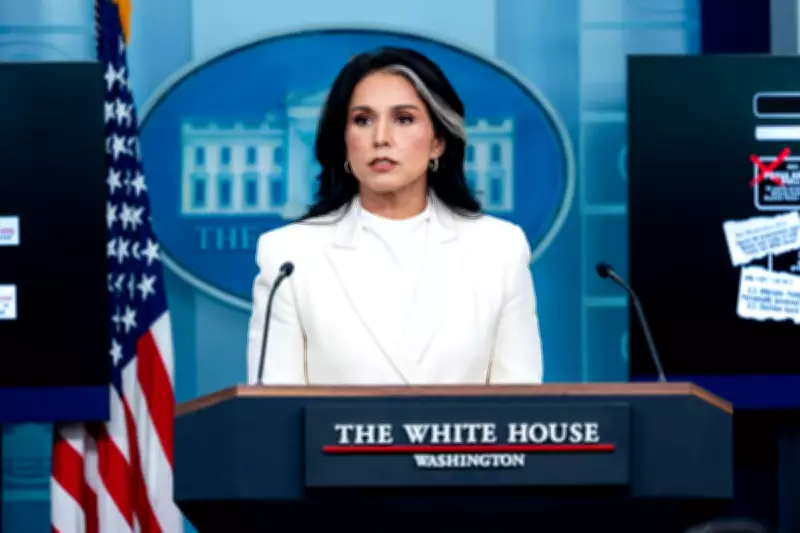
Republican Leaders Reject Whistleblower Allegations Against Intelligence Director
The Republican chairs of both congressional intelligence committees have formally dismissed a top-secret whistleblower complaint that alleged Director of National Intelligence Tulsi Gabbard improperly withheld classified information for political purposes. This decisive rejection from Senator Tom Cotton and Congressman Rick Crawford effectively halts further investigation into the anonymous allegations, though Democratic lawmakers continue to raise concerns about procedural irregularities in how the complaint was handled.
Political Motivations Alleged in Complaint Dismissal
Senator Cotton, who chairs the Senate Intelligence Committee, publicly stated on social media that he agreed with an earlier inspector general's assessment that the complaint lacked credibility. The Arkansas Republican suggested the allegations represented "just another effort by the president's critics in and out of government to undermine policies that they don't like." Cotton's office confirmed this position remains unchanged when questioned about the matter.
Congressman Crawford, who leads the House Intelligence Committee and also represents Arkansas, echoed these sentiments, characterizing the complaint as an apparent attempt to damage Gabbard's professional reputation through unsubstantiated allegations. Both Republican leaders have effectively closed the door on further congressional examination of the whistleblower's claims.
Democrats Question Procedural Delays and Transparency
Despite the Republican dismissal, Democratic intelligence committee members continue to demand explanations for why Gabbard's office took approximately eight months to refer the complaint to Congress, despite legal requirements mandating such referrals within 21 days. Senator Mark Warner, the senior Democrat on the Senate Intelligence Committee, emphasized that "the law is clear" regarding timely reporting obligations.
"I think it was an effort to try to bury this whistleblower complaint," Warner stated at the Capitol, noting that the heavily redacted nature of the document left numerous unanswered questions about its specific contents. Representative Jim Himes, the top Democrat on the House Intelligence Committee, confirmed in a written statement that he intends to continue examining the matter despite the Republican position.
Complex Background and Inspector General Findings
The intelligence community's inspector general provided lawmakers with a memorandum detailing that the complaint contained two primary allegations: that Gabbard's office withheld classified information for political reasons, and that the Office of General Counsel failed to report a potential crime to the Department of Justice. The heavily redacted memo offered limited additional details about either accusation.
According to current Inspector General Christopher Fox, his predecessor Tamara Johnson had previously determined that the allegation regarding politically motivated distribution of classified information "did not appear to be credible." Johnson was reportedly "unable to assess the apparent credibility" of the separate accusation concerning the general counsel's office. Fox noted that while he would have classified the complaint as non-urgent, he respected his predecessor's determination and therefore forwarded it to congressional oversight committees.
Distribution and Legal Context of the Complaint
Copies of the top-secret complaint were physically delivered this week to the congressional "gang of eight" – a select group comprising House and Senate leadership from both major parties along with the four senior members of the intelligence committees. This limited distribution reflects the highly classified nature of the document and standard procedures for handling sensitive intelligence matters.
Andrew Bakaj, attorney for the anonymous complainant and a former CIA officer now serving as chief legal counsel at Whistleblower Aid, asserted there was "no justification" for keeping the complaint from Congress since last spring. While acknowledging he cannot discuss specific details or reveal his client's identity, Bakaj emphasized the importance of timely congressional notification regarding such allegations.
Gabbard's office has consistently rejected all allegations of wrongdoing while defending the extended review period as necessary due to the complaint's extensive classified content requiring thorough legal and security analysis. The intelligence director, who coordinates the nation's eighteen intelligence agencies, has recently attracted attention for her presence during FBI operations in Georgia related to investigations into 2020 election claims.




