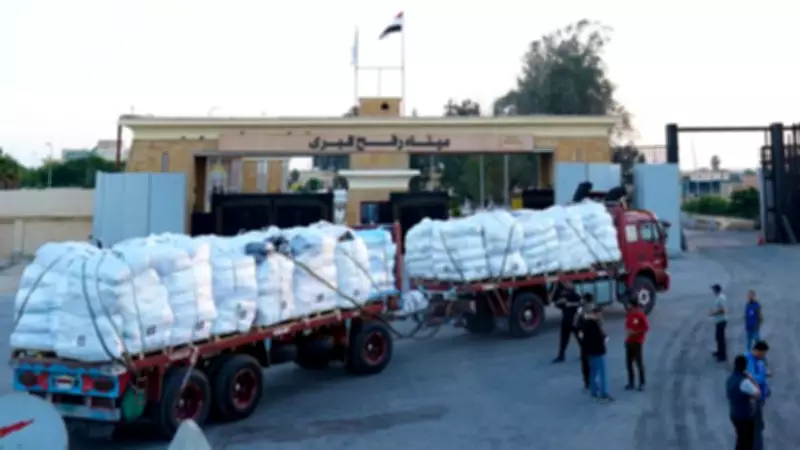
Rafah Crossing Reopens: A Symbolic Yet Limited Lifeline for Gaza
The reopening of the Rafah crossing this Sunday marks a significant, albeit constrained, moment for the people of Gaza. After months of closure, this border point between Gaza and Egypt will resume operations, but with strict limitations that underscore the ongoing complexities of the region's humanitarian and security landscape.
Limited Access and Stringent Security Measures
While the crossing's reopening is symbolically important, the practicalities reveal a heavily restricted process. Only individuals who fled Gaza during the recent conflict will be permitted to return from Egypt, with a daily cap of 150 people. In contrast, Israel has not imposed a limit on those leaving Gaza, though all travellers must undergo rigorous security screenings.
Applications for crossing will require advance approval, with the Shin Bet, Israel's security service, conducting remote checks using facial recognition technology. On the ground, officials from Egypt and the European Union will monitor departures, while the Palestinian Authority will also have a presence. For those entering Gaza from Egypt, an additional Israeli checkpoint adds another layer to what is expected to be a slow and laborious procedure.
The Dilemma of Returning to a Devastated Homeland
With the crossing operational, many Gazans now face a profound decision: whether to return to a homeland that has been largely reduced to rubble. Since the war began, approximately 100,000 people have fled Gaza, and the Strip remains divided by a so-called "yellow line," with half under Israeli military occupation and the other half where Hamas retains control. This fragmentation complicates any return, as residents must navigate a landscape of destruction and ongoing conflict.
Medical Evacuations and Humanitarian Implications
Beyond the return question, the reopening facilitates a critical humanitarian effort. The World Health Organisation estimates that up to 20,000 individuals in Gaza require urgent medical treatment, and the crossing will now allow for their evacuation. This aspect of the reopening is part of a broader American-led peace plan, aimed at addressing the severe health crises exacerbated by the war.
The Gaza side of the crossing has been under Israeli military control since May 2024, when troops seized the area. Its reopening, while a step forward, highlights the delicate balance between security concerns and humanitarian needs, with friction anticipated as the system is implemented.