
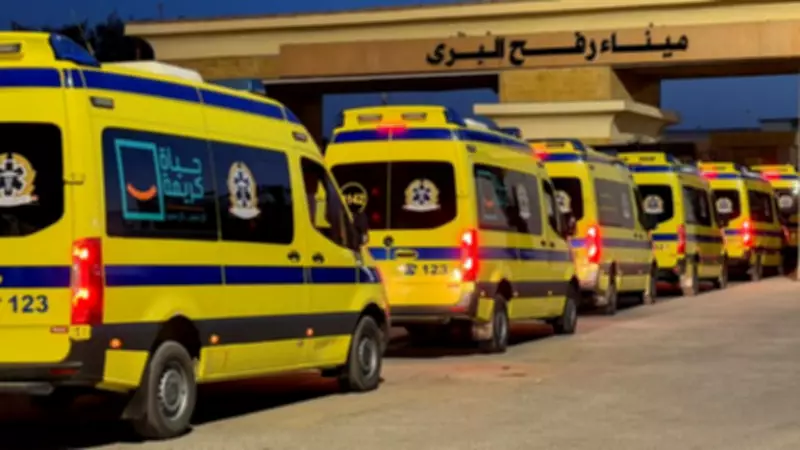
The Rafah border crossing between Gaza and Egypt has reopened for limited traffic after a day of anticipation, with ambulances lining up on the Egyptian side to receive casualties. As the sun set, these vehicles were finally put into action, transporting a small group of individuals with serious medical conditions from Khan Younis, accompanied by two travelling companions.
Symbolic Significance Amidst Low Numbers
This reopening holds profound symbolic importance, even as the numbers of people entering and exiting remain very low. The Rafah crossing serves as a unique artery for Gazans, offering the only route out of the Strip that does not lead into Israel. Its operation, however, is tightly restricted, with only a handful of individuals permitted to cross each day.
Medical Evacuations and Challenges
Patients requiring complex medical care, which is unavailable in Gaza's devastated infrastructure, were carefully checked and loaded into Egyptian ambulances for transfer to specialised hospitals. Despite the urgent need, Israeli authorities have been rejecting many applications from doctors in Gaza. For instance, the director of the Nasser Medical Complex reported that out of 27 patient names submitted, only five received approval to cross.
Israeli officials have not provided explanations for these rejections, but it is evident that prolonged security checks are being conducted on each applicant. This meticulous process was always expected to be slow, delaying the evacuation of thousands in need of medical treatment or wishing to return home.
Future Prospects and Humanitarian Impact
While numbers are projected to increase, with expectations of up to 150 people leaving and 50 returning daily, this remains a mere drop in the ocean compared to the vast humanitarian needs. Nevertheless, the reopening marks a form of progress, welcomed by many as Egyptian ambulances begin transporting Gazan patients to receive essential care.
The situation underscores the ongoing challenges in the region, where limited border access continues to impact civilian lives amidst broader geopolitical tensions.




