A Tale of Two Realities at Sydney's Arms Convention
The stark contrast between celebration and condemnation was on full display at the Indo-Pacific International Maritime Exposition in Sydney's Darling Harbour. While Australia's Defence Minister, Richard Marles, described the event as a "kind of Disneyland" for some, protesters outside faced barricades and armed police, chanting "War criminals are not welcome here."
Confrontation on the Streets
The ideological divide turned physically violent as police and demonstrators clashed. Protesters reported being "attacked from all different angles," while police stated officers were "set upon." The confrontation resulted in pepper spray being deployed and injuries on both sides.
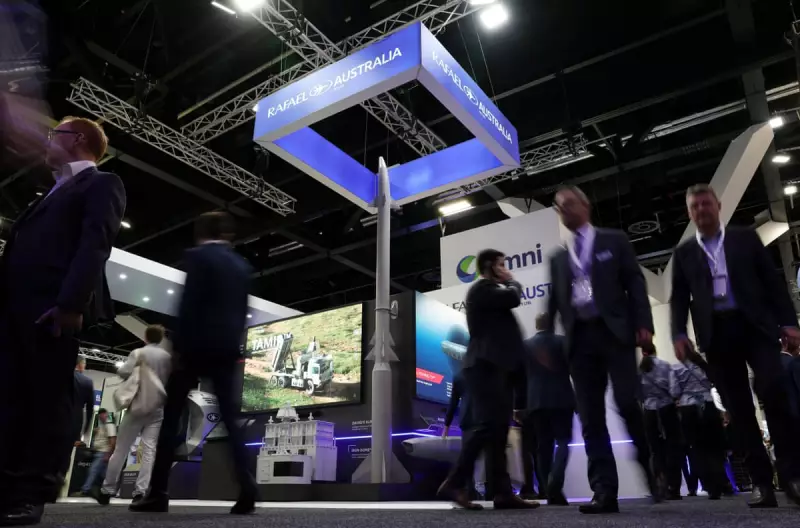
Inside the aseptically cool halls, a different narrative unfolded. Minister Marles praised the exposition as an "invaluable and incredibly worthwhile opportunity" to compare notes with global navies and speak to industry about future capabilities. He marvelled at the "incredible display" of awesome power and ingenious autonomous systems, spanning from the "beautiful" to the "menacing and the extremely cool."

The Global Arms Industry on Display
The vast exhibitors' hall was a sea of colour and noise, featuring some of the world's largest and richest weapons manufacturers. The event demonstrated Australia's deep enmeshment in the global arms industry, with distant conflicts feeling anything but distant.
Elbit Systems Australia, the local arm of Israel's largest weapons manufacturer, maintained a prominent stall. This presence is particularly sensitive given that an Israeli Hermes 450 drone, produced by Elbit, was identified by Israeli defence sources as firing the missiles that killed Australian aid worker Zomi Frankcom in a Gaza strike in April 2024.
Similarly, Lockheed Martin, the main manufacturer of the F-35 strike fighter used by Israel in Gaza, participated in a defence department networking event. The UN special rapporteur on the occupied Palestinian territories, Francesca Albanese, cited Australia as one of several states continuing to transfer F-35 parts, actions she stated "indicate an intent to facilitate Israeli crimes."
Other major players included Raytheon (RTX Corporation), which displayed model missiles. Amnesty International reported its GBU-12 laser-guided bomb was used in a 2022 airstrike on a Yemen detention centre that killed nearly 100 civilians. Australia's Future Fund holds an investment of over $179 million in the company.
Boeing, another exhibitor, produces the GBU-39 small-diameter bomb, debris from which was displayed by Houthis after a strike on the same Yemen detention centre in April this year killed more than 60 civilian detainees.
The Language of War and Erasure
Throughout the exhibition, the language remained precise and bloodless. Weapons were discussed as "capabilities," "assets," "solutions," and "systems"—"mission-ready" and "deployable" with no mention of the human targets upon whom they would fall. This linguistic erasure stood in sharp relief to the real-world consequences documented by human rights organisations.
By the final afternoon, large-scale protests had dwindled. A lone banner hanging from a road overpass was swiftly removed by police. Hundreds of officers stood at barricades, scrolling their phones or patting horses in the sun, as a tiny plane scrawled a wedding proposal across the sky—a momentary diversion from the carnival of arms inside, where everybody looked the other way.