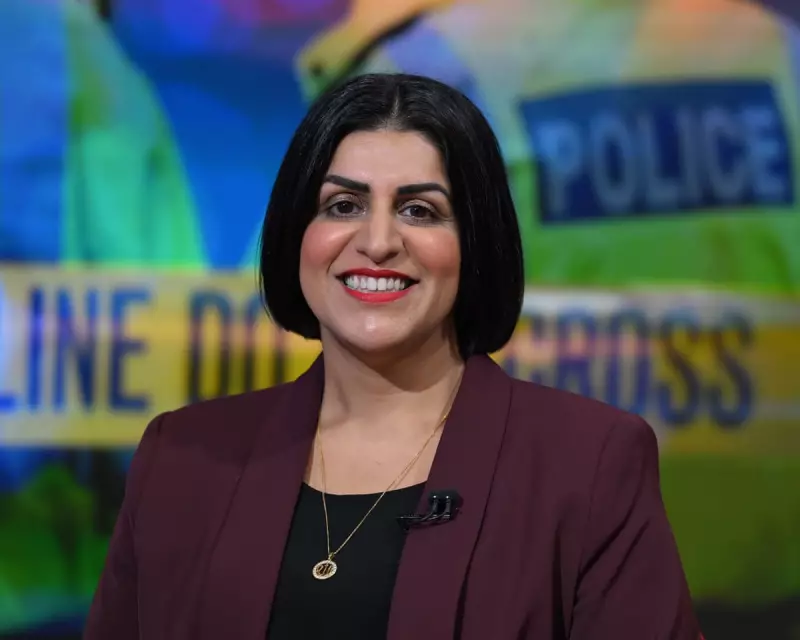
Home Secretary's Radical Police Restructuring Faces Mounting Opposition
The Home Secretary, Shabana Mahmood, is preparing for substantial resistance to her ambitious proposals to merge smaller police forces across England and Wales. Her recently published white paper, titled From Local to National: a New Model for Policing, outlines what her department describes as the most significant overhaul of policing since its establishment two centuries ago.
Core Components of the Proposed Policing Reforms
Among the major changes detailed in the document are several transformative measures. The plan includes reducing the current number of 43 police forces by 2034, with a review to determine the specifics of this consolidation. A new FBI-style National Police Service would be created to lead on critical areas such as terrorism, fraud, and organised crime.
Additionally, the reforms propose establishing local policing areas in every borough, city, and town, where officers would focus specifically on neighbourhood policing. The Home Secretary would gain enhanced powers, including the authority to dismiss chief constables. Every police officer in England and Wales would be required to hold a licence to serve and undergo regular assessments.
Rationale Behind the Restructuring and Force Mergers
Officials argue that merging forces represents the most ambitious aspect of the proposal, potentially saving billions of pounds. Funds currently allocated to duplicated backroom services—such as human resources, payroll, and IT—could be redirected to frontline policing. Each force would be divided into local policing areas, with neighbourhood officers handling issues like shoplifting, phone theft, and anti-social behaviour.
Home Office sources cite Police Scotland, formed in 2013 through the merger of eight regional forces, as a successful precedent. It reportedly saved an estimated £2 billion through staff reductions, efficiencies, and improved practices.
Significant Challenges and Potential Objections
Critics, however, highlight considerable obstacles. Applying similar mergers to 43 forces in England and Wales presents a far more daunting challenge, requiring new funding and governance arrangements. The Treasury may be reluctant to provide the necessary cash injection. Notably, Labour attempted comparable reforms during its last period in government under Home Secretary Charles Clarke, but the plans were abandoned after lobbying from MPs and local police chiefs.
Resistance is anticipated from rural politicians, opposition parties, and senior officers from smaller forces facing dissolution. The Conservatives have questioned the evidence linking force reductions to crime reduction, while concerns persist that rural policing needs might be overshadowed by urban priorities.
The National Police Service: A Third Attempt at an FBI-Style Agency
The proposed National Police Service aims to consolidate the capabilities of the National Crime Agency, counter-terrorism policing, regional organised crime units, police helicopters, and national road policing into a single entity. Officials argue that some forces lack the capacity to tackle serious organised crime, often relying on the Metropolitan Police's expertise.
This marks the third effort to establish such an organisation, following the Serious and Organised Crime Agency in 2006 and its replacement, the National Crime Agency. Senior officers worry that another reorganisation could be reversed by a future government, and that concentrating power might enable Home Secretaries to interfere in operational matters.
Implementation Timeline and Further Controversial Elements
The major reforms, including force mergers and the introduction of the National Police Service, are expected to take years to implement, potentially spanning multiple governments and Home Secretaries. Mergers will begin with consultations and a test merger to seek consensus rather than confrontation.
Other aspects of the package also face objections. MPs have criticised the national rollout of live facial recognition technology, noting Home Office admissions that the current system may incorrectly identify black and Asian individuals more frequently than white counterparts in some settings. The Police Federation has expressed concerns about the licence to practice, emphasising the need for improved training to support it.
Political Support and Long-Term Implications
Privately, some Labour MPs acknowledge that while these reforms address long-standing structural issues in policing, they may not resonate as vote-winners and could consume significant bureaucratic and operational resources for years. A former minister remarked, These may be necessary reforms in the long run but they might not be good politics, given our position in the polls.
As the debate intensifies, the success of Mahmood's proposals will hinge on navigating political opposition, securing funding, and demonstrating that centralisation can enhance, rather than undermine, effective and equitable policing across diverse communities.