Poland has taken decisive action against Russia, ordering the closure of its last remaining consulate on Polish soil following what the country's foreign minister has labelled an 'act of state terrorism' against its railway infrastructure.
A Deliberate Act of Sabotage
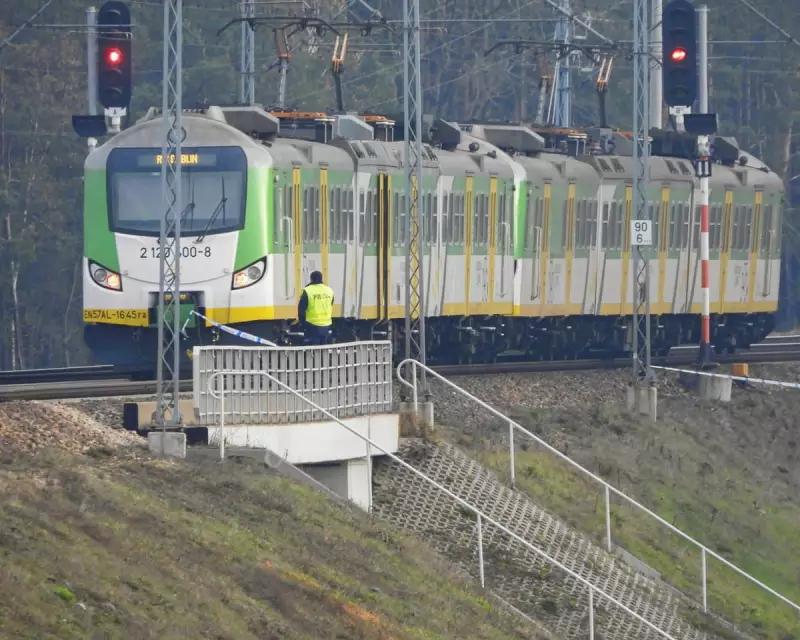
The crisis was triggered by a bomb attack over the weekend that damaged railway tracks on the crucial Warsaw-Lublin line near the town of Mika, in east-central Poland. This route is a key logistics artery leading towards the border with Ukraine. According to Polish Foreign Minister Radosław Sikorski, the blast was a deliberate attempt to cause human casualties.
Fortunately, a potential disaster was averted when an alert regional train driver spotted the damaged section of track and raised the alarm, preventing any injuries. In a separate but related incident, power cables along a nearby section of the railway were also destroyed.
Arrests and International Links
Polish security services have moved swiftly, announcing the arrest of four individuals connected to the sabotage. A spokesperson for the services, Jacek Dobrzyński, confirmed that authorities are actively pursuing both the perpetrators and those who commissioned the attack.
Prime Minister Donald Tusk provided further details, identifying two Ukrainian citizens who entered Poland from Belarus, planted the explosive devices, and then promptly left the country. Tusk stated that Poland believes the men were cooperating with Russian security services, noting that one had a prior arrest in Ukraine for sabotage. These two individuals are reportedly not among those currently in custody.
In a show of solidarity, Ukrainian President Volodymyr Zelenskyy spoke with Tusk, pledging to share all relevant information and establishing a bilateral working group to prevent future incidents. Zelenskyy affirmed that the evidence points to a 'Russian trace' behind the attack.
Diplomatic Fallout and Security Reinforcement
As a direct consequence, Foreign Minister Sikorski ordered the closure of the Russian consulate in Gdańsk, signalling that this would not be Poland's only response. This follows the earlier closures of Russian consulates in Kraków and Poznań, leaving only the embassy in Warsaw operational.
Russia's foreign ministry promised retaliatory measures to reduce Poland's diplomatic presence in Russia. The Kremlin's spokesperson, Dmitry Peskov, acknowledged that relations with Poland have 'completely deteriorated'.
The incident has heightened security concerns across Europe, where intelligence services suspect Moscow of orchestrating a campaign of arson, explosions, and infrastructure attacks. This campaign, often recruiting operatives via Telegram, is seen as an effort to test European defences and undermine support for Ukraine.
In response, Poland's defence minister, Władysław Kosiniak-Kamysz, announced Operation Horizon, a plan to deploy 10,000 soldiers to protect critical infrastructure nationwide. Chief of the General Staff Wiesław Kukuła warned that the long winter nights could be seen by Russia as an opportune time to escalate sabotage activities, a threat the Polish military is determined to counter.