Pakistan Intensifies Crackdown on Baloch Separatists After Major Assaults
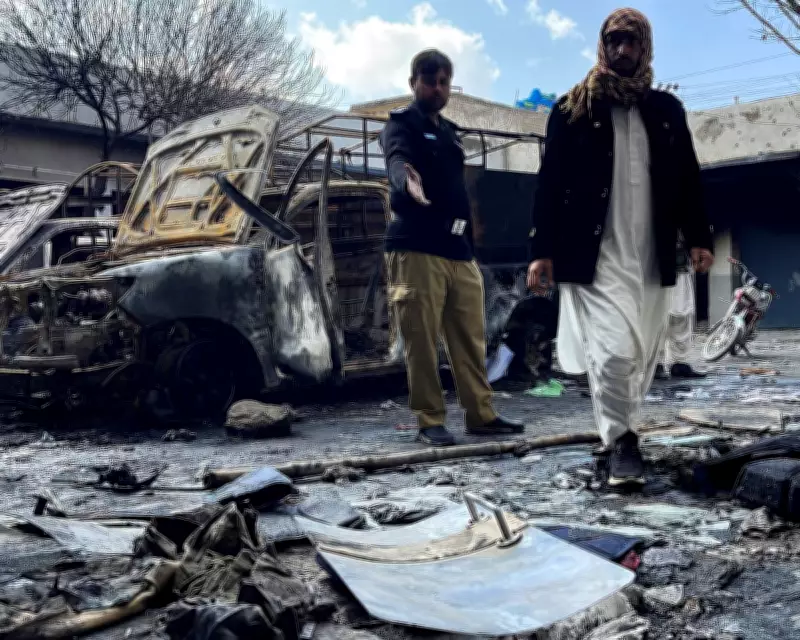
Pakistan's security forces have significantly escalated their operations against separatist militants in Balochistan province, following a major and coordinated assault on Saturday that resulted in the deaths of at least 31 civilians and 17 security personnel. The attacks, described by analysts as unprecedented in scale and coordination, targeted more than ten cities simultaneously, marking a severe escalation in the long-standing insurgency in the region.
Unprecedented Coordinated Attacks Across Balochistan
The violence began before dawn on Saturday, with scores of insurgents launching a multi-pronged offensive across Balochistan. In the provincial capital, Quetta, militants attacked military installations, police stations, and banks, while also blocking main roads and destroying railway tracks. Suicide attacks were carried out in Quetta and the strategic port city of Gwadar, causing widespread disruption and fear among residents.
Local officials confirmed that a car rammed into Quetta's red zone, an area housing key government buildings including the governor and chief minister's offices, before detonating. This attack killed several police personnel, including a deputy superintendent. In Mastung, dozens of insurgents assaulted a prison, freeing almost 30 prisoners, according to police reports.
Security Response and Casualty Figures
In response to the assaults, Sarfraz Bugti, the chief minister of Balochistan, stated that security forces had killed 145 militants within 40 hours, with their bodies now in the custody of authorities. The proscribed Baloch Liberation Army (BLA) has claimed responsibility for the attacks, asserting in a statement that they killed 84 security personnel and took 18 security and civilian officials prisoner. However, these claims have not been independently verified by The Guardian.
Residents in Khuzdar district reported that the BLA had captured seven members of the security forces, though Pakistan's military has not commented on this. Videos shared on social media, including by the BLA, show insurgents moving freely through Quetta, firing rocket launchers at a bank, torching police stations, and standing on roadsides, highlighting the brazen nature of the attacks.
International and Regional Implications
The attacks have drawn swift political responses, with Pakistan's interior minister, Mohsin Naqvi, rushing to Quetta on Saturday to offer condolences to the families of those killed. Naqvi blamed India for backing the terrorists, a claim that Delhi has denied. Additionally, Pakistan has repeatedly accused Afghanistan of providing safe sanctuaries to Baloch insurgents, the Pakistani Taliban, and other militant groups, alleging they use Afghan soil to launch attacks. Kabul has consistently denied these allegations.
In Gwadar, where China has developed a deep-sea port as part of its Belt and Road Initiative, insurgents attempted to breach perimeter security but were foiled. A resident described hearing a huge blast and seeing smoke billow up, with firing continuing late into the night near the port. In Pasni, within Gwadar district, five militants were killed when they entered the headquarters of Pakistan's coastguard after a suicide bomber detonated at the gate, reportedly killing one maritime security official.
Ongoing Security Measures and Political Fallout
Mobile internet services have been suspended in various cities, including Quetta, Gwadar, and Noshki, as part of security measures. Residents in Noshki, where insurgents attacked the offices of counterterrorism police and other government agencies, reported that attacks were still ongoing in some areas. Pakistan's defence minister, Khawaja Asif, told local media that calm had been restored in Balochistan and that security forces were engaged in a mopping-up operation to clear any remaining threats.
Security analyst Zahid Hussain described Saturday's assaults as unprecedented and contradictory to recent claims by central and provincial government officials that Balochistan's insurgency had been reined in. Hussain noted that the lack of a political apparatus in the province, with the military making all decisions, has exacerbated the situation. He warned that the attacks demonstrate a significant local support base for the insurgents, which, combined with safe sanctuaries in Afghanistan, poses a dangerous escalation.
The Balochistan separatist insurgency, which has persisted for decades, has gained lethal momentum in recent years, with attacks increasingly targeting both security forces and civilians. This latest wave of violence underscores the complex and volatile security challenges facing Pakistan, as it grapples with internal militancy and regional geopolitical tensions.