Deadly Suicide Bombing Strikes Islamabad Mosque During Prayers
A devastating suicide bombing has claimed the lives of at least thirty-one people and left one hundred and sixty-nine injured in Pakistan's capital, Islamabad. The horrific attack targeted the Khadija Al-Kubra mosque, a Shiite place of worship on the city's outskirts, during Friday morning prayers, creating scenes of utter chaos and devastation.
Chaotic Aftermath and Witness Accounts
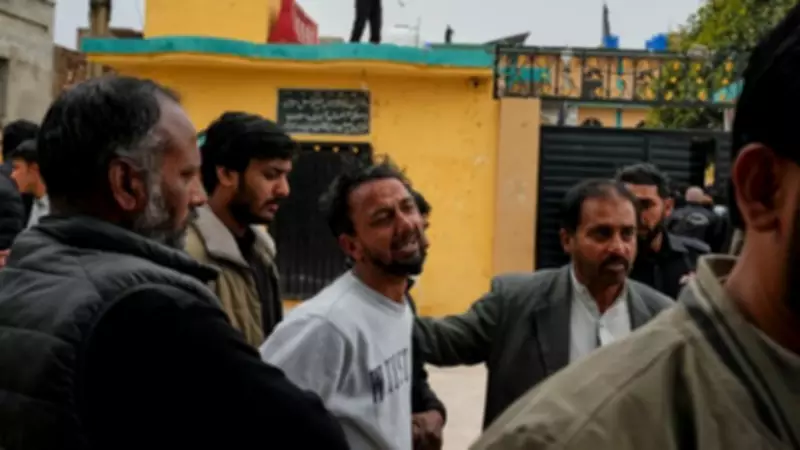
Eyewitnesses described a sudden, loud explosion that ripped through the mosque, leaving bodies scattered across the carpeted floors and the wounded screaming desperately for help. Footage from the aftermath showed police and local residents frantically transporting critically injured victims to nearby hospitals for emergency treatment.
Hussain Shah, who was praying in the mosque courtyard at the time, recounted the terrifying moment. "I immediately thought that some big attack had happened," he said, highlighting the shock and fear that gripped the congregation.

Political Condemnation and Blame Game
Pakistan's President Asif Ali Zardari and Prime Minister Shehbaz Sharif both strongly condemned the assault on innocent civilians, extending their condolences to the bereaved families. "Targeting innocent civilians is a crime against humanity," President Zardari stated, while Prime Minister Sharif ordered a full investigation to identify and punish those responsible.
However, the incident quickly sparked diplomatic tensions. Pakistan's Defence Minister, Khawaja Muhammad Asif, claimed on social media that the bomber had opened fire on security guards before detonating his explosives among worshippers. He alleged the attacker had links to Afghanistan and accused India of using Taliban proxies to carry out the assault. "The threads of the alliance between India and the Taliban are being uncovered," he wrote.
India's foreign ministry swiftly rejected these allegations as "baseless and pointless," urging Pakistan to address its internal issues instead of blaming others. Afghanistan's foreign ministry also denied any involvement, condemning attacks on mosques as contrary to Islamic values.
Broader Security Context and Festival Impact
This tragic bombing has cast a shadow over Pakistan's security landscape and cultural events. It overshadowed the return of the Basant kite flying festival in Lahore, following an eighteen-year ban, leading authorities to cancel a related concert due to the attack.
The nation has been grappling with a surge in militant violence, particularly in Balochistan province, where separatist groups like the Baloch Liberation Army recently launched coordinated attacks. Security forces responded with a week-long operation that concluded on Friday, reportedly killing over two hundred militants.
No group has immediately claimed responsibility for the mosque bombing, but suspicion has fallen on militant organisations such as the Taliban and Islamic State, which have historically targeted Shiite minorities in Pakistan. The attack underscores the ongoing challenges Pakistan faces in maintaining stability and protecting its citizens from extremist violence.