From Olympic Slopes to Alleged Criminal Empire: The Ryan Wedding Story
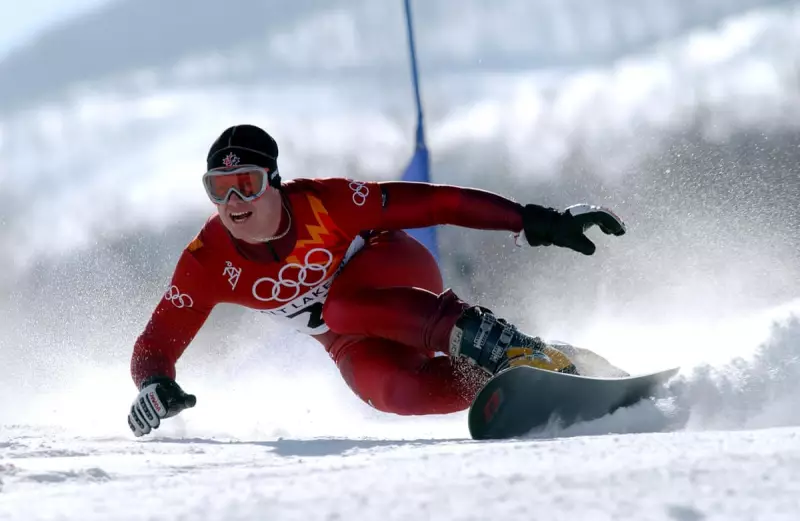
The extraordinary tale of Ryan Wedding unfolds as a dramatic narrative that bridges the world of elite winter sports with the shadowy realms of international drug trafficking. Once a promising Canadian snowboarder who competed at the highest level during the 2002 Winter Olympics in Salt Lake City, Wedding now finds himself at the centre of sensational allegations that have captured global attention.
Olympic Dreams and Criminal Schemes
Ryan Wedding's early life in Thunder Bay, Ontario, seemed destined for athletic greatness rather than criminal notoriety. Growing up with grandparents who owned the Mount Baldy ski resort provided the perfect training ground for developing the precise skills required for competitive snowboarding. The sport demands mastery of carving techniques, perfect edging control, and exceptional balance at breathtaking speeds that push human limits.
Wedding possessed these technical abilities alongside what many elite athletes require: a fiercely competitive instinct that drives them to outperform rivals. However, his Olympic performance in 2002 proved disappointing when challenging icy conditions led to misjudged turns and failure to reach the podium. This setback marked a turning point that would dramatically alter the course of his life.
The Alleged Transformation
Following his Olympic disappointment, Wedding's trajectory shifted dramatically according to investigative reports. He reportedly worked as a nightclub bouncer while aggressively building his physique through intensive gym workouts. His lifestyle began to change as he dabbled in property flipping, acquired luxury vehicles, and adopted fashion styles associated with criminal elements frequenting the establishments where he worked.
The transformation allegedly accelerated in 2010 when Wedding received a four-year prison sentence for conspiracy to distribute cocaine after attempting to purchase the drug from an undercover US government agent. Prosecutors claim he used his incarceration to forge crucial relationships within drug trafficking networks, laying the foundation for what would become an extensive criminal operation.
Alleged Criminal Enterprise and Violent Methods
US authorities have painted a picture of Wedding as the leader of a sophisticated drug trafficking ring allegedly generating $1 billion annually through cocaine sales. The operation's alleged brutality came to light through several high-profile incidents that prosecutors have linked to Wedding's organisation.
In January 2025, Jonathan Acebedo-García, a former associate turned FBI informant, was murdered in a Medellín restaurant in what authorities describe as a brazen daylight execution. Prosecutors allege Wedding used a Canadian blog called The Dirty Newz to track down and publicly identify Acebedo-García before orchestrating the killing as retaliation for cooperation with law enforcement.
Further violence allegedly connected to Wedding's operation includes the 2023 shooting of an innocent Canadian couple in Caledon, Ontario, mistaken for rival criminals, and the 2024 murder of Mohammed Zafar in Brampton over alleged drug debts. These incidents form part of a pattern of contract killings that prosecutors attribute to Wedding's leadership.
Legal Developments and Controversial Comparisons
Recent legal developments have brought Wedding's alleged activities into sharp focus. His arrest was announced with considerable fanfare by US law enforcement officials who drew dramatic comparisons between Wedding and notorious drug lords Pablo Escobar and El Chapo Guzmán. FBI Director Kash Patel declared Wedding "the modern-day iteration" of these infamous figures, though security experts have questioned the accuracy of such characterisations.
Stephen Woodman, a security analyst based in Guadalajara, Mexico, expressed scepticism about these comparisons, noting: "There's no indication [Wedding] controls territory, nor that he's at the head of an armed militia, nor that he's a major player politically." Woodman suggested the Trump administration's emphasis on Wedding's case might represent a "performative" approach to international drug enforcement.
Questioning the Narrative
While the core allegations against Wedding appear substantiated by multiple criminal cases, analysts have raised questions about the scale of his alleged operation. Though US authorities claim Wedding's network trafficked 60 tonnes of cocaine annually, this specific figure does not appear in official indictments, which reference more modest quantities of a few hundred kilograms in individual shipments.
The case has also ensnared legal professionals, with Ontario's law society suspending the licence of lawyer Deepak Balwant Paradkar, who allegedly advised Wedding to eliminate a key witness. Paradkar, known by the social media handle @Cocaine_lawyer, cultivated a reputation for representing high-profile drug dealers before facing extradition proceedings to the United States.
A Complex Legacy
Ryan Wedding's story represents a remarkable journey from Olympic athlete to alleged international drug trafficker. His case raises important questions about how law enforcement agencies characterise criminal figures and the narratives constructed around high-profile arrests. As legal proceedings continue to unfold, Wedding's transformation from snowboarding prodigy to alleged "Public Enemy" serves as a cautionary tale about how competitive drive can manifest in dramatically different arenas.
The international dimensions of the case, involving Canada, the United States, Mexico, and Colombia, highlight the complex global networks through which modern drug trafficking operates. Whether Wedding's alleged operation truly reached the scale described by prosecutors or represents a more modest criminal enterprise amplified for political purposes remains a subject of ongoing debate among security analysts and legal observers.