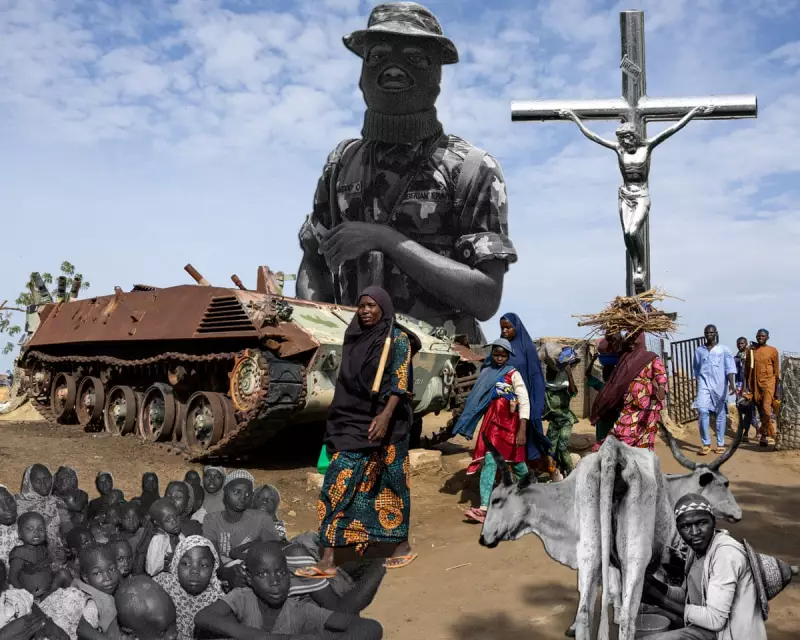
The Labyrinth of Nigeria's Enduring Security Crisis
Understanding Nigeria's complex security situation requires navigating a maze of religious tensions, ethnic conflicts and political failures that have left the country grappling with escalating violence. As one local maxim suggests: "If they explain Nigeria to you and you understand it, they didn't explain it well enough."
Religious Persecution and Minority Marginalisation
The recent abduction of more than 300 schoolchildren from a Catholic school in Niger State represents just the latest episode in a worsening security crisis. This incident follows numerous other attacks, including the killings of hundreds in Benue State and a live-streamed terrorist assault on church worshippers in Kwara State.
According to West Africa correspondent Eromo Egbejule, religious persecution represents a genuine threat in Nigeria. The implementation of Sharia law in 12 northern states following Nigeria's return to democracy from 1999 has created an environment where those not adhering to strict Islamic interpretations face violence and displacement.
However, the situation defies simple religious categorisation. While Christian communities in states like Benue and Kaduna experience persecution, Muslim groups also suffer attacks when viewed as insufficiently orthodox. Sunni extremists including Boko Haram frequently target Shia Muslims whom they consider heretics.
The country's middle belt, where much violence occurs, hosts numerous minority groups who feel increasingly marginalised. "Many Nigerian crises are essentially about the marginalisation of political, ethnic and religious minorities," Eromo explains. The most visible manifestation happens to be between Christians and Muslims, though the underlying issues run much deeper.
The Farmer-Herder Conflict and Climate Pressures
While Boko Haram's insurgency in the northeast has captured international attention, the herder-farmer conflict in Nigeria's middle belt has increasingly driven violence often misinterpreted as purely religious persecution.
Traditional symbiotic relationships between Fulani herdsmen and non-Fulani farmers have deteriorated due to multiple factors:
- Climate change and desertification pushing herdsmen further south
- Development of former grazing routes into urban areas
- Proliferation of sophisticated weaponry from Sahel conflicts
- Exploitation by criminal elements
The transformation of Abuja from grazing land to capital city with malls and complexes exemplifies how development has eliminated traditional cattle routes. With limited cattle ranching and nomadic herds prevailing, competition over diminishing resources has intensified dramatically.
This has created severely asymmetric conflicts where Christian farmers armed with machetes face herdsmen and militias with advanced weaponry. The absence of effective state policing has allowed these conflicts to escalate, resulting in what Eromo describes as "large graveyards" across affected regions.
Governance Failures and Data Deficits
Nigeria's highly centralised government structure significantly hampers security responses. "Abuja has all of the power, and there's a lot of ungoverned, or under governed, spaces," Eromo notes, highlighting the absence of state police as a critical weakness.
The country's "original sin," according to the correspondent, lies in "ignoring the minorities and focusing on regime security." Poor intelligence sharing allows non-state actors to operate freely across Nigeria's extensive forest regions, including the Sambisa forest where Boko Haram held the kidnapped Chibok schoolgirls.
Compounding these governance challenges is a severe data deficit. "Data is a luxury in Nigeria," Eromo states, noting that even basic population figures remain uncertain despite estimates of around 220 million people. Atrocities in remote areas with limited network coverage might only emerge weeks after occurring when survivors reach communication zones.
This data scarcity complicates understanding the true scale of religious persecution. Criminal motives often blend economic opportunism with ideological elements, as seen in the targeted abductions of priests who attract higher ransoms from congregations and diaspora communities.
International Attention and Complex Solutions
Recent international commentary, including former US President Donald Trump's threat of intervention citing "Christian genocide" and Nicki Minaj's UN address spotlighting Christian persecution, has generated controversy and mixed reactions within Nigeria.
While many Nigerians resent Westerners weighing in with what they perceive as unwarranted authority, some embrace international attention as potential leverage against a government they feel has ignored minority concerns.
Eromo suggests that American military intervention isn't the solution, but international pressure might prompt greater government action. For victims and survivors facing immediate threats, nuanced analysis becomes secondary to securing protection and justice.
Ultimately, Nigeria's security crisis resists simple solutions because it stems from interconnected issues including religious tensions, resource competition, climate pressures, governance failures and criminal opportunism. As Eromo concludes, "We have to tread carefully" when attempting to understand a situation where ground realities may differ significantly from available data and external perceptions.