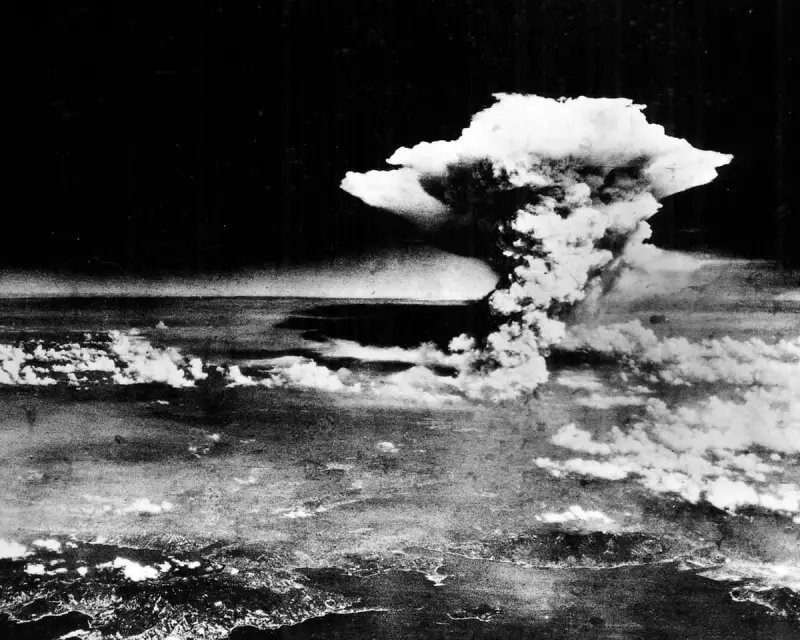
Eighty years after the United States dropped the Little Boy atomic bomb on Hiroshima, incinerating tens of thousands of people, the spectre of nuclear conflict looms larger than ever in global politics. Recent developments suggest we may be entering a dangerous new nuclear age, with former US president Donald Trump's remarks about resuming nuclear testing highlighting escalating international tensions.
The Breaking of Nuclear Taboos
Last month, Donald Trump ordered the US military to match other countries' nuclear weapons testing, prompting counter-threats from Russian president Vladimir Putin. While Trump appears to have misunderstood Russian systems tests - which, though alarming, don't breach the de facto testing moratorium - his comments reflect a worrying shift in nuclear diplomacy.
The situation represents a stark contrast to the hopeful days of 1974, when Japanese prime minister Eisaku Satō received the Nobel peace prize after committing his country to not making, owning, or allowing nuclear weapons on its territory. "I have no doubt that this policy will be pursued by all future governments," Satō assured his audience at the time.
Yet in a concerning development last week, Japan's new prime minister Sanae Takaichi declined to confirm whether her country - which understands the cost of nuclear war better than any other - would maintain this commitment.
Arms Control Breakdown and Global Consequences
Experts who previously worked on nuclear strategy are sounding alarms about the deteriorating situation. Vipin Narang and Pranay Vaddi, who both worked in the Biden administration, warn that arms control has essentially broken down and that the growing risks amount to a "Category 5 hurricane."
The last nuclear arms control treaty between Russia and the US, New Start, is due to expire in February, creating a potential regulatory vacuum. For decades, the main nuclear fear centred on terrorists or rogue states like North Korea, but now we're witnessing a resurgence of great power rivalry.
This new landscape features a more complicated contest than the old Cold War standoff. China is massively expanding its nuclear capabilities after decades of maintaining a relatively modest arsenal. This breakneck expansion reflects China's growing global might, but experts note its efforts ramped up significantly after Trump was first elected.
For unsettled US allies such as South Korea and Poland, acquiring their own nuclear arsenals is no longer considered out of the question. The nuclear taboo that has held for generations is wearing dangerously thin.
The Path Forward in a Dangerous New Era
Donald Trump's previous actions on the international stage have contributed significantly to the current crisis. During his first term, he pulled out of the intermediate-range nuclear forces treaty, which Russia had been violating. Then in 2018, he withdrew from the JCPOA nuclear deal with Iran and bombed Iran's nuclear facilities this year, despite the country not having an active weapons programme.
These moves sent a clear message to potential adversaries: the best strategy is to arm yourself as quickly as possible, following North Korea's example.
A resumption of US nuclear testing - the country last detonated a warhead in 1992 - would probably benefit adversaries more than the United States itself. It would also strengthen suspicions that non-proliferation efforts merely represent window dressing for maintaining the nuclear monopoly of a few states, rather than constituting a serious commitment to humanity's future.
Instead of escalating tensions, experts suggest Trump should challenge Putin to make good on his proposal of a one-year extension of New Start treaty limits. There's also an urgent need to revive non-proliferation endeavours by championing the comprehensive test ban treaty, which neither the US nor China have ratified, and from which Russia has withdrawn ratification.
As the subject returns to pop culture through films like Kathryn Bigelow's new movie "A House of Dynamite" - which depicts a nuclear attack targeting Chicago - and experts like Ankit Panda publish works with titles such as "The New Nuclear Age: At the Precipice of Armageddon," the urgency of the situation becomes increasingly clear. A president aspiring to a Nobel peace prize could set an example that is sorely needed in these dangerous times.