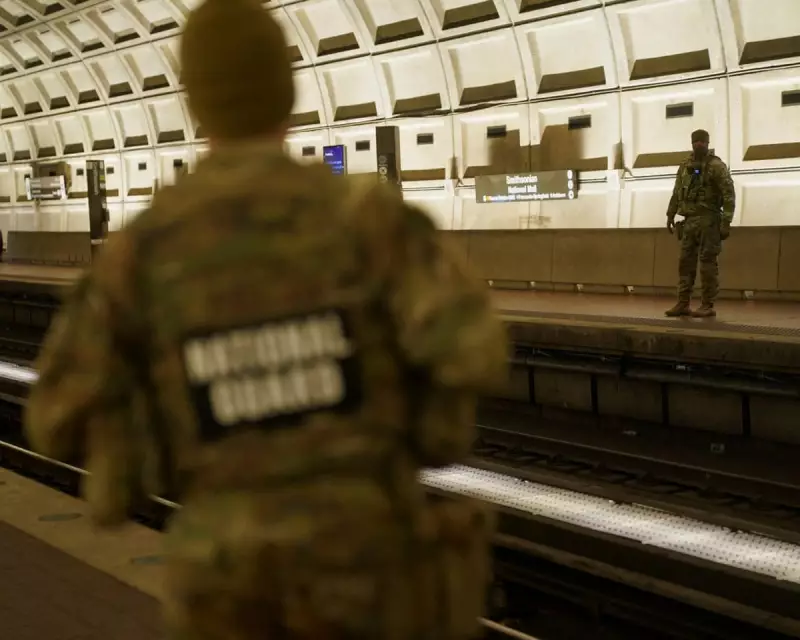
In a significant shift for security operations within the US capital, National Guard troops are now set to join local law enforcement on patrols across Washington DC. This decision comes just 48 hours after two Guard members were shot, marking a pivotal change in their deployment.
A Fluid Security Situation
According to a report in the Washington Post on Friday, the new protocol will see officers conducting high-visibility patrols alongside the National Guard. An internal email obtained by the newspaper described the situation as "fluid", indicating that further adjustments to the security plan remain possible.
The changes represent a notable evolution in how the Guard has been utilised in the district since their initial assignment back in August. The Trump administration has previously credited the presence of these troops with a significant reduction in street crime, arguing it freed up local law enforcement to focus on other priorities.
Escalating Charges and Increased Deployment
The impetus for this strategic review was a violent incident on Wednesday, 28 November. Two National Guard members were shot, one of whom, Army Specialist Sarah Beckstrom, later succumbed to her wounds. The suspect, Rahmanullah Lakanwal, now faces upgraded charges of first-degree murder. He is also accused of shooting a second guardsman, Andrew Wolfe of the West Virginia National Guard.
In response to the escalating tensions, Defence Secretary Pete Hegseth announced the deployment of an additional 500 National Guard troops to the capital. This bolsters the existing force of approximately 2,000 members currently stationed in Washington DC as part of President Trump's "Safe and Beautiful Task Force".
Operational Implications and Coordination
The move to pair guardsmen with police raises questions about the original mission. Shifting them to direct accompaniment duties could potentially undercut the crime-fighting rationale for their initial deployment. A spokesperson for the Metropolitan Police Department (MPD) emphasised close coordination with the Guard to ensure community safety but stopped short of confirming the new patrols were already in effect.
It is important to note that the National Guard members do not possess the same training as seasoned city police officers, a factor that will undoubtedly influence the dynamics of these joint operations. The coming days will reveal the effectiveness of this new security strategy in the nation's capital.