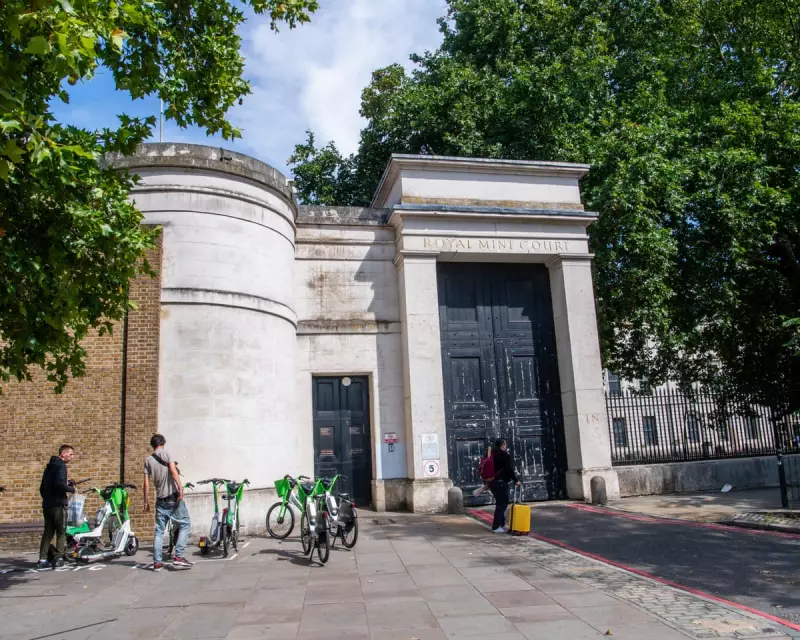
Britain's security services have expressed confidence in managing potential espionage threats from China's proposed massive new embassy in London, potentially clearing the way for the controversial development to receive approval next month.
Security Services Give Green Light
Senior MI5 officers privately informed House of Commons speaker Lindsay Hoyle during a summer meeting that they were "very relaxed" about China's plans to construct a 20,000 square metre diplomatic complex at Royal Mint Court near Tower Bridge. The Security Service believes it can effectively manage the espionage risks associated with what would become China's largest diplomatic outpost in London.
According to sources familiar with the discussion, MI5 officials indicated that the substantial expansion of China's diplomatic presence presents manageable security challenges. The revelation comes as ministers approach a 10 December deadline to decide on the planning application, having already postponed the decision twice previously.
Diplomatic Stakes and Compromise
The embassy decision has become entangled in broader diplomatic relations between London and Beijing. Labour leader Keir Starmer is reportedly planning his first bilateral visit to China in January or February next year, though insiders suggest the trip depends on the embassy receiving approval next month.
The situation has created a diplomatic standoff, with Beijing currently blocking extensive renovation works at the British embassy in China while awaiting decision on their own London project. This tit-for-tat approach echoes commitments made by former foreign secretary Boris Johnson, who wrote to his Chinese counterpart in 2018 promising that both countries' embassy projects would "develop alongside each other".
Richard Moore, who recently stepped down as chief of MI6, indicated that a compromise appears likely. "I'm sure there has to be a way through where they get an appropriate embassy and we are allowed to retain and develop our own, excellent embassy in Beijing," he told Bloomberg earlier this month.
Expert Views on Security Implications
Security experts have offered contrasting perspectives on the potential risks. Nigel Inkster, former assistant chief of MI6 and now senior adviser at the International Institute for Strategic Studies, suggested that "the size of the embassy is immaterial" from a security perspective.
"It is far easier to monitor staff centred in one location rather than dispersed all around the city," Inkster noted, adding that many countries including China now avoid conducting espionage directly from diplomatic compounds due to advanced surveillance technologies making such operations more detectable.
However, critics continue to raise concerns about security vulnerabilities, particularly regarding communication cables beneath the site that connect to the City of London. Additional objections focus on potential traffic disruptions, safety implications for local residents, and the symbolic message sent by approving such a substantial Chinese diplomatic presence.
The Chinese government has grown increasingly impatient with the delayed decision, last month demanding that the UK "immediately fulfil its obligations and honour its commitments" or face consequences. Meanwhile, MI5 director general Ken McCallum previously indicated the Security Service's confidence in handling the situation, noting that "MI5 has more than a century of experience of dealing with the national security risks which do flow from the presence of foreign embassies on British soil."
As the decision deadline approaches, the government must balance security assurances from its intelligence agencies against geopolitical considerations and domestic concerns about deepening ties with China at a time of heightened global tensions.