Security Services Issue Urgent Warning Over Chinese Espionage Campaign
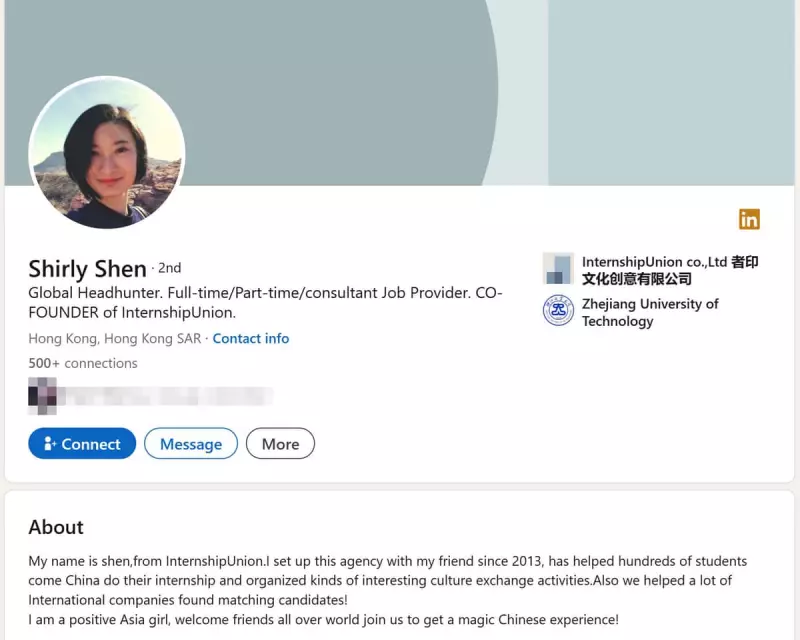
Britain's domestic intelligence agency MI5 has issued an urgent security alert warning that Chinese state security operatives are systematically targeting members of Parliament through professional networking platforms. The alert was distributed through the offices of Commons Speaker Lindsay Hoyle and his Lords counterpart after repeated approaches by recruiters including Shirly Shen and Amanda Qiu.
The sophisticated operation involves approaches from what appear to be young female headhunters based in China, offering lucrative part-time work opportunities. Targets are approached with offers of up to £20,000 for writing geopolitical reports containing "non-public" or "insider" insights, with payments typically offered in cryptocurrency or cash to maintain anonymity.
The Scale of the Threat
This latest campaign represents an escalation of tactics that MI5 chief Ken McCallum previously revealed had reached "extraordinary scale." In 2023, McCallum disclosed that Chinese agents had approached approximately 10,000 Britons on LinkedIn over the preceding two and a half years, seeking political, industrial, military and technological secrets.
The security alert took the form of a single slide distributed to parliamentary offices, deliberately designed to leak into public domain to raise awareness. MI5's strategy acknowledges that while they don't typically publish security advice, wider public awareness helps individuals identify interactions with fraudulent intent.
Security Minister Dan Jarvis told MPs that China maintains a "low threshold for what information is considered to be of value," explaining why even peripheral figures in political circles might be targeted. The long-term cultivation approach means someone currently considered insignificant could rapidly become valuable with political changes.
Legal Changes and Enforcement
The alert comes following the embarrassing collapse of prosecution against former parliamentary aide Christopher Cash and his friend Christopher Berry earlier this autumn. The two had been accused of spying for China, but their case failed on a technicality under the now-repealed Official Secrets Act.
The new National Security Act now provides stronger legal tools, with the MI5 slide explicitly warning that "those engaging in espionage activity risk significant criminal penalties." The legislation makes it a crime to engage in conduct that "materially assists a foreign intelligence service."
Despite these strengthened laws, questions remain about what Beijing hopes to gain from targeting backbench politicians and their staff. While ministers have access to classified material, ordinary MPs and peers typically do not. However, security experts note that during 2020 and 2021, UK China policy on issues including Huawei and the treatment of Uyghurs was significantly driven by backbench parliamentary pressure.
Cultural Differences in Intelligence Gathering
The scale of China's intelligence apparatus dwarfs western counterparts, with estimates suggesting approximately 300,000 people employed in intelligence activities. Chris Inglis, former US national cyber director under President Joe Biden, noted that "the Chinese have more English speakers engaged in this than we [western intelligence] have English speakers."
This vast resources allows for persistent, long-term cultivation of sources that sometimes blurs the line between legitimate relationship building and espionage. The approach reflects wider geopolitical tensions between China and western nations, operating below the threshold of outright conflict but involving significant cyber operations and influence campaigns.
Recent cybersecurity incidents including the Salt Typhoon penetration of phone and data networks in 80 countries and the Volt Typhoon compromise of millions of internet devices demonstrate the breadth of Chinese intelligence activities. The LinkedIn recruitment campaign represents just one facet of this comprehensive approach to information gathering.
Security officials emphasise that the campaign's persistence suggests Beijing engages in these activities not just for specific intelligence gains, but to demonstrate capability, display power, and test western defences. The fact that these approaches continue despite previous exposure indicates they consider the potential rewards worth the diplomatic repercussions.