Ceremonial Sword Display as Maduro Invokes Bolívar's Legacy
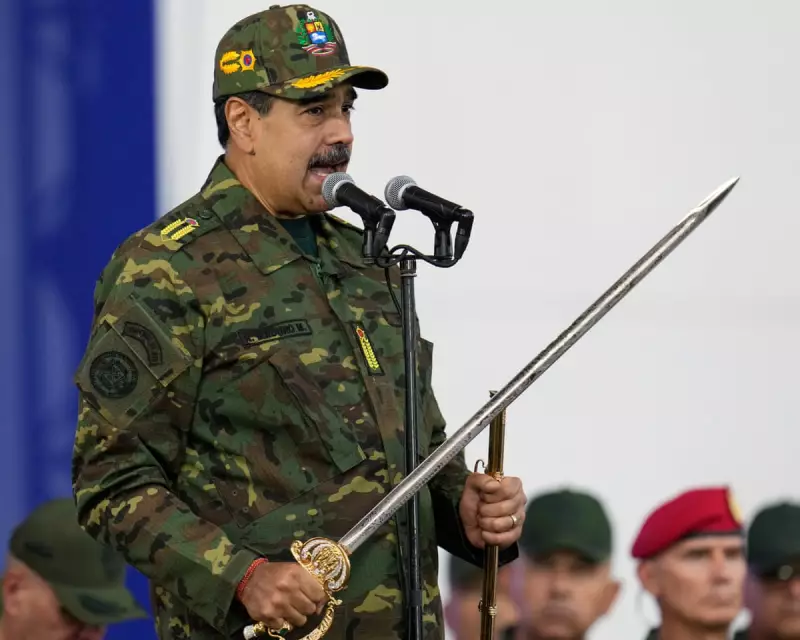
In a dramatic display of nationalist fervour, Venezuelan President Nicolás Maduro brandished a ceremonial sword said to have belonged to independence hero Simón Bolívar during a rally in Caracas on Tuesday. The symbolic gesture came as the authoritarian leader faces increasing pressure from the United States, with President Donald Trump warning he could take action "the easy way ... or the hard way."
Photographs from the event show Maduro clad in woodland camouflage fatigues, holding the historic sword aloft before a crowd of supporters. He told attendees it was their historic duty to fight foreign aggressors, mirroring Bolívar's struggle for liberation two centuries earlier.
Trump's Mysterious Caribbean Military Buildup
Speaking to reporters aboard Air Force One while en route to Florida, President Trump declined to specify the precise objectives behind his four-month campaign against Venezuela. Many observers suspect the ultimate goal is overthrowing Maduro, who is widely believed to have stolen last year's presidential election.
The substantial US military deployment in the Caribbean Sea has been officially characterised as part of a crackdown on Latin American drug traffickers allegedly "flooding" the United States with narcotics. Washington has accused Maduro of leading a narco "cartel" called the "Cartel of the Suns," which was designated a foreign terrorist organisation this week, though many experts question the group's actual existence.
"I'm not going to tell you what the goal is. You should probably know what the goal is," Trump stated cryptically, adding that he "might" engage in talks with Maduro. "If we can save lives, if we can do things the easy way, that's fine. And if we have to do it the hard way, that's fine too."
Venezuela's Defiant Response and Potential Outcomes
Maduro's response was unequivocal during his Tuesday address to what he called "the revolutionary people of Caracas." "We have to be capable of defending every inch of this blessed land from any sort of imperialist threat or aggression, wherever it comes from," he declared.
The Venezuelan leader made a solemn pledge, stating: "I swear before our Lord Jesus Christ, that I will give my all for the victory of Venezuela," vowing to protect the nation's skies, mountains, and plains.
According to sources with regular contact with top Venezuelan officials, Maduro and most of his inner circle view US military threats as a bluff. "Maduro believes that the only way the US can oust him is by sending troops to Caracas," a source told the Wall Street Journal this week.
Given Trump's known reluctance to commit US troops to overseas combat, such an invasion appears highly improbable. However, many analysts suspect that after conducting more than ten deadly airstrikes targeting alleged drug-smuggling vessels in the Caribbean Sea, Trump's next move might involve strikes on Venezuelan soil.
Douglas Farah, a national security consultant and Latin America expert who advised the US government on Venezuela during Trump's first term, expressed his concerns: "I think that we're going to start blowing things up. I think we have to do something because there's too big a force there [in the Caribbean] to not do something."
Farah's primary apprehension is that even if the US launches attacks—perhaps targeting major Caribbean ports used for cocaine smuggling—such actions might fail to remove Maduro from power, similar to Trump's unsuccessful attempt to oust him in 2019. "[If that happens] Maduro will feel empowered. He'll say: 'Yeah, I defeated the United States,'" Farah warned, suggesting that any chance of the Venezuelan leader leaving power "in some sort of orderly fashion will be gone again for another 10 years."
The future of Venezuela, South America's sixth-largest country and the nation with the world's largest proven oil reserves, remains uncertain as both leaders maintain their confrontational positions.