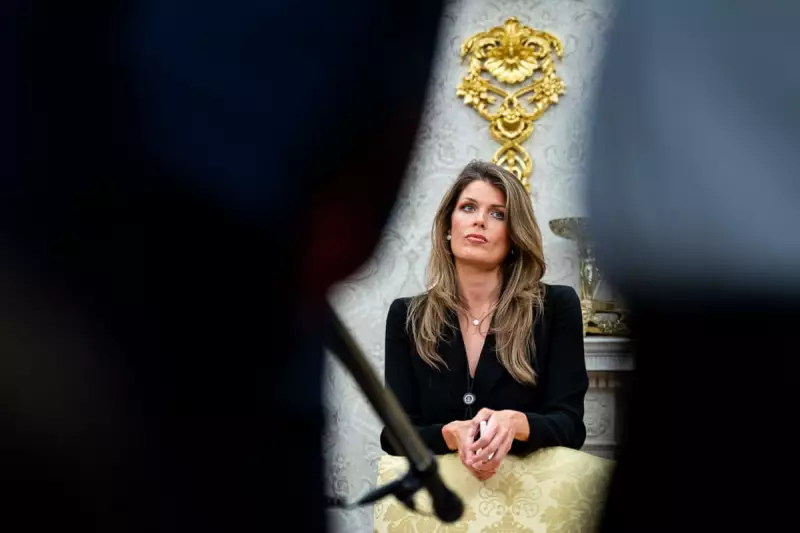
Lindsey Halligan, a federal attorney appointed by former President Donald Trump, has officially left her position at the US Justice Department. Her departure was confirmed by Attorney General Pam Bondi on Tuesday, marking the end of a contentious tenure marked by judicial scrutiny and failed legal actions against political adversaries.
Background of the Controversial Appointment
Halligan, who previously served as Trump's personal attorney, was sworn in as the interim US attorney for the eastern district of Virginia in September. This appointment came after the president removed her predecessor, who had declined to pursue charges against Letitia James, the New York attorney general, and James Comey, the former FBI director. Notably, Halligan had no prior prosecutorial experience before assuming this high-profile role.
Failed Prosecutions and Judicial Backlash
During her brief stint, Halligan oversaw indictments brought against James and Comey, which were widely criticised as politically motivated and vindictive. In November, a judge dismissed these cases, ruling that Halligan had been unlawfully appointed and lacked the legal authority to bring the indictments. The judge emphasised that her appointment violated statutory requirements, as her predecessor had already served the maximum 120-day interim period, meaning federal judges in the district held exclusive authority to fill the position.
This ruling sparked a broader judicial revolt, with at least six federal judges rejecting the Justice Department's argument that the administration could make back-to-back interim appointments. The controversy escalated further this week when federal judge David Novak took direct action, ordering the removal of the title "United States attorney" from Halligan's signature on legal documents. Novak warned that any continued use of the title would constitute a false statement and could lead to disciplinary proceedings.
Escalating Scrutiny and Official Vacancy Declaration
Halligan's departure coincides with mounting pressure from the judiciary. In a separate order on Tuesday, Chief Judge M Hannah Lauck of the eastern district of Virginia directed court clerks to publish a job posting for the US attorney position, formally declaring it vacant. This move underscores the legal establishment's rejection of Halligan's authority and the administration's appointment practices.
Attorney General Pam Bondi praised Halligan in a social media statement, commending her for fulfilling responsibilities "with courage and resolve." Bondi lamented what she described as "deeply misguided" circumstances hindering a democratically elected president's ability to staff key law enforcement roles. However, Halligan and representatives from the US attorney's office did not respond to requests for comment on Tuesday night.
Implications for the US Justice System
This episode highlights ongoing tensions between the executive branch and the judiciary over appointments and prosecutorial independence. The case raises significant questions about the lawful exercise of power within the US justice system, particularly regarding interim appointments and the politicisation of legal proceedings. As the search for a new US attorney begins, the legacy of Halligan's tenure serves as a cautionary tale about the importance of adhering to legal protocols and maintaining the integrity of federal prosecutions.