A senior Libyan military commander has been killed alongside seven others after a private jet crashed in Turkey, dealing a severe blow to the war-torn nation's fragile political landscape.
A Fatal Return Journey
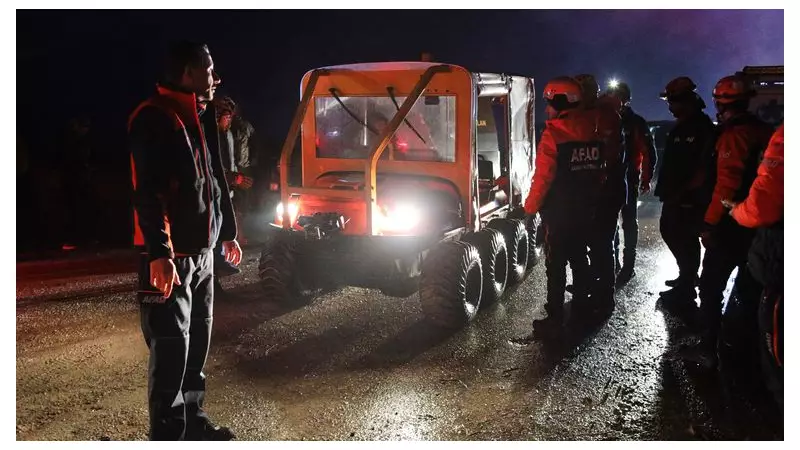
The aircraft, a Falcon 50-type jet, took off from Esenboga airport in the Turkish capital, Ankara, at 8.30pm on Wednesday 24 December 2025. On board were five high-ranking Libyan officials and three crew members. Shortly after departure, the plane issued an emergency landing signal near the district of Haymana, south of the city, before all communication was lost.
Turkish rescue teams subsequently located the wreckage. General Muhammad Ali Ahmad al Haddad, the chief of staff of the Libyan army and the top military commander in western Libya, was confirmed among the dead.
Prominent Figures Lost
In a statement, Libyan Prime Minister Abdul-Hamid Dbeibeh named the other military officials who perished. They were:
- General Mohammed al Asawi Diab, General Haddad's adviser.
- General Al-Fitouri Ghraibil, chief of staff of Libya's ground forces.
- General Mahmoud al Qatawi, director of the Military Industrialization Organisation.
- Military photographer Mohammed Omar Ahmed Mahjoub.
Mr Dbeibeh stated the group was returning from an official trip to Ankara. He described the incident as a "grave affliction" and a "great loss to the homeland," praising the men for their service, discipline, and national commitment.
A Blow to Military Unification
The crash has significant implications for Libya's stability. General Haddad was a crucial figure in ongoing UN-backed efforts to unify Libya's military, which has been split for years.
The nation has been divided since the fall of Muammar Gaddafi in 2011, with rival administrations in the east and west. Mr Dbeibeh leads the internationally-recognised government in Tripoli, while military strongman Khalifa Haftar controls the east.
On the day of the crash, General Haddad had met with Turkish Defence Minister Yasar Guler and his Turkish counterpart Selcuk Bayraktaroglu, along with other Turkish military commanders. His death creates a major vacuum in the western Libyan military hierarchy and complicates delicate diplomatic and unification processes.
The Turkish interior minister, Ali Yerlikaya, confirmed the search operation and the recovery of the wreckage. An investigation into the cause of the crash is expected to follow.