Scenes of utter devastation define the landscape of Lebanon's southern border towns, where Israeli military strikes have left communities shattered and homes uninhabitable. A year after a truce was supposed to bring calm, the reality on the ground tells a story of continued violence and broken promises.
A Landscape of Ruin and Loss
The town of Aita al Chaab, once home to 14,000 people and a Hezbollah stronghold, now lies virtually unrecognisable. Most residents have fled the area, which sits just a kilometre from the Israeli border. A handful of families returned, desperate to rebuild under the supposed safety of the ceasefire that began in November 2024.
For Nehmeh Mahmoud al-Zein, that hope turned to tragedy. He was among the first to return, opening a coffee shop. "On the very first day we opened, the Israelis killed my son with a drone, right outside my coffee shop! In front of my eyes!" he told Sky News, spitting with rage. His son, 26-year-old Hassan, is one of more than 300 people killed by Israel during the truce period, according to Lebanese government figures.
The sentiment that Israel is deliberately preventing reconstruction is widespread. "They don't let us rebuild. They don't want us to come back," al-Zein stated, a refrain echoed by many other residents.
Civilian Casualties and a Family Destroyed
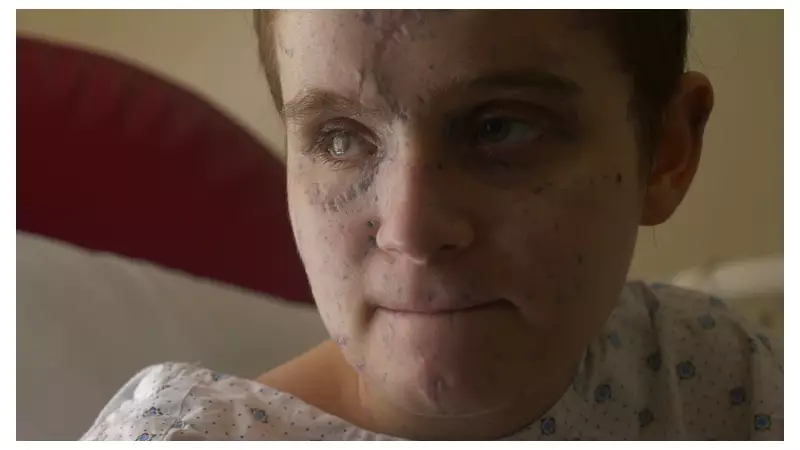
The human cost of the ongoing strikes is embodied by 12-year-old Aseel, recovering in a Beirut hospital. Her face is marked with embedded shrapnel, her right eye blinded and her left eye with only partial sight. She and her mother, Amina, are the sole survivors of an Israeli drone attack that killed the rest of their family near Bint Jbeil.
Amina described the horrifying moment in her first interview since leaving hospital. Initially thinking her phone had exploded, she regained consciousness to find her husband Chadi with half his body missing. Her twin babies, Hadi and Silan, were decapitated in their car seats. Her 10-year-old daughter Celine, who initially seemed less injured, died from catastrophic internal bleeding soon after.
"Why did I have to see this? Why? I can't get these images out of my head," Amina sobbed. "I live only for Aseel. But I want justice. I want those who killed them to stand trial." The family had been in the final stages of securing visas to move to the United States after their home was damaged in a previous airstrike.
In a rare admission, the Israeli military stated the strike had killed "several uninvolved civilians" and expressed regret for "any harm".
Growing Tensions and Disputed Justifications
The Israel Defence Forces (IDF) maintains its strikes are acts of self-defence, asserting that Hezbollah is rearming and regrouping south of the Litani River, presenting a continued danger. However, United Nations peacekeepers on the ground contest this claim.
A UN major accompanying Sky News crews said, "I think most of the Hezbollah has retreated north of the Litani. We just haven't seen any evidence on the ground that there is that much activity anymore." This assessment was supported by the UN's overall commander in south Lebanon, Diodato Abagnara, who told Israel's Channel 12 he had also seen "no evidence" of rearmament.
Abagnara condemned the continued airstrikes as "blatantly violating the ceasefire agreement" and noted Israel remains in five military positions along the Blue Line, contravening UN Security Council resolution 1701. The UN has documented over 10,000 ceasefire violations since the truce began, the vast majority attributed to Israel.
Tensions between UN monitors and the IDF are rising, with increasing complaints about attacks near UN forces. On 9 December 2025, the IDF said it fired warning shots at an "approaching subject". The UN states it provides the IDF with advanced details of all patrol routes and timings.
A Wall, Seized Land, and a Century of Resilience
On the ground, Israel's construction of a long wall along the Blue Line continues. UN monitors report the wall encroaches on Lebanese territory in two areas, cutting off around 4,000 square metres from residents. Farmers in towns like Kfar Chouba say much of their land is now inaccessible, with one family claiming 90% of their farmland is under effective Israeli control.
Despite the truce mandating withdrawal, residents provided video evidence of Israeli troops moving through Kfar Chouba, bulldozing homes, laying and detonating mines, and trashing farms.
Zahia Kassab, 97, the oldest resident of Kfar Chouba, summarised the relentless cycle: "We've built our house three times. We build. Israel destroys. We build. Israel destroys. They should go away from here."
In a rare interview, Dr Rima Fakhry, the only woman on Hezbollah's political council, stated the group would never disarm, arguing Israel attacked Lebanon long before Hezbollah's existence. She placed the onus on the United States: "We really believe the Israelis' decision is in the hands of the Americans. If the Americans forced Netanyahu and Israel to stop the war and the aggression today, they'd stop it."
As the wall rises and the strikes continue, the promised peace along Lebanon's southern border remains a distant prospect, overshadowed by devastation and a mounting civilian death toll.