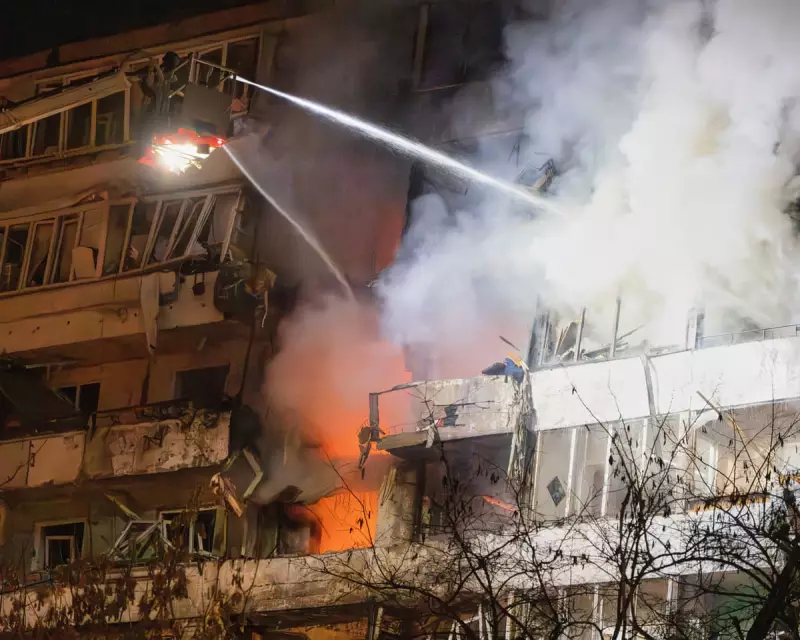
Night of Terror in Kyiv
Firefighters worked desperately to extinguish a major blaze that engulfed a residential building in Kyiv on 25 November 2025, following a direct hit by a Russian drone. The attack formed part of a massive barrage of missile and drone strikes launched by Vladimir Putin's forces, killing seven people and causing widespread destruction and heating outages across the Ukrainian capital.
As the night assault unfolded, the immediate reality of Ukraine's vulnerability was laid bare. American F-16 fighter jets, supplied by European allies, roared overhead while Patriot air-defence systems, likely provided by the US or Germany, thundered into action against incoming ballistic missiles.
Diplomatic Battles and Failed Initiatives
The military offensive came just hours after US Secretary of State Marco Rubio had spoken of "substantial progress" following Ukraine-US talks in Geneva, creating a stark contrast between daytime diplomacy and nighttime brutality. This sequence captured the grim essence of the conflict throughout the year.
The recently proposed 28-point peace plan from Washington, which had sparked intense debate and concern, lasted merely seven days before collapsing. According to analysis by former Ukrainian foreign minister Dmytro Kuleba, this followed a familiar pattern where diplomatic initiatives from the Trump administration are fended off by Kyiv and European capitals, stabilising the situation without ever winning the battle.
Ukraine's Critical Dependence
The 24-hour period highlighted Ukraine's critical military reliance on the United States, a dependency that Europe cannot fill in the short term. From intelligence capabilities tracking missile launches to air defence systems and fighter jets, Western equipment proved essential in defending against the onslaught.
Kuleba argues that while Washington operates on the premise that you cannot win at the negotiating table what has been lost on the battlefield, it simultaneously fails to deter Moscow from believing the situation will shift further in Russia's favour. This leaves Putin convinced that time is on his side and that Ukraine and its partners are approaching exhaustion.
The fundamental conclusion for Kyiv and European capitals is clear: only by standing together and accelerating defence capabilities can they fend off diplomatic offensives from Washington that reflect Russian demands. For the foreseeable future, however, Ukraine's ability to repel nightly air assaults will continue to rely heavily on American support.