Federal Judge Upholds ICE Operation in Minneapolis Despite Fatal Shootings and Protests
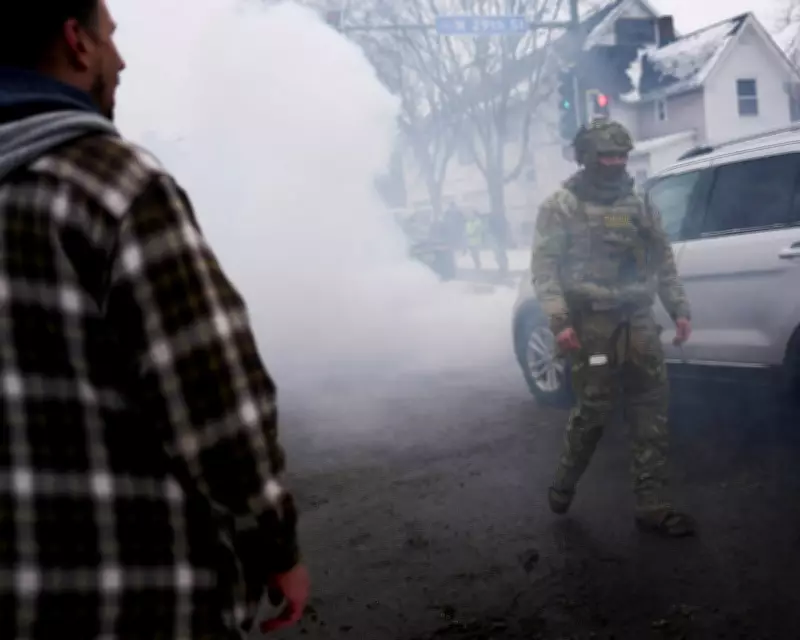
A federal judge has denied a request by the state of Minnesota to end a contentious federal immigration operation in Minneapolis, which has resulted in the deaths of two individuals and ignited weeks of sustained protests across the city. The ruling, delivered on Saturday by Judge Kate Menendez, allows the Trump administration's Operation Metro Surge to continue, despite mounting criticism and legal challenges.
Legal Battle Over Constitutional Authority and State Autonomy
The state government, alongside the cities of Minneapolis and St. Paul, filed a lawsuit following the fatal shooting of Renee Good by an Immigration and Customs Enforcement (ICE) agent earlier this month. This legal action demanded an immediate cessation of the operation, citing violations of the 10th Amendment, which protects states' rights from federal overreach. Subsequently, a second victim, Alex Pretti, was shot and killed by federal agents while protesting ICE's presence, further intensifying public outrage and condemnation.
In her decision, Judge Menendez, appointed to the bench during Joe Biden's presidency in 2021, acknowledged the operation's profound and even heartbreaking impact on Minneapolis. She noted evidence of racial profiling, excessive force, and other harmful actions by ICE and Customs and Border Protection (CBP) agents. However, she concluded that the plaintiffs failed to demonstrate a clear violation of the 10th Amendment, stating that their arguments lacked a precise metric to distinguish lawful enforcement from unlawful commandeering.
Political and Public Reactions to the Ruling
US Attorney General Pam Bondi hailed the ruling as a HUGE win for the administration, asserting on social media that neither sanctuary policies nor litigation would hinder federal law enforcement in Minnesota. Conversely, Brian Carter, a lawyer representing Minnesota, described the situation as unprecedented in the 250-year history of our country, likening the deployed agents to an army engaged in widespread illegal conduct.
President Trump has indicated a potential de-escalation in response to the shootings, dispatching border czar Tom Homan to oversee the operation. Nevertheless, the administration maintains that ICE agents are acting within legal boundaries to uphold federal immigration laws. This ruling coincides with nationwide protests organized by the grassroots group 50501, with over 300 demonstrations planned across all 50 states and Washington DC under the banner ICE Out of Everywhere.
Broader Context and Ongoing Controversies
The fatalities in Minneapolis are part of a larger pattern, with eight deaths reported in ICE interactions so far in 2026, including incidents in Texas and Los Angeles. The ongoing operation has sparked a fierce debate over federal versus state powers, immigration enforcement tactics, and civil liberties. As protests continue to swell, the community remains deeply divided, with many calling for accountability and reform in immigration policies.
This case underscores the complex interplay between federal authority and local governance, highlighting the tensions that arise when aggressive enforcement measures lead to tragic outcomes. The legal and social ramifications are likely to persist, influencing future policies and public discourse on immigration in the United States.