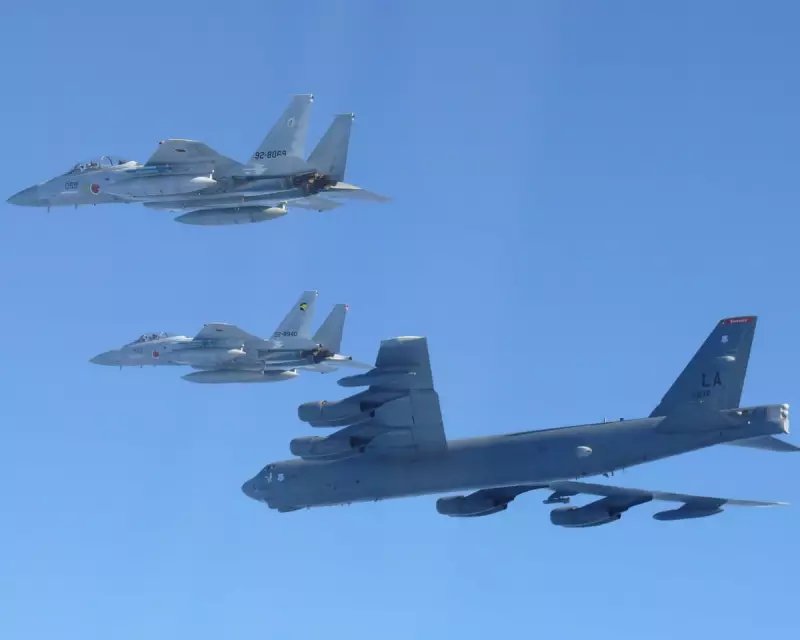
Japan's cabinet has greenlit a record-breaking defence budget for the coming fiscal year, marking a significant military build-up as strategic tensions with China continue to intensify. The move follows recent joint military drills between Japanese F-15 fighter jets and a US B-52 bomber over the Sea of Japan and comes amid a fierce war of words with Beijing over Taiwan and space policy.
A Historic Budget for a New Defence Posture
The draft budget, approved on Friday, stands at over ¥9 trillion (approximately $58 billion or £46 billion). This represents a substantial 9.4% increase on the previous year's spending and is the fourth instalment in Japan's ambitious five-year plan to double its annual arms expenditure to 2% of GDP. The financial boost is squarely aimed at enhancing what officials term "strike-back capability" and fortifying coastal defences.
Key investments include new surface-to-ship missiles and a major push into unmanned systems. Notably, the defence ministry plans to spend ¥100 billion to deploy a "massive" network of air, sea-surface, and underwater drones for surveillance and defence. This system, codenamed "Shield," is scheduled for deployment by March 2028.
Escalating Rhetoric and the Taiwan Flashpoint
The budgetary increase unfolds against a backdrop of sharply deteriorating relations between Tokyo and Beijing. The situation imploded last month after Japanese Prime Minister Sanae Takaichi stated that Japan would likely become militarily involved should China attack Taiwan. Beijing, which claims the self-ruled island as its territory, reacted furiously with diplomatic and economic retaliatory moves.
Chinese officials have since seized on every Japanese military announcement. In a recent briefing, China's defence ministry accused Japan of "fuelling a space arms race" through its space technology developments, some conducted in cooperation with the United States. Ministry spokesperson Zhang Xiaogang went further, invoking Japan's wartime past by saying its offensive space policy raised concerns about "another Pearl Harbor scenario."
Regional Security and the US Alliance
Japan's current security strategy explicitly identifies China as its biggest strategic challenge and calls for a more assertive role in its security cooperation with the United States. The recent B-52 drill underscores this deepening alliance. Meanwhile, China is simultaneously criticising substantial US arms sales to Taiwan, which it views as emboldening separatist forces.
Incidents between Chinese and Japanese forces are adding to the friction. Earlier this month, Chinese aircraft locked their radar on Japanese aircraft during drills near south-western Japan—an act considered highly provocative as it simulates an attack sequence. Tokyo lodged a formal protest.
This record budget signals Japan's steadfast commitment to a major military transformation, underpinned by a 2015 constitutional reinterpretation allowing for collective self-defence. As China continues its own rapid military modernisation, focused heavily on Taiwan, the stage is set for continued strategic competition in East Asia.