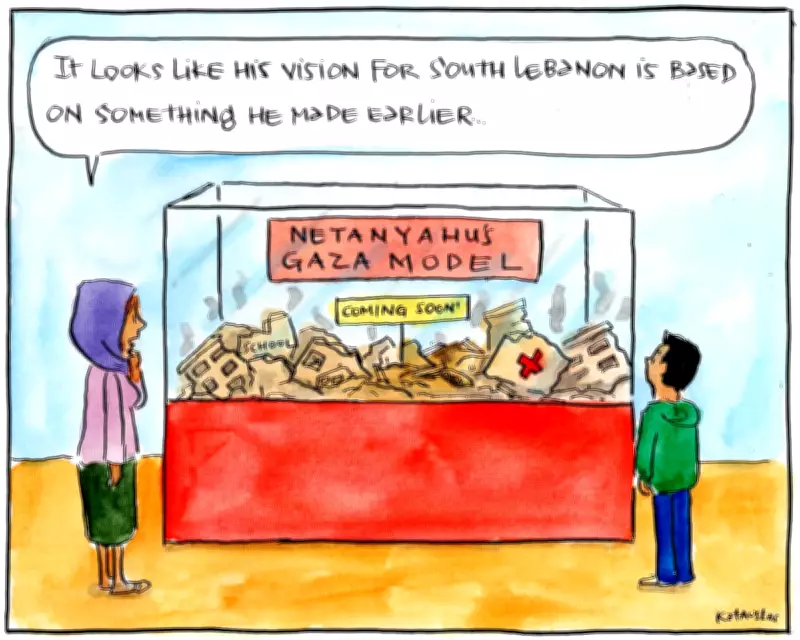
Israel's Strategic Blueprint for Lebanon: A Comprehensive Analysis
In recent years, Israel's approach to Lebanon has evolved into a multifaceted strategy that combines military deterrence, political maneuvering, and economic pressure. This plan is not merely a reaction to immediate threats but a long-term vision aimed at reshaping the regional landscape. Understanding this blueprint requires a deep dive into its components and the historical context that informs it.
Military Posture and Deterrence
Israel's military strategy in Lebanon is primarily focused on countering the influence of Hezbollah, a powerful Shiite militant group based in southern Lebanon. The Israeli Defense Forces (IDF) have conducted numerous operations, including airstrikes and covert missions, to disrupt Hezbollah's weapons supply chains and infrastructure. These actions are designed to prevent the group from amassing advanced weaponry, such as precision-guided missiles, which could threaten Israeli cities.
Moreover, Israel has invested heavily in intelligence-gathering capabilities, using drones, satellites, and cyber operations to monitor Hezbollah's activities. This proactive stance is intended to maintain a technological edge and ensure early warning of potential attacks. The IDF's "Dahiya doctrine," named after a Beirut neighborhood heavily bombed in the 2006 war, emphasizes overwhelming force in response to aggression, aiming to deter future conflicts by imposing significant costs on adversaries.
Political and Diplomatic Maneuvers
Beyond military measures, Israel's plan for Lebanon includes a robust political dimension. Israel has sought to leverage international diplomacy to isolate Hezbollah and its backers, particularly Iran. This involves lobbying for sanctions and condemning Hezbollah's activities in global forums like the United Nations. By framing Hezbollah as a terrorist organization, Israel aims to delegitimize it and curb its political influence within Lebanon's fragile government.
Additionally, Israel has engaged in indirect talks with Lebanese officials through mediators, exploring potential agreements on maritime borders and resource sharing in the Eastern Mediterranean. These efforts are part of a broader strategy to foster economic stability in Lebanon, which could reduce Hezbollah's appeal among the populace. However, progress has been slow due to deep-seated animosities and Lebanon's internal political divisions.
Economic and Humanitarian Considerations
Israel's strategy also incorporates economic elements, recognizing that Lebanon's ongoing crisis—marked by hyperinflation, unemployment, and a collapsing infrastructure—creates fertile ground for extremism. While Israel has provided limited humanitarian aid in coordination with international organizations, its primary focus is on preventing Hezbollah from exploiting the crisis to strengthen its position. This includes monitoring and disrupting illicit financial networks that fund the group's operations.
Furthermore, Israel has expressed concerns about Lebanon's potential as a failed state, which could lead to increased refugee flows and regional instability. As such, part of Israel's plan involves supporting international efforts to stabilize Lebanon, albeit from a distance, to prevent spillover effects that could threaten its own security.
Future Implications and Regional Stability
The long-term implications of Israel's plan for Lebanon are profound. If successful, it could weaken Hezbollah's military capabilities and political clout, potentially leading to a more stable and less hostile northern border. However, this outcome is far from guaranteed. Hezbollah remains a resilient force with deep roots in Lebanese society and strong backing from Iran, making any significant reduction in its influence a challenging endeavor.
Moreover, Israel's actions risk escalating tensions, as seen in recent cross-border skirmishes that have raised fears of a broader conflict. The regional context, including Iran's nuclear ambitions and Syria's civil war, adds layers of complexity, meaning Israel's plan must be adaptable to shifting dynamics. Ultimately, the success of this strategy will depend on a delicate balance of force, diplomacy, and economic pressure, with the goal of securing Israel's interests while avoiding a devastating war.
In conclusion, Israel's plan for Lebanon is a comprehensive and evolving strategy that reflects the country's security priorities in a volatile region. By combining military deterrence, political isolation, and economic pressure, Israel aims to neutralize threats and promote stability, but the path forward is fraught with uncertainties that could reshape the Middle East for years to come.