Israel's Escalating Conflict in Lebanon Draws Global Concern
The intense global focus on the conflict between Donald Trump, Benjamin Netanyahu, and Iran has overshadowed another critical crisis: Israel's escalating war in Lebanon. According to the Lebanese health ministry, Israeli strikes have now killed almost 1,100 people and displaced approximately one-fifth of the country's population, creating a severe humanitarian emergency.
Occupation Threats and Military Escalation
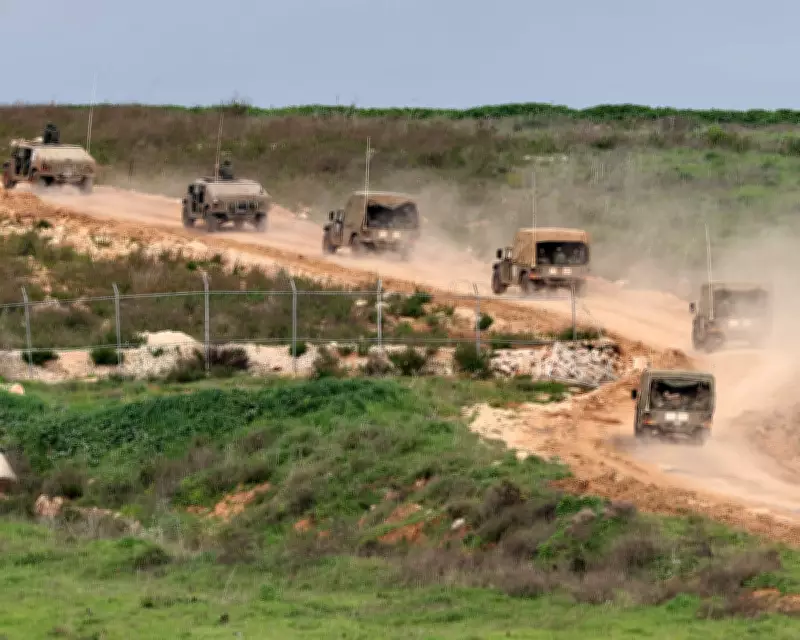
Israeli Defense Minister Israel Katz recently announced plans for a new occupation of Lebanon, describing it as a "defensive buffer" extending up to the Litani River, about 30 kilometers north of the border. This move, which implies a prolonged military presence, would be illegal under international law. Far-right Finance Minister Bezalel Smotrich has gone further, calling for outright annexation of Lebanese territory.
The conflict began when Hezbollah fired rockets into Israel following attacks on its patron Iran. Israel responded with what it initially called "precise and targeted strikes," but the offensive quickly escalated beyond those parameters.
Civilian Infrastructure Under Attack
Human rights organizations report that Israel has employed tactics similar to those used in Gaza, including forced mass displacement of civilians and systematic targeting of critical infrastructure. Bridges, water systems, and sanitation facilities have been hit repeatedly, while health workers accuse Israeli forces of deliberately targeting medical facilities.
Human Rights Watch has documented the use of white phosphorus in populated areas, and Defense Minister Katz has stated that Israel will demolish homes along the border, mirroring the destruction seen in Rafah and Beit Hanoun in Gaza.
Political Calculations and Regional Dynamics
Prime Minister Benjamin Netanyahu, fighting ongoing corruption charges and determined to restore his political legacy, appears committed to perpetual conflict. His far-right coalition partners advocate for maximalist territorial expansion, while Israel sees an opportunity to eliminate Hezbollah while the group remains isolated without Syrian support or Iranian assistance.
However, analysts warn that another occupation could actually strengthen Hezbollah's support base, as Lebanese civilians become increasingly dependent on the group for basic survival needs. The Lebanese government has taken limited steps to curb Hezbollah's influence but lacks the capacity for meaningful disarmament as required by previous ceasefire agreements.
International Complicity and Failed Diplomacy
The widespread failure to take meaningful action against Israel for atrocities committed in Gaza has emboldened Netanyahu's government. Since the Gaza ceasefire was announced, Israeli military operations have killed hundreds more Palestinians, and the humanitarian crisis continues unabated.
With the Trump administration focused on its conflict with Iran and showing little concern for Lebanon's plight, France has been left to seek diplomatic solutions. The U.S. has reportedly asked Israel to spare Christian communities, a request that critics say could facilitate ethnic cleansing rather than prevent civilian casualties.
Western allies, including the United Kingdom, face mounting pressure to apply genuine diplomatic and economic pressure on Israel rather than remaining complicit in what human rights advocates describe as potential war crimes. The international community's tepid response to Gaza's devastation has created conditions where similar atrocities could unfold in Lebanon without meaningful intervention.