More than 1.2 million people have been forced to flee their homes amid bombings, evacuation orders, and demolitions in southern Lebanon. Israel's destruction occurred in phases, starting hours after Hezbollah launched rockets on 2 March. The Israeli military issued forced evacuation orders for over 100 villages near the border, followed by intense bombing. Tens of thousands of residents headed north to cities like Tyre, Sidon, and Beirut, while many outside formal evacuation zones also fled, recalling the 2024 war.
Phased Evacuation Orders
On 4 March, Israel ordered all people south of the Litani River to move north. By 12 March, evacuation orders extended to the Zahrani River, and later to Beirut's southern suburbs. In total, Israel ordered roughly 14.3% of Lebanon's territory vacated, displacing over 1.2 million people. The vast majority came from south Lebanon, where bombing was concentrated.
Continued Displacement and Occupation
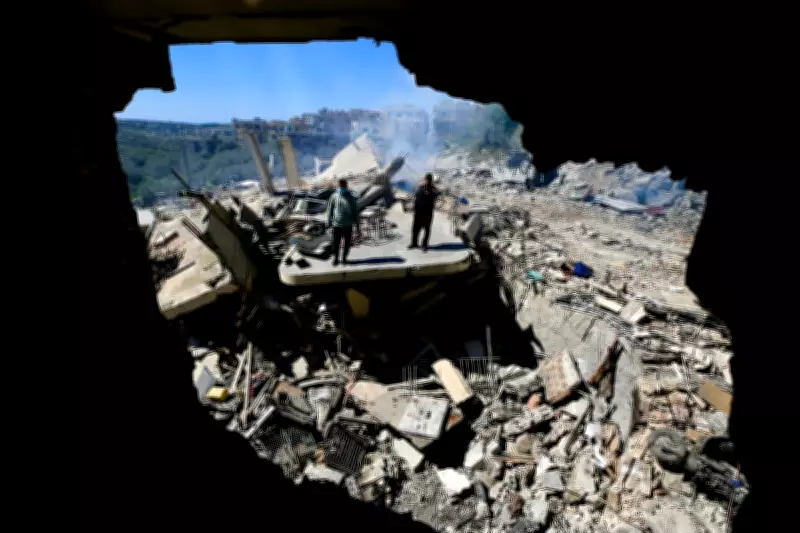
More than two months later, most residents remain displaced. Many homes lie in ruins from airstrikes or controlled demolitions. Return is impossible for those in areas under the "yellow line," an Israeli-occupied zone of about 608 sq km (6% of Lebanese territory) established after the 17 April ceasefire. Despite the ceasefire, Israel continues strikes, and Hezbollah attacks Israeli soldiers there.

The yellow line concept originated in Gaza, part of military techniques transplanted to Lebanon. Defense Minister Israel Katz ordered the "Rafah and Beit Hanoun model" for south Lebanon, involving village demolitions along the border.
Intense Bombing Campaign
Between 2 March and 1 May, there were over 3,688 Israeli strikes, according to Acled, mostly in south Lebanon, Beirut's southern suburbs, and the Bekaa valley. Houses, valleys, and cars were hit, with civilian infrastructure explicitly targeted. On 12 March, Israel began bombing bridges over the Litani River, claiming Hezbollah used them. Human rights groups said this could be a war crime due to their civilian use.
For those trapped in south Lebanon, each destroyed bridge cut off another escape route. Hours before the 17 April ceasefire, Israel bombed the last bridge out of Tyre, forcing people to abandon cars and walk through the crater.
Demolitions and War Crimes
Fighting continued after the ceasefire, described as a lower-intensity war. Israel issued more evacuation orders, and with south Lebanon depopulated, demolitions increased. Civilian contractors used excavators to knock down buildings. In Qantara, over 450 tonnes of explosives flattened the hillside town, leaving a sandy crater. "You feel a deep sense of frustration. Like someone has the power to erase you," said Ahmad Abu Taam, a shop owner from Taybeh.
Satellite images show villages unrecognizable. At least 2,154 buildings have been damaged or destroyed, per Conflict Ecology. Human Rights Watch said demolitions could amount to wanton destruction, a war crime. Israel claims it targets Hezbollah infrastructure in civilian areas, but HRW says this does not justify widespread destruction.
In Marwahin, Israel blew up a public secondary school, posting a photo of alleged Hezbollah arms. The Legal Agenda said the weapons were hunting rifles confiscated by local authorities, photographed in a court room.
Casualties and Escalation
Over 2,846 people have been killed and 8,693 wounded by Israeli strikes since the war began. The death rate slowed after the 17 April ceasefire, but airstrikes continue daily. On Friday, a civil defense employee died near Rachaya; the night before, three people, including an infant, were killed in Duweir. Hezbollah targets Israeli troops with increasing success, while Israel pushes past previous red lines, including bombing Beirut's southern suburbs on Wednesday.
Lebanese fear the ceasefire could collapse before Washington negotiations reach an armistice, plunging the country back into war.