
Israeli Airstrike Targets Hezbollah Leadership in Beirut
In a significant escalation of tensions, the Israeli military has conducted an airstrike on Lebanon's capital, Beirut, marking the first such attack since June. The strike, which occurred on Sunday 23 November 2025, specifically targeted the chief of staff of the militant group Hezbollah, according to Israeli officials.
The office of Israeli Prime Minister Benjamin Netanyahu confirmed the operation, stating that the Israel Defence Forces (IDF) attacked the Hezbollah chief of staff in the heart of Beirut. A statement from Netanyahu's office declared that the targeted individual, Ali Tabtabai, had been leading the group's build-up and rearmament efforts. The Prime Minister reportedly ordered the strike upon the recommendation of the defence minister and the IDF chief of staff.
Strike Details and Immediate Aftermath
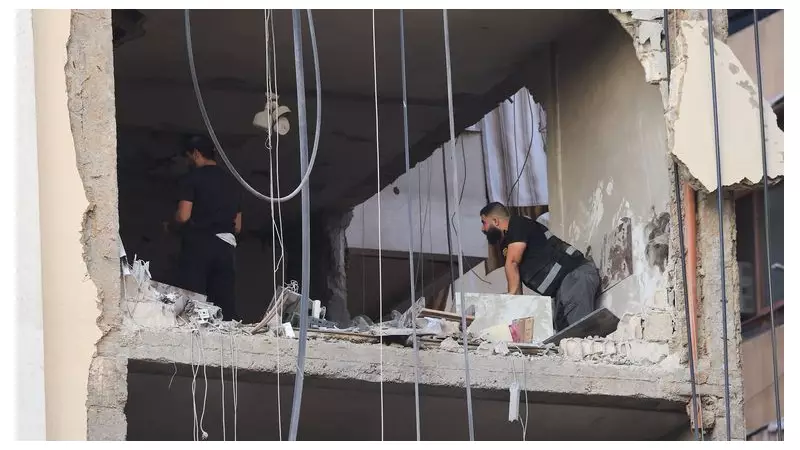
The attack centred on the busy Haret Hreik neighbourhood, with social media footage showing crowds gathering around a damaged apartment building. Smoke was seen billowing from the area following the explosion. Local residents reported to the Reuters news agency that they heard the distinct roar of warplanes just before the blast occurred.
As of the initial reports, there was no immediate confirmation on casualties or the status of Ali Tabtabai. Hezbollah, a heavily armed non-state group regarded as an Iranian proxy force, has not yet issued an official comment on the incident. The group is a sworn enemy of Israel and has historically called for the destruction of the Israeli state.
Regional Tensions and Papal Visit Loom
This dramatic event comes at a highly sensitive time, occurring just days before Pope Leo XIV is scheduled to visit Lebanon. The airstrike also follows a period of intensified Israeli military activity in southern Lebanon. Israel has repeatedly accused Hezbollah of attempting to rebuild its military capabilities in the region, a claim the Lebanese government has denied.
Hezbollah maintains that it has abided by the requirements of a US-backed ceasefire from the previous year, which included ending its military presence near the Lebanon-Israel border. The Israeli government, however, has stated it is determined to act to achieve its objectives everywhere and at all times, signalling a potentially volatile period ahead for the region.




