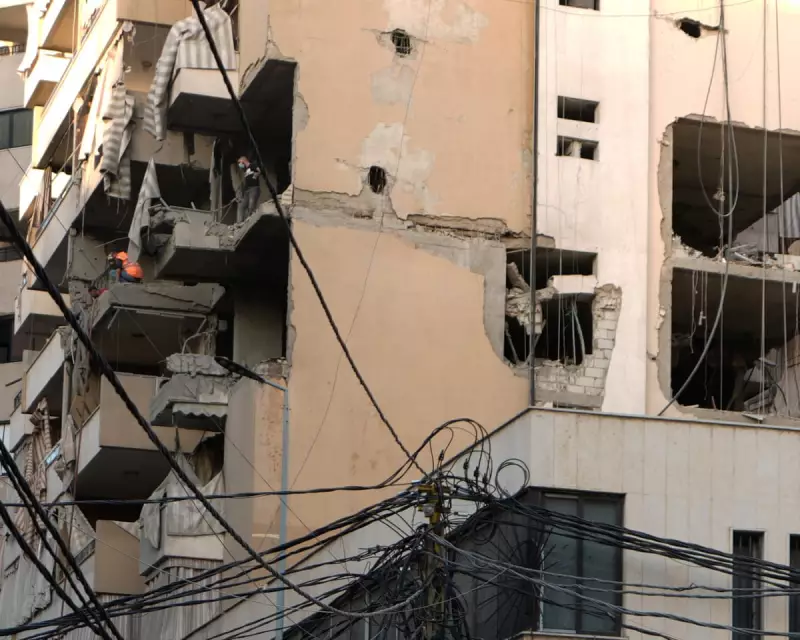
In a significant escalation of regional tensions, Israeli forces have targeted Hezbollah's chief of staff in a precision strike on Beirut, according to Lebanese security sources. The attack occurred on Sunday, November 23, 2025, marking one of the most direct confrontations between Israel and the Lebanese militant group in recent months.
The Target and Immediate Aftermath
The strike specifically aimed at Hassan al-Haq, Hezbollah's highest-ranking military official after its leader Hassan Nasrallah. Lebanese security officials confirmed that al-Haq was the primary target of the operation, though his current condition remains unverified. The attack took place in the southern suburbs of Beirut, an area known to be a Hezbollah stronghold.
Witnesses reported hearing multiple explosions followed by plumes of smoke rising from the targeted location. Emergency services rushed to the scene amid concerns about civilian casualties in the densely populated neighbourhood. The precise method of the strike has not been officially confirmed, though regional analysts suggest it likely involved advanced missile technology.
Regional Reactions and Escalating Tensions
The Lebanese government has condemned what it describes as a severe violation of its sovereignty and an act of aggression. Prime Minister Najib Mikati called for an emergency session of the United Nations Security Council to address what he termed "unprovoked Israeli aggression."
Meanwhile, Israeli officials have maintained their customary stance of neither confirming nor denying involvement in the strike. However, defence analysts note that the targeting of such a high-ranking Hezbollah figure represents a significant escalation in Israel's campaign against the group's leadership structure.
Hezbollah has vowed to deliver a "swift and powerful response" to the attack, raising concerns of renewed conflict along the Israel-Lebanon border. The group's media arm released a statement describing the strike as "a dangerous crossing of red lines" that would not go unanswered.
Broader Regional Implications
This development comes amid already heightened tensions throughout the Middle East. Security experts warn that the targeting of Hezbollah's chief of staff could trigger a new wave of violence between Israel and Lebanese militants, potentially drawing in other regional actors.
The strike represents the most significant attack on Hezbollah's leadership since the assassination of Imad Mughniyeh in 2008. Hassan al-Haq has been instrumental in coordinating Hezbollah's military operations and was considered a potential successor to Nasrallah.
International observers are closely monitoring the situation, with several Western governments issuing travel warnings for Lebanon and the surrounding region. The United States State Department has called for restraint from all parties while European leaders have urged diplomatic solutions to prevent further escalation.
As the situation develops, security has been tightened throughout Beirut, particularly around known Hezbollah facilities and government buildings. The coming days are likely to reveal whether this strike will trigger the widespread regional conflict that diplomats have long feared.