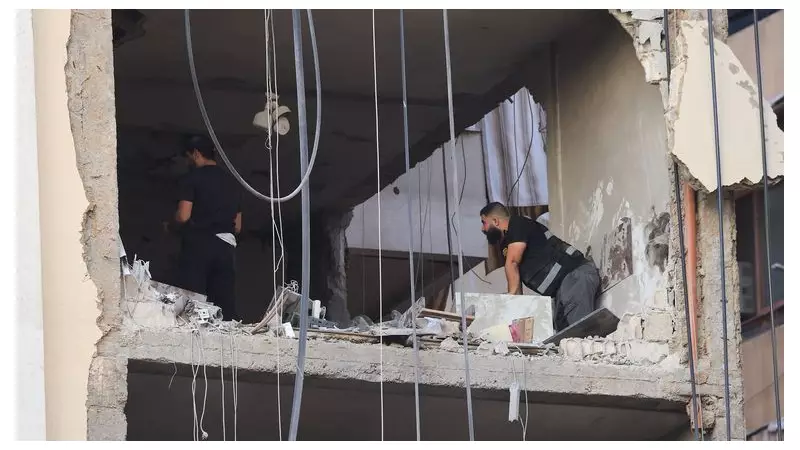
In a significant escalation of tensions, Israeli warplanes struck central Beirut on Sunday, killing Hezbollah's chief of staff Haytham Ali Tabtabai in the first such attack on the Lebanese capital since June.
Deadly Strike Hits Residential Area
The targeted airstrike occurred in the busy Haret Hreik neighbourhood, with at least five people killed and 28 wounded according to Lebanon's Health Ministry. Local residents reported hearing warplanes before the explosion that damaged an apartment building.
Israeli Prime Minister Benjamin Netanyahu confirmed the operation, describing Tabtabai as "a master of murders" and thanking Israeli defence forces for what he called a "professional, precise and successful operation." Notably, Israel did not issue any evacuation warning before the strike.
Emergency services faced challenges reaching the scene as crowds gathered around the damaged building. Lebanese military personnel cordoned off the area while rescue workers and firefighters attempted to access the site amid gunshots fired to disperse onlookers.
Who Was Haytham Ali Tabtabai?
The eliminated Hezbollah official was a significant figure within the organisation. Haytham Ali Tabtabai had led Hezbollah's elite Radwan Unit and was seen as the apparent successor to Ibrahim Aqil, who was killed in Israeli attacks in September 2024.
That previous strike had wiped out much of Hezbollah's senior leadership, including longtime leader Hassan Nasrallah. The United States had designated Tabtabai as a terrorist in 2016, offering up to $5 million for information leading to his capture.
Timing and Regional Implications
The attack comes at a particularly sensitive time, with Pope Leo scheduled to visit Lebanon in the coming days. This marks the first Israeli airstrike on Beirut since June and follows intensified Israeli operations in southern Lebanon.
Israel claims Hezbollah is attempting to rebuild its military capabilities in violation of last year's US-backed ceasefire agreement. The Lebanese government denies these allegations, insisting that a viable disarmament mechanism is in place.
Hezbollah, considered one of the most heavily armed non-state groups globally and regarded as an Iranian proxy force, maintains considerable power in Lebanese politics, particularly in southern regions bordering Israel.
The strike represents a serious blow to Hezbollah's leadership structure and signals that despite the nominal ceasefire, the conflict between Israel and the militant group continues to escalate, threatening regional stability as diplomatic efforts face new challenges.