A devastating suicide bombing in Pakistan's capital has left at least twelve people dead and 27 wounded, prompting the country's defence minister to declare the nation is in a 'state of war' against a rising tide of militancy.
Chaos at the Court Complex
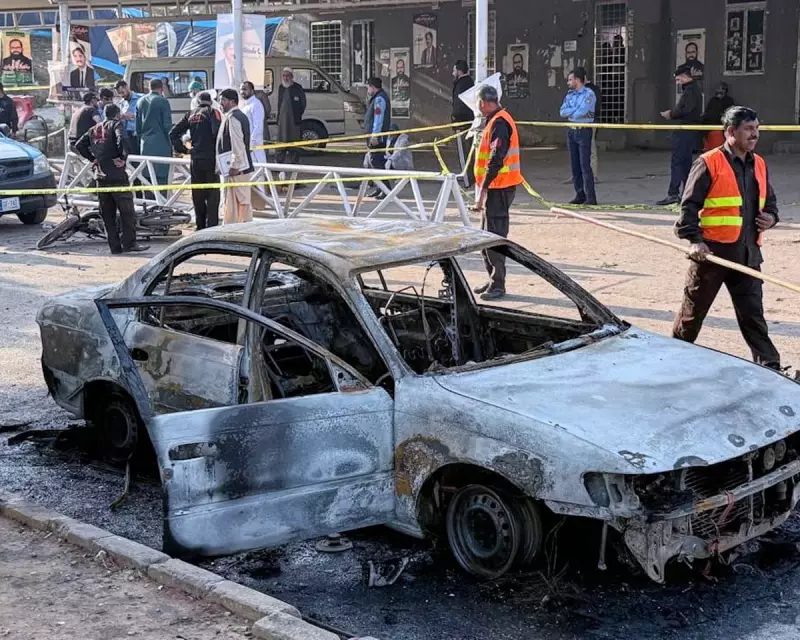
The attack unfolded at approximately 12:30 pm on Tuesday outside the district court buildings in Islamabad, a location typically thronged with lawyers and litigants. Interior Minister Mohsin Naqvi confirmed the casualty figures and revealed crucial details of the assailant's movements.
According to Naqvi, the bomber initially attempted to 'enter the court premises but, failing to do so, targeted a police vehicle'. This detail suggests the attacker was seeking a higher-casualty target within the crowded court complex.

Eyewitness accounts painted a picture of immediate pandemonium. Lawyer Rustam Malik described the scene to AFP, stating, 'It was complete chaos, lawyers and people were running inside the complex. I saw two dead bodies lying on the gate and several cars were on fire.' Video evidence from the site showed a blackened and destroyed police car, the focal point of the explosion.
A Nation Under Siege from Multiple Fronts
This brutal attack is not an isolated incident but part of a severe and destabilising surge in terror attacks that has plunged Pakistan into its most serious security crisis in over a decade. The primary threat comes from the Pakistan Taliban, known as Tehreek-e-Taliban Pakistan (TTP).
This group has been responsible for more than 600 militant attacks this year alone, primarily in the Khyber Pakhtunkhwa region bordering Afghanistan. The Pakistani government has repeatedly accused the Afghan Taliban of providing a safe haven and military support to TTP fighters, allegations which Kabul denies.
This friction led to deadly cross-border clashes last month, and subsequent fragile ceasefire talks have so far failed to produce any agreement on handling cross-border terrorism.
Wake-Up Call on Security
In response to the Islamabad bombing, Defence Minister Khawaja Asif issued a stark warning, calling the event a 'wake-up call'. He emphasised that the conflict is not confined to remote border areas.
'We are in a state of war,' Asif stated. 'Anyone who thinks that the Pakistan army is fighting this war in the Afghan-Pakistan border region and the remote areas of Balochistan, today’s suicide attack at the Islamabad district courts is a wake-up call.'
He further expressed deep scepticism about the prospects for peace talks with the Afghan Taliban in the current climate, remarking, 'In this environment, it would be futile to hold out greater hope for successful negotiations with the rulers of Kabul.'
As investigations continue, no terrorist group has yet claimed responsibility for the attack. Interior Minister Naqvi confirmed that authorities are 'investigating this incident from different angles', underscoring that 'It is not just another bombing', hinting at its complex and significant nature.