Iran's Hidden Death Toll: Medics Reveal Systematic Concealment of Protest Killings
Exclusive testimony from medical professionals within Iran has uncovered a vast, coordinated effort by authorities to obscure the true number of fatalities during the recent crackdown on protests. Doctors, morgue staff, and graveyard workers describe scenes of chaos and deliberate concealment, with bodies reportedly disappearing from forensic facilities and being buried en masse.
A Network of Medical Witnesses Documents the Violence
In early January, as protests swept across Iran, Dr Ahmadi—a medical professional whose identity has been verified but remains anonymous for safety—began treating wounded protesters outside the official hospital system. Initially dealing with superficial injuries, the situation escalated dramatically. "The next day, everything abruptly changed," he recounts. Protesters arrived with close-range gunshot wounds and severe stab wounds, often proving fatal.
Shocked by the scale in his own town, Ahmadi established a network of over 80 medical professionals across 12 provinces to share data. Their collective observations, combined with accounts from morgues and cemeteries, paint a harrowing picture of state violence. While hesitant to provide a precise figure, the network agrees that all publicly cited death tolls represent a severe underestimation. Comparing witnessed deaths with hospital baselines, they estimate the true toll could exceed 30,000, far above official numbers.
Discrepancies in Reported Figures and State Concealment
Estimates of the death toll vary widely, complicated by an ongoing internet shutdown. The Iranian government acknowledges over 3,000 dead, while the US-based Human Rights Activists News Agency (HRANA) has verified more than 6,000 fatalities, with an additional 17,000 under investigation. Other external medical estimates range up to 33,000 or higher.
Testimony reveals systematic efforts to hide the true scale. Bodies were transported in unconventional vehicles like ice-cream vans and meat trucks, and forensic facilities were overwhelmed. At one morgue, staff reported trucks loaded with corpses being turned away, with the bodies subsequently disappearing. "They expressed suspicion that this was linked to mass burial," the report notes.
Graphic Accounts from Morgues and Graveyards
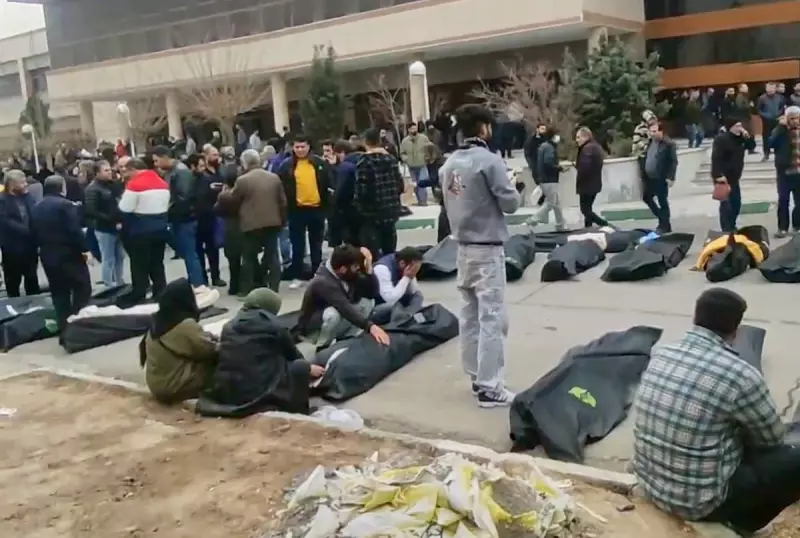
Verified video from the Kahrizak morgue in Tehran shows dozens of bodies laid out in the street, while witnesses describe similar scenes nationwide. At Behesht-e Sakineh cemetery in Karaj, a witness recounted hundreds of bodies arriving in small pickup trucks, often unsealed and piled together. "I have seen bodies in these trucks so stuck together it required strength to pull them apart," he said.
Graveyard staff reportedly spoke of receiving thousands of bodies in just two days, with orders for mass burials that many refused to carry out due to fear of future reprisals from grieving families. This pattern appears consistent across multiple provinces, indicating a national strategy of concealment.
Evidence of Systematic Killing and Executions
Medical workers emphasise that the injuries observed point to deliberate, systematic violence rather than random shootings. In some cases, bodies arrived at forensic facilities with close-range gunshot wounds to the head, still attached to medical equipment like catheters and tubes—a highly unusual occurrence that suggests individuals may have been killed while under active hospital care.
Photographs verified by the Iranian fact-checking organisation Factnameh show deceased patients in hospital gowns with catheters attached and apparent gunshot wounds to the forehead. A UK-based Iranian doctor who analysed the images stated: "From a medical point of view, it appears the bodies were shot directly in the head while under treatment."
A System Designed to Suppress Memory
The mechanisms of concealment are multifaceted, including discouraging hospital attendance, removing bodies from standard forensic pathways, and limiting medical staff's ability to register causes of death. Dr Ahmadi concludes that these actions form "a system designed not only to suppress protest, but to suppress memory." Many fear the true death toll may never be fully known, buried beneath layers of state orchestration.
As the international community grapples with these revelations, the testimonies from inside Iran highlight the profound human cost of the crackdown and the lengths to which authorities have gone to obscure it.