ICE Hiring Spree Under Trump Administration Led to Influx of Recruits with Questionable Qualifications
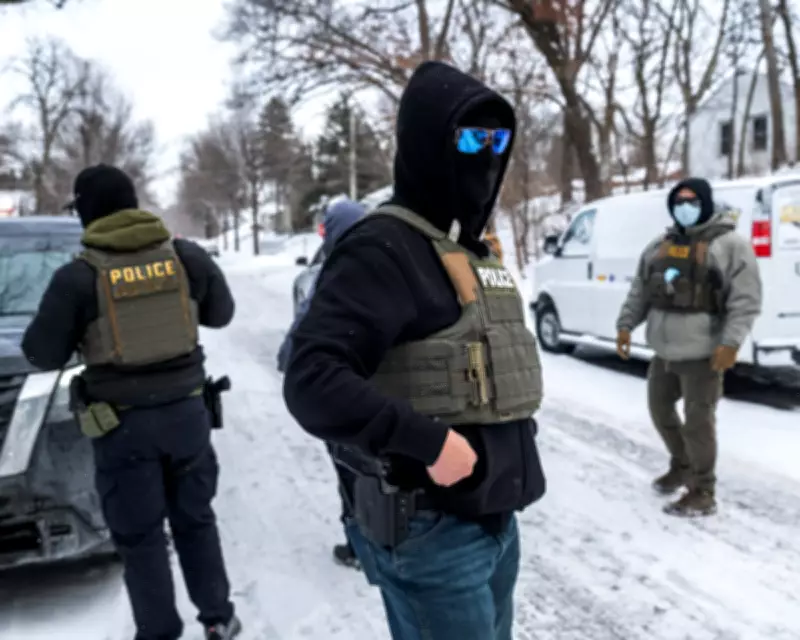
Federal law enforcement agents were observed outside a private residence in St Paul, Minnesota, on 18 January 2026, highlighting the ongoing activities of US Immigration and Customs Enforcement (ICE). An investigation has uncovered that rapid recruitment and expansion by ICE, driven by a $75 billion windfall from Congress to enact Donald Trump's immigration agenda, has resulted in an influx of employees with questionable qualifications.
Patchy Records and Allegations of Misconduct Among New Hires
The track records of some new recruits stand out negatively, including characteristics such as two bankruptcies and six law enforcement jobs in three years. One recruit faced an allegation of lying in a police report to justify a felony charge against an innocent woman, leading to a $75,000 settlement and criticism of their integrity. Another job candidate failed to graduate from a police academy and lasted only three weeks in his sole police officer role.
All these individuals were hired recently by ICE during an unprecedented hiring spree aimed at doubling its force with 12,000 new officers and special agents. The agency's focus on swift action under the Trump administration led to rapid-fire recruitment, which in turn brought on new employees with questionable backgrounds and training. This has come under scrutiny after numerous high-profile incidents involving excessive force by ICE agents.

Concerns Over Vetting and Training Standards
Claire Trickler-McNulty, a former ICE official who served during the Obama, Trump, and Biden administrations, warned that inadequate vetting done too quickly increases the risk of liability due to bad actions, abuse of power, and inability to properly carry out missions. While ICE claims the majority of new hires are police and military veterans, evidence suggests that applicants with questionable histories were either not fully vetted or hired despite their past.
Todd Lyons, ICE's acting director who is stepping down at the end of May, expressed pride in the hiring campaign during a congressional hearing in February, noting it drew over 220,000 applications. However, unlike many local law enforcement agencies, ICE shields employee identities to protect them from harassment, making a full accounting of new hires impossible.
Investigation Highlights Specific Cases of New Recruits
The Associated Press investigation focused on more than 40 officers who publicly announced their new ICE jobs on LinkedIn, using public records to check backgrounds. Most were male and had conventional qualifications, but several had histories of unpaid debts leading to legal action, two had filed for bankruptcy, and three faced lawsuits alleging misconduct in prior law enforcement jobs.
Marshall Jones, an expert on police recruiting at the Florida Institute of Technology, noted that hiring large numbers inevitably leads to outliers, but questioned whether these are normal human errors or systemic vetting challenges. The Department of Homeland Security (DHS), ICE's parent agency, acknowledged some applicants received tentative selection letters and offers before full background checks were completed, emphasizing that vetting is an ongoing process.
Internal Strains and Training Cuts
The deluge of hires has strained ICE, which offered signing bonuses up to $50,000 and advertised that college degrees were not required. An internal memo instructed supervisors to refer derogatory information about new hires to an internal affairs unit for investigation. Former ICE academy instructor Ryan Schwank testified in February that agency leaders cut training on use of force, firearms safety, and protesters' rights, with some recruits as young as 18 lacking college degrees and having non-English primary languages.
Notable Cases of New Hires
Among the new hires is Carmine Gurliacci, 46, who resigned as a police officer in Georgia to join ICE in Atlanta. He filed for bankruptcy twice, in 2013 and 2022, listing significant debts and unemployment periods. Serious financial problems are considered a red flag due to susceptibility to bribes or extortion. Gurliacci moved through six Georgia law enforcement agencies in three years, resigning each time before moving on.

Another hire, Andrew Penland, 29, joined ICE after resigning as a sheriff's deputy in Kansas, where he faced a lawsuit alleging false arrest of a woman, settled for $75,000. A third hire, Antonio Barrett, initially failed to graduate from a Colorado law enforcement academy, worked only three weeks as a police officer, and was accused in a lawsuit of excessive force against an inmate, though the case was dismissed.
ICE has denied removing training requirements, stating new recruits receive 56 days of training and 28 days of on-the-job training, with most having completed law enforcement academies. However, the investigation raises ongoing concerns about the quality and thoroughness of the hiring process under the Trump administration's immigration agenda.