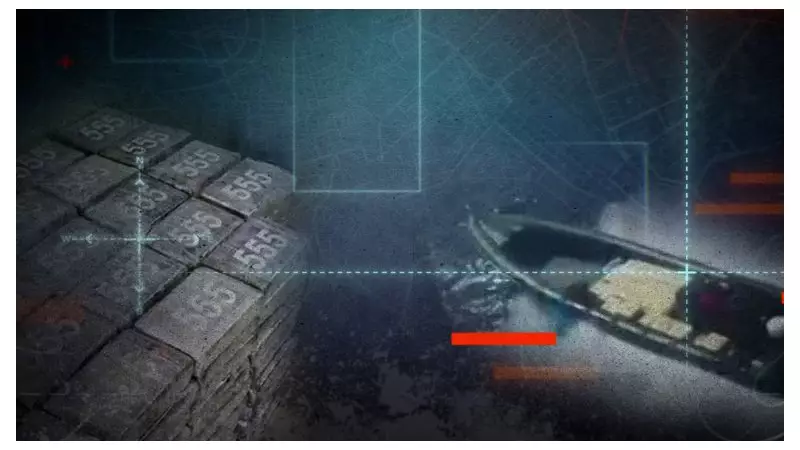
Beneath the cover of midnight darkness in the Strait of Gibraltar, a high-stakes chase unfolds. A Spanish police officer, peering into the blackness, shouts over the engine roar: "They're making lots of waves… I think it's a smuggler's boat." Within moments, the suspicion is confirmed. "That's a narco-boat! They're going faster." This is the frontline of Europe's relentless war on drugs, a nightly battle playing out just miles from UK waters.
The Midnight Chase: Cat, Mouse, and 100mph Waves
Sky News was aboard a vessel with Vigilancia Aduanera, an elite Spanish anti-drugs unit, as they sped into action. A helicopter had spotted five suspicious boats circling in Moroccan waters. The target, identified minutes after leaving the port of Algeciras, was a 12-foot inflatable speedboat powered by massive outboard motors.
The crew donned helmets and body armour as the chase began. These pursuits can reach speeds of 100mph, with smugglers taking extreme risks to evade capture. The narrow Strait, just eight miles wide at its narrowest, is the crucial gateway for cocaine and hashish entering Europe. Drugs landed here can be on the streets of London and other European cities within 24 hours.
The operation is a coordinated ballet of force. On land, spotters hidden along riverbanks watch inlets, while undercover officers wait to intercept vans meant to receive the narcotics. Everyone keeps their distance; the smugglers have many lookouts.
During the chase, a second police boat emerged from the dark, working in tandem to cut off the prey. But the smugglers, in boats costing around €100,000 (£88,000), are faster and more agile. Using tracking devices, they made a desperate run for the safety of Moroccan territorial waters, where Spanish authorities must stop pursuit.
Without warning, the police boat smashed into a series of massive waves—a wake deliberately created by the fleeing narco-boat. Alarms sounded, people were thrown from their seats, and unsecured equipment flew. In an instant, the chase was over. The smuggler's boat vanished from the infrared camera, its trail disappearing into the night. It would live to run another day.
An Unprecedented Tide of Cocaine
This nightly conflict is fuelled by a simple, brutal economics. Cocaine production in Latin America has hit record levels, driving down street prices across Europe and creating a vast, globalised network operating 24/7. Recorded seizures have risen annually for almost a decade, but no one knows how much gets through.
In 2023 alone, there were 95,000 separate seizures of cocaine across the EU. The following year, Spanish authorities made history, seizing 13 tonnes of cocaine hidden in a banana shipment from Ecuador—the largest ever seizure in Spain and Europe's second biggest.
The methods are constantly evolving. Smugglers now use drones, exploit major seaports, and rely on claustrophobic, manned narco-submarines that make perilous weeks-long journeys across the Atlantic. In November 2025, Portuguese security intercepted one such sub with 1.7 tonnes of cocaine onboard—a potential street value exceeding £100 million.
Lisardo Capote, head of customs and intelligence in Algeciras, summarises the challenge: "They have all the money they want. Just for one landing, they can earn two, three, four, five million euros." He stresses the problem is not for Spain, Italy, or Portugal alone, but for all of Europe.
The Smuggler's Confession: "This is Like a Game"
The scale of the operation is laid bare in a clandestine meeting near Cadiz with a man claiming to be a kingpin of Andalusia's largest drug cartel. Wearing a balaclava, sunglasses, and a cap, he asks to be called "Incognito." The rendezvous point was close to a warehouse where, just days before, a Spanish police officer was shot during a raid.
"Even as I'm speaking with you, there are narco-boats full of drugs going in that sea. This is how it works," he states matter-of-factly. He claims his network distributes cocaine "everywhere in Europe" and justifies his trade with a stark explanation: "There's a lack of jobs, there's no food and we all have a family. We need to survive."
His life is one of constant paranoia, wanted by police and fearing execution by his own gang for speaking out. "This is like a game," he reflects. "One day you win, one you lose. Sometimes the police win, other times we win… It's normal to lose your family or to go to prison. We're aware, it's part of the game."
His words are underscored by violence. Two weeks prior to the interview, five police officers were shot and wounded during a raid nearby. Spain's police union warns the country has "lost control" and the region is being "colonised by traffickers." So prevalent are the smugglers that police colloquially refer to them as "the mice."
Despite being a major European and NATO nation, Spain's authorities often find themselves outgunned and outmanoeuvred by gangs with superior resources and equipment. It is a non-stop war, a dangerous game of cat and mouse visible from some of Spain's most famous tourist coastlines. As the chase in the Strait proved, it is a conflict where the police are frequently forced to back off, and Europe's fight against cocaine smuggling appears increasingly out of control.