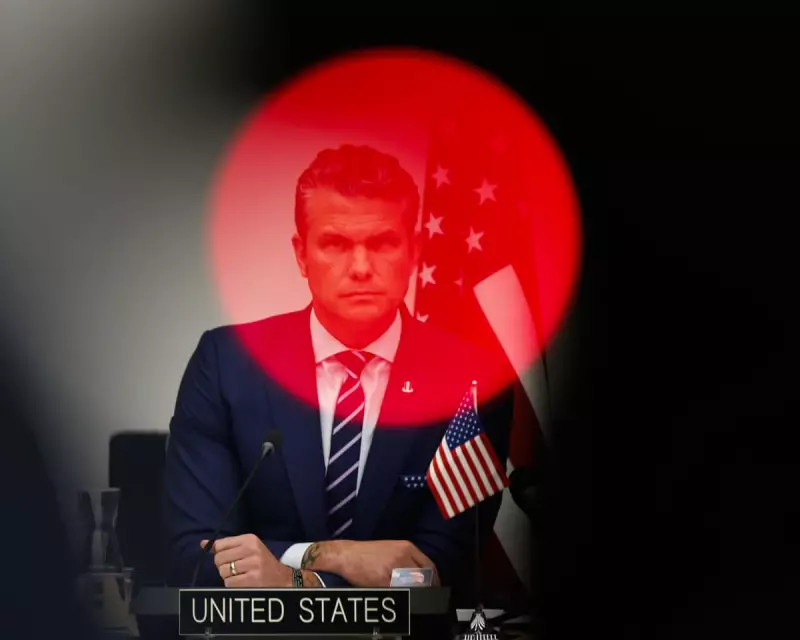
US Defence Secretary Pete Hegseth reportedly told soldiers under his command in Iraq to ignore legal advice regarding when they were permitted to kill enemy combatants, according to revelations in his own book. This controversial stance is now under intense scrutiny following a separate incident in the Caribbean where survivors of a boat strike were allegedly killed after a verbal order to "kill everybody".
Controversial Anecdote from Iraq Deployment
In his book, The War on Warriors, published last year, Hegseth recounts a legal briefing at the start of his service in Iraq. A military judge advocate general (JAG) officer explained the rules of engagement, using the example of an identified enemy holding a rocket-propelled grenade (RPG). When Hegseth's platoon indicated they would shoot, the JAG officer corrected them, stating they were not authorised to fire until the RPG was pointed at them with intent to fire.
Hegseth writes that he was "stunned" by this guidance. He subsequently gathered his men and instructed them to disregard the legal advice. "I will not allow that nonsense to filter into your brains," he told them, according to the book. "Men, if you see an enemy who you believe is a threat, you engage and destroy the threat." He promised to have their backs, framing the JAG's rules as a "bullshit rule that's going to get people killed".
Scrutiny Over Caribbean Strike and Chain of Command
Hegseth's philosophy is under the microscope due to an attack on 2 September on a boat in the Caribbean, purportedly carrying drugs. Reports indicate survivors of an initial strike were killed in a second strike following a verbal order from Hegseth to "kill everybody". While Hegseth has denied giving the order and retains the support of former President Donald Trump, some US senators have raised the possibility of a war crime.
Professor David M Crane, a former chief UN war crimes prosecutor and army veteran with 20 years' service, emphasised the critical importance of rules of engagement. "After the tragedy of My Lai in 1968, we have tried to avoid another one," he said. He explained that liability for illegal orders travels up the chain of command. "So if there's an illegal order that goes all the way down, then all of them have committed a war crime. It goes all the way to the president of the United States."
Admiration for 'Badass' Commanders and Pardons
In his writing, Hegseth expresses admiration for his former commanding officer, retired Colonel Michael Steele, whom he calls a "certified badass". Steele was reprimanded after soldiers under his command in 2006 said he ordered them to "kill all military age males" during a raid in Iraq. Media reports indicated Steele promoted the use of "kill boards" to track soldiers' body counts.
Professor Crane condemned this mindset, stating, "This shows you the mindset of this secretary of defence: that's the kind of person, that's the signal they're sending the commanders – kill them all and let God sort them out." He also challenged Hegseth's portrayal of antagonism between soldiers and JAG lawyers, calling it "absolutely not true", and highlighting that JAG officers are soldiers first, deployed alongside their units to ensure they operate within the law.
Hegseth's views align with his previous advocacy during the Trump administration. He successfully campaigned for the pardon of two army officers and the reversal of disciplinary action against a Navy SEAL, all accused or convicted of war crimes. He argued that "the benefit of the doubt should go to the guys pulling the trigger". Crane believes such actions "cheapen the profession" and embarrass a military that prides itself on following the law.
Throughout his book, Hegseth rails against the "rules and regulations" governing warfare, questioning the entire framework of international law. He argues for unleashing American forces to be "the most ruthless" and "overwhelmingly lethal", positing that winning wars by America's own rules is preferable to appeasing international tribunals.