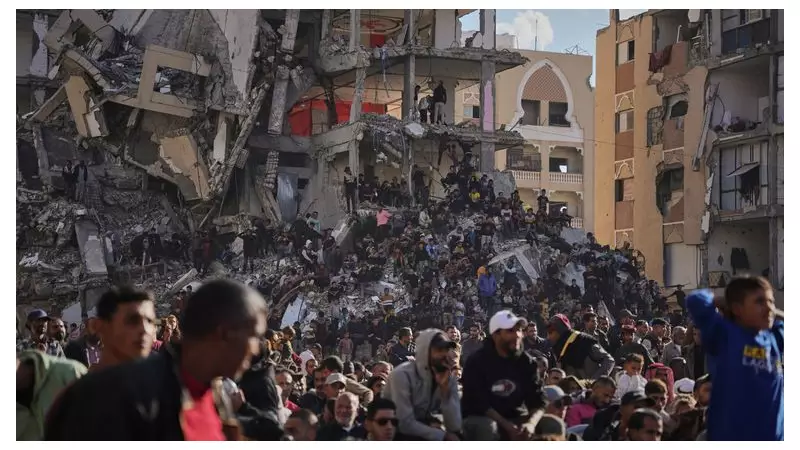
In the heart of Gaza's devastation, a powerful symbol of hope briefly flickered. On 2 December, 54 couples gathered for a mass wedding ceremony in Khan Younis, their vibrant attire a stark contrast to the surrounding grey landscape of dust and shattered buildings. Crowds clambered onto the ruins to celebrate, yearning for a return to the simple rhythms of normal life: full shops, open schools, and days free from the crackle of gunfire.
A Landscape of Conflict and Contradiction
Yet this captivating vision remains an illusion. The territory is still being ripped apart by tides of danger and volatility, trapped within a cobweb of conflicting interests that makes lasting security a distant dream. The events of just the past few days illustrate the profound challenges.
First, the Israeli military reported that five of its soldiers were injured in an attack by Hamas fighters, suspected to have emerged from the network of tunnels. Israel responded with an airstrike targeting, it said, a senior Hamas official. The ensuing fallout claimed civilian lives, including two children.
Simultaneously, a diplomatic stalemate unfolded over the Rafah Crossing. Israel announced it would open it, but only for departures from Gaza. Egypt refused to cooperate unless movement was allowed in both directions. With Israel suspecting Egypt of offering financial support to Hamas, no agreement was reached.
The Resurgence of Hamas and a Path Strewn with Obstacles
In a significant development in Rafah, Yasser Abu Shabab, the leader of a militant group opposed to Hamas and reportedly receiving covert Israeli backing, was killed. The assassination, presumably by Hamas fighters, signals that the group is far from degraded and is once again exerting control in areas it contests.
Amid this, the process of returning hostages' remains continued, with the penultimate hostage, Sudthisak Rinthalak, handed back. Only one body, that of police officer Ran Gvili, now remains. The completion of this process is meant to trigger a theoretical 'Phase Two', envisioning a flood of aid, the disarmament of Hamas, and the rebuilding of Gaza under a new governance structure.
However, the obstacles are monumental. Half of Gaza remains under Israeli military control, with the IDF showing no signs of withdrawal. The other half exists in a state of quasi-anarchy. While the UN has signed off on the concept of a military supervisory force, it has not been created, nor have any rules of engagement been established.
An Uncertain Future and Unanswered Questions
The core question of who would disarm Hamas seems increasingly difficult to answer as the group regroups. Without this, Israel's fear of another attack like that of October 7 persists. American diplomats and planners have invested heavily in designing a future for Gaza, with a major coordination centre in southern Israel. Yet, faith in these plans coming to fruition effortlessly is a stretch.
The ambitions of Phase Two remain little more than hopes. The return of the final hostage will not bring closure but will instead unleash a torrent of new, unanswered questions. For the people of Gaza, the profound anxiety of life in a fractured, volatile landscape continues to roll on, their desperate desire for normality still overshadowed by the grim realities of conflict and control.