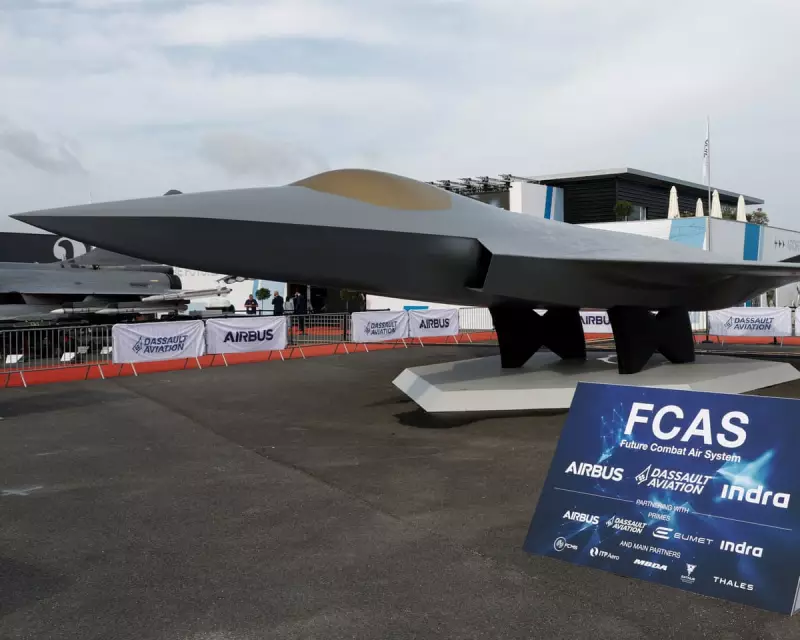
The ambitious Franco-German project to develop a next-generation stealth fighter jet is under severe threat due to escalating corporate rivalries, the chief executive of engine manufacturer Safran has warned.
Political Will vs Corporate Stalemate
Olivier Andriès, CEO of French aerospace giant Safran, stated that relations between the lead industrial partners—French company Dassault Aviation and the German division of Airbus—are "extremely difficult" and "very strained." This clash over leadership and workshare risks derailing the entire Future Combat Air System (SCAF) programme, a cornerstone of European defence cooperation.
Despite the industrial deadlock, Andriès confirmed that French President Emmanuel Macron and German Chancellor Friedrich Merz retain a "very strong willingness" to strike a deal and see the project through. The political imperative to collaborate remains high, even as the corporate partners struggle to find common ground.
The SCAF: A Sixth-Generation Vision
The SCAF is envisioned as a so-called sixth-generation combat aircraft, designed to succeed the current Rafale and Eurofighter Typhoon jets. Its advanced capabilities are planned to include:
- Next-generation stealth technology
- Advanced sensor fusion and electronics
- Networked operations with accompanying drones (loyal wingmen)
- New weapon systems
The programme exists in a competitive global landscape, developing alongside the UK-Italy-Japan Global Combat Air Programme (GCAP/Tempest) and the United States' own next-generation fighter efforts.
Safran's Role and Broader Industry Concerns
Safran, co-producing the jet's engines with Germany's MTU, reports that cooperation on the propulsion side is proceeding smoothly. Andriès highlighted that the engine partners meticulously allocated responsibilities from the outset, avoiding the friction seen elsewhere in the programme.
His comments were made during a visit to London, where he met UK government ministers. Safran employs 5,500 people in the UK across various subsidiaries working on landing gear, flight controls, and aircraft seats. Andriès also spotlighted the company's Buckinghamshire facility in Pitstone, which is researching electric motors and crucial magnets not reliant on rare earth metals—a strategic move given China's dominance of the supply chain.
The SCAF turmoil echoes wider debates within the European aerospace sector. Industry leaders, including the CEO of Airbus, have previously questioned the logic of multiple, parallel European next-generation fighter projects, suggesting consolidation might be necessary to compete globally.
As the political leaders of France and Germany push for a resolution, the future of this pivotal defence project hangs in the balance. Its success or failure will signal the depth of European strategic autonomy in an increasingly contested world.