Europe's Defence Awakening
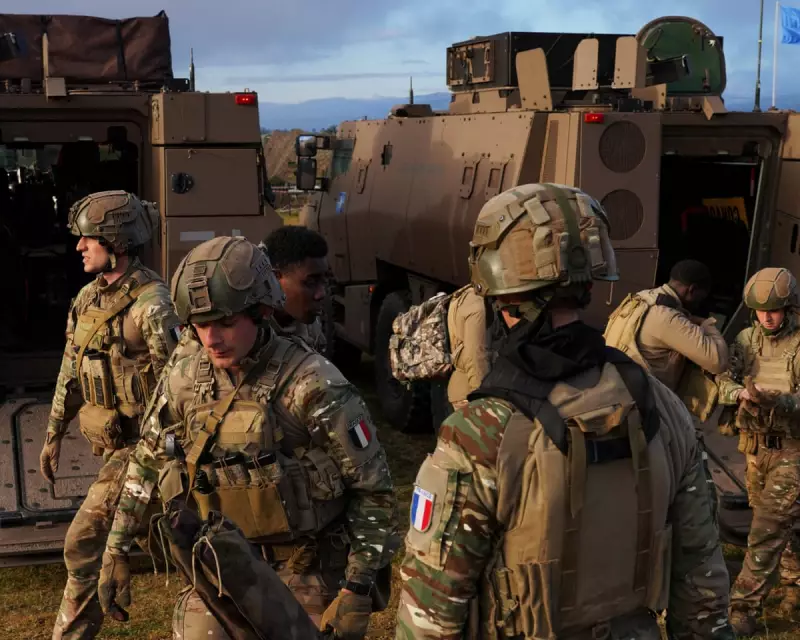
France is poised to become the latest European nation to significantly expand its military capabilities, with President Emmanuel Macron expected to announce the restoration of military service this Thursday. This landmark decision comes nearly three decades after France abolished conscription in 1997, though the new scheme will operate on a voluntary basis rather than compulsory enlistment.
The Geopolitical Drivers Behind Europe's Military Expansion
This move forms part of a broader European rush to bolster defence capabilities amid growing concerns about Russia's military threat and increasing uncertainty over America's commitment to transatlantic defence. European military leaders perceive Russia as a potential direct threat within two to five years, despite significant losses in Ukraine.
The urgency was starkly illustrated last week when France's top general, Fabien Mandon, sparked political uproar by stating the country must prepare "to lose its children" given Russia's preparations for "a confrontation with our countries by 2030." Meanwhile, Washington has made it clear that it expects European Union allies to assume greater responsibility for their own defence.
Recruitment Challenges and Conscription Models Across Europe
Sophia Besch, a defence specialist at the Carnegie Endowment for International Peace, highlighted that "growing military personnel shortfalls" are forcing numerous Western European countries to explore various conscription models. She noted that training cycles will need intensification for reservists, presenting a "politically and socially sensitive challenge" for nations without recent military service traditions.
Across the continent, different approaches are emerging. The Nordic and Baltic states lead with "total defence" strategies underpinning military thinking. Finland maintains one of the world's largest reserves through universal male conscription, while Sweden reintroduced selective conscription in 2018, requiring mandatory registration for both men and women but employing a strict selection process.
Recent developments show Denmark extending its conscription system to women and lengthening service to 11 months from four in June. Estonia continues universal male conscription, while Latvia and Lithuania, like Denmark, select conscripts by lottery when volunteer numbers prove insufficient.
Elsewhere in Europe, Croatia recently restored conscription eighteen years after abolishing mandatory military service. Poland is developing plans for large-scale military training for every adult male, aiming to double its army size.
Despite recent polls showing majority support for mandatory military service in several European countries including Germany, France and Poland, Germany's government this month opted against compulsory service after heated debate, choosing a voluntary model instead - though it reserves the right to reconsider if recruitment targets aren't met.
Army leaders generally prefer volunteers for their professionalism and motivation, though volunteer armies prove expensive to maintain. Conscripts not only bolster active service numbers but create substantial reserve pools. However, compulsory service isn't a universal solution - Besch argues that in countries with domestic resistance, mandatory conscription could potentially undermine public resolve to strengthen national defences.
As Besch observes, "Most successful European conscription models now rely on a strong degree of volunteerism - but instilling a willingness to serve in a population that does not have a recent history of military service takes time and sustained domestic debate."